

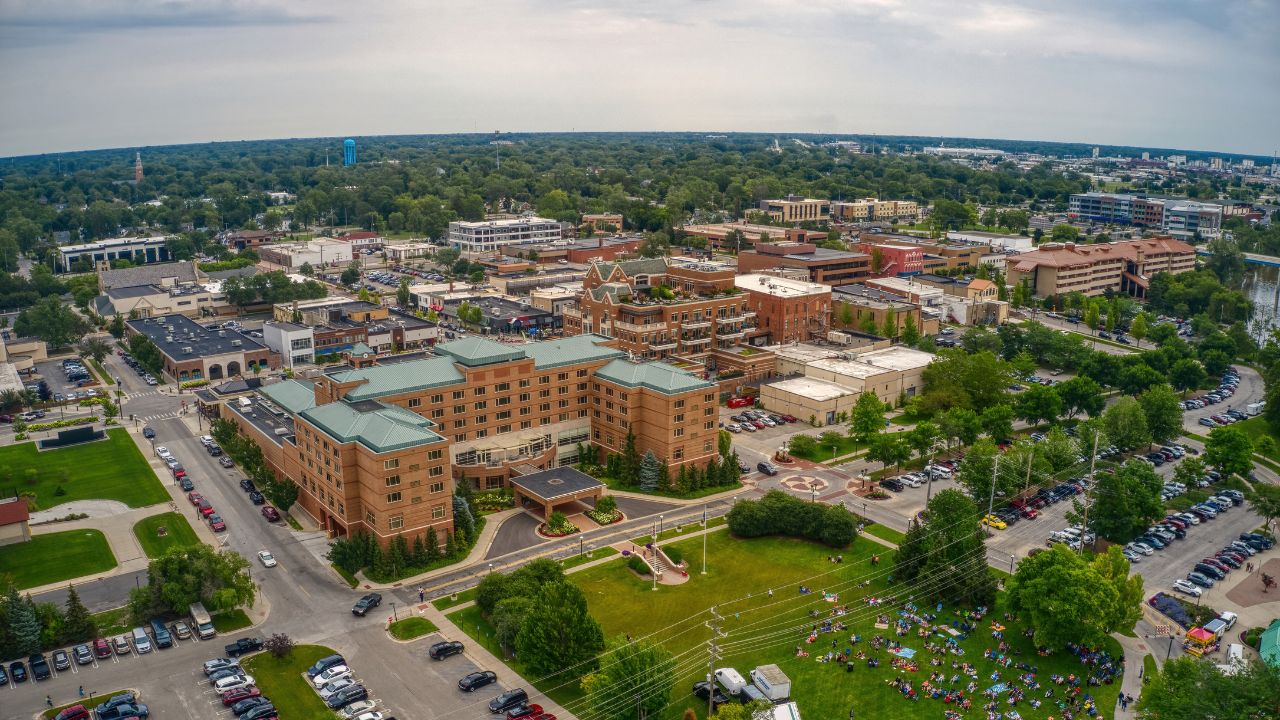
The charming, artsy city of Midland, Michigan, is known for having the longest canopy walk in America. According to Data USA, nearly all its residents have health insurance, and on average, Midland primary care physicians see 1,276 patients per year.
However, Michigan is facing a nurse shortage that is set to worsen over the coming years. According to the Health Resources and Services Administration, the state is projected to have a deficit of 20,150 registered nurses (RNs) by 2030.
Midland facilities must maintain patient care standards and adequate staffing ratios amid a rapidly shrinking clinician pool. Traditional staffing methods no longer provide sufficient coverage, so more facilities are turning to a hybrid method, which includes PRN staffing.
Current healthcare staffing landscape in Midland, MI
According to the latest data available from the U.S. Census Bureau, Midland has an estimated population of 42,806, served by 1 primary acute care hospital and smaller healthcare facilities. The city also serves as a medical hub for the surrounding Great Lakes Bay Region.
The nurse staffing market is dominated by MyMichigan Health, the county's second-largest employer. In comparison, smaller facilities, such as long-term care (LTC) centers, specialized clinics, and assisted living communities, may struggle to hire sufficient clinicians.
The local supply of RNs and licensed practical nurses (LPNs) is often absorbed into the hospital system, leaving other facilities to grapple with high agency spend and understaffing.
Flexible staffing solutions are no longer an optional extra for maintaining high-quality patient care; they are a necessity.
What are the top staffing options for your facility?
More facilities are now using a hybrid staffing approach, combining internal and external options to ensure units are adequately staffed. Let’s evaluate each model's operational risk relative to its specific use cases.
Nurse staffing agencies
Traditional agencies have long been the go-to for filling staffing gaps; however, the trade-offs are high mark-ups and rigid contracts.
- Use cases: Nurse staffing agencies are good for filling long-term, predictable vacancies. For instance, if a clinician is taking a 12-week maternity leave, an agency contract might be the best option for you.
- Operational risks: The primary risks are financial rigidity and slow response time. Agencies often come with high markups, hire-away fees that penalize you for hiring great talent, and slow response times that don't help when a staff member calls out 2 hours before a night shift.
Internal float pools
Internal float pools can provide a comfortable buffer for routine fluctuations. However, their limited depth can expose facilities to high overtime costs and burnout during severe shortages.
- Use cases: Ideal for managing minor patient census fluctuations across units or for covering standard vacation requests.
- Operational risks: Scalability is the main concern. During a local respiratory surge or a flu outbreak, these pools may not provide adequate cover. Furthermore, over-reliance on internal staff can increase W-2 employee benefits costs.
On-demand staffing marketplaces
Digital staffing platforms can offer unmatched agility to fill urgent gaps and provide fee-free recruitment. However, they do require a shift from traditional, phone-based communication to a digital workflow.
- Use cases: Platforms like Nursa are designed for immediate gaps—holiday coverage, weekend surges, or filling a vacancy while the recruitment process for a full-time employee is underway. Facilities can also use PRN shifts as working interviews and offer a clinician a permanent role with zero hire-away fees.
- Operational risks: Success requires leadership buy-in and a slight adjustment to administrative workflows. Facilities must be prepared to manage a digital interface rather than a traditional phone-based relationship.
Complying with healthcare regulations in Midland
As state legislation evolves to prioritize healthcare worker well-being, local facilities must navigate a shifting landscape of operational accountability.
Mandatory overtime
In April 2026, the Michigan Senate passed legislation that aims to protect nurses from forced mandatory overtime. The bill will now be considered by the House. If passed, it would prohibit hospitals and many care facilities from requiring nurses to work beyond their scheduled shifts, except in extreme emergencies.
For Midland administrators, this could potentially mean further staffing shortages and unfilled shifts. Having a reliable pool of per diem nurses could be a cost-effective way to replace mandatory overtime.
Credentialing and compliance
Modern staffing models do more than fill shifts; they streamline credentialing, ensure compliance, and prevent burnout.
The credentialing barrier
Digital platforms solve the administrative burden of credential verification. Every clinician’s profile is vetted for current licensure and reliability ratings before they can request a shift at your facility.
Hours per resident day (HPRD)
For LTC facilities, maintaining HPRD compliance is vital to CMS ratings. Flexible staffing allows you to adjust your roster up or down in real-time, ensuring you never fall below mandated levels or pay for unneeded hours.
Burnout relief
Using PRN nurses in Midland to handle labor variance protects your permanent core staff from exhaustion. This directly impacts patient safety, reducing the likelihood of medication errors and improving overall staff retention.
Choose a hybrid staffing mix for long-term resilience
The most efficient facilities in Midland are moving away from relying on a single contingent staffing method. Instead, they are utilizing a hybrid staffing model to enhance workforce productivity.
In this framework, a facility maintains its core staff to cover 75–90% of the baseline schedule and utilizes on-demand staffing for the remainder.
The hybrid model builds flexibility into your budget. Rather than carrying the high fixed cost of a massive full-time staff that may be underutilized during low census periods, you pay for labor only when you need it.
By using PRN staffing, you can significantly reduce overtime premiums and provide vital burnout relief for your permanent team.
Innovative strategies to strengthen your talent pipeline
Recruiting in the current healthcare staffing landscape requires looking beyond city limits and traditional recruitment methods.
Expand your local talent pool
Midland is uniquely positioned near 2 other major hubs: Saginaw and Bay City. Both are within a 30-minute drive.
Many clinicians living in these areas may not want a daily commute to Midland for a full-time job, but they are highly motivated to pick up high-value PRN shifts. You can tap into this local pool of talent that your competitors—who only focus on Midland residents—might be completely missing.
Offer flexible scheduling to get the cutting edge
Small- to mid-sized facilities in Midland rarely outspend MyMichigan Health on sign-on bonuses. However, you can compete on scheduling flexibility.
Many nurses today are leaving full-time roles because they want control over their lives. By offering shifts via an on-demand platform, you attract high-quality clinicians who prioritize autonomy—a benefit that large, rigid health systems often struggle to provide.
Students as certified nursing assistants (CNAs)
Midland is within driving distance of premier nursing programs:
- Mid Michigan College
- Saginaw Valley State University
Many nursing students are already certified as CNAs. By allowing these students to pick up flexible shifts that fit around their clinical rotations, your facility builds an early relationship with future RNs and LPNs.
This is a far more cost-effective talent management strategy than paying a high placement fee to a recruiter 3 years down the line.
Looking to the future of staffing in Midland
The old way of staffing—relying on a few agencies and mandating overtime—is no longer viable in the current Michigan healthcare landscape.
To thrive, Midland facilities must embrace technology that offers both compliance and agility. Secure your facility's clinical future and budget by shifting your strategy today.
Create your facility profile today to access Midland’s local clinician pool and start building your future talent pipeline.
Sources:










.png)

.png)

