Physical therapists (PTs) help patients move better and live more independently, and demand for the profession is growing.
If you work in rehabilitation or are exploring new career paths, this guide covers pay, jobs, and how to get started.
What does a physical therapist do?
Professionals in this field work closely together to help patients restore mobility and quality of life.
The main duties of a physical therapist are:
- Evaluating patients’ movements
- Guiding patients through individual therapeutic exercises using tools such as electrical stimulation, ultrasound, and dry needling
- Educating patients to support continued progress at home
In the United States, physiotherapy is called physical therapy.
Not every clinician in this field has the same role or training. The main roles are PTs, physical therapist assistants (PTAs), and physical therapy aides. Let’s dive deeper into the difference between them.
Physical therapist vs. physical therapist assistant
To understand the PT vs PTA difference, it is important to look at their education, licensing, and roles.
PTs hold a Doctor of Physical Therapy (DPT) degree, while PTAs typically hold an associate degree. Both must pass a national exam and earn a state license, but their scope of practice differs.
PTs are the main clinical evaluators and movement experts. They analyze how a patient walks, check muscles, hips, and ankles, and identify the actual cause of pain.
On the other hand, PTAs work under the PT’s supervision, applying the plan of care.
Physical therapy aides
Aides handle patient prep, equipment sanitation, and inventory, which lets licensed PTs and PTAs stay hands-on with patients. No license is required, and most aides learn on the job.
It’s a common entry point for students who want clinic experience before applying to PT or PTA programs.
Physical therapist vs. occupational therapist
Physical therapy typically focuses on gross motor function: restoring the ability to walk, run, climb stairs, and maintain balance.
Occupational therapy, in contrast, focuses on fine motor function and the activities of daily living (ADLs), such as dressing, eating, bathing, and performing work-related tasks.
PTs and occupational therapists (OTs) often work as a team: the PT helps a patient get from the bed to the kitchen, and the OT helps them prepare a meal safely. Because PTs and OTs often treat the same patients, comparing occupational therapist roles and salaries helps career changers choose between the 2 paths.
Physical therapist salary
The physical therapist salary picture is strong. The Bureau of Labor Statistics (BLS) reports a median annual wage of $102,760 for PTs, or roughly $49.40 per hour. The lowest 10% earn less than $73,000 a year, and the highest 10% earn more than $130,000. The hourly figure matters because PRN roles usually pay by the hour.
Four factors move pay the most:
- Work setting
- Location
- Certification
- Experience
A PT with board certification in a high-demand setting in a high-paying state will typically earn well above the median.
How much do physical therapist assistants and aides make?
The physical therapist assistant salary is lower than a PT’s because the education path is shorter, but it remains solid for a 2-year degree. A physical therapy aide salary is lower still, reflecting the no-license, on-the-job-training entry point.
Medians below come from the same BLS Occupational Employment and Wage Statistics (OEWS) release:
Physical therapist salary by state
Physical therapist salary by state varies widely. OEWS state data consistently places California, Nevada, New Jersey, and Alaska among the top-paying states for PTs. Higher pay often tracks higher living costs, so a bigger paycheck in a coastal metro may stretch no further than a smaller one elsewhere.
Physical therapy jobs by work setting
Where do physical therapists work?
Physical therapy jobs span several settings, and OEWS industry data shows pay differences among them. Home health, nursing and residential care facilities, and hospitals generally pay at or above the median, while offices of physical therapists tend to pay somewhat less.
A Reddit user said: “PTs are indispensable post-surgery and should be thought of as first-resort providers for a wide range of injuries.”
Common work settings include:
- Hospitals (acute care): Providing immediate post-surgical or post-trauma care, focusing on safe mobilization, preventing complications like pneumonia, and preparing for discharge.
- Inpatient rehabilitation facilities (IRFs): Offering intensive, multidisciplinary rehab (often 3+ hours per day) for patients recovering from severe events like strokes, spinal cord injuries, or traumatic brain injuries.
- Skilled nursing facilities (SNFs): Providing sub-acute rehabilitation for patients, often geriatric, who no longer need hospital-level care but are not yet safe to go home.
- Outpatient clinics: This is the most common setting, treating a wide range of orthopedic conditions, sports injuries, and chronic pain. Outpatient clinics fall under ambulatory care, where patients receive treatment and go home the same day.
- Home health: PTs visit patients at home to restore function in their own living environment, with a focus on safety and independence. Pay in this setting often runs above the national median, making the home health physical therapist salary one of the stronger options.
- Specialty centers: This includes athletic programs, pediatric physical therapy clinics, and school systems.
Highest-paying physical therapy specialties
The highest-paying physical therapy specialties are hard to rank, because no credible public source publishes per-specialty salaries.
What is clear is that board certification and subspecialty focus affect both pay and job options. They can open doors to leadership, teaching, and niche clinical roles.
Check out the following data:
- Orthopedic physical therapy: This is the most common specialty. It deals with the assessment and treatment of the musculoskeletal system: bones, joints, muscles, tendons, and ligaments.
- Neurological physical therapy: This specialty focuses on individuals who have a neurological disorder or disease. This includes stroke (CVA), traumatic brain injury (TBI), spinal cord injury (SCI), Parkinson’s disease, and multiple sclerosis (MS). Neurological PTs often work in neurorestorative care settings that treat stroke and brain injury patients.
- Pediatric physical therapy: These specialists work with infants, children, and adolescents.
- Geriatric physical therapy: This specialty focuses on the unique movement needs of older adults.
- Cardiopulmonary physical therapy: A hospital-based specialty, these PTs work with patients who have cardiovascular or pulmonary conditions.
- Women’s health (pelvic floor physical therapy): A rapidly growing and vital specialty.
Physical therapist job outlook
The physical therapist job outlook is among the strongest in healthcare. The BLS projects PT employment to grow faster than average from 2024 to 2034, with roughly 13,000 openings each year. PTAs are projected to grow even faster, with several thousand openings annually.
The demand for physical therapy services is high and growing, driven by an aging population and a focus on active lifestyles. It is expected to continue growing, particularly in pediatric physical therapy (in-school services) and geriatrics (home-based fall prevention).
Hands-on roles like physical therapy are hard to automate, which is one reason healthcare jobs remain strong despite AI disruption.
Is physical therapy a good career?
Across many forums on the web, there are positive and negative opinions. A Physical therapist on Reddit shared:
“There are negative comments on most profession forums.” Personally, I am glad I chose PT and would choose it again. Improved work-life balance…
Most people cited the pros as high pay, strong demand, flexibility, pleasant settings, and the opportunity to see patients improve and regain their lives.
On the other hand, the cost of becoming a PT is usually high, leading students to take on debt. Also, it requires physical effort, since it demands lifting weights, transfers, and more.
Full-time, PRN, and travel physical therapist jobs
Physical therapists can work in three main employment types: full-time or part-time staff roles, PRN (per diem), and travel contracts. Each trades stability against flexibility in a different way.
Full-time and part-time staff roles
Staff roles offer the most stability. They typically include benefits such as health insurance, paid time off, and retirement contributions, as well as a consistent caseload that lets you build relationships with patients and coworkers.
Part-time positions offer a similar structure, but with fewer hours.
PRN physical therapist jobs
A PRN physical therapist works shifts as needed rather than a fixed schedule, and PRN pay is usually hourly.
Facilities need this coverage for predictable and unpredictable reasons. Outpatient clinics experience seasonal surges (e.g., “skier’s knee” season) and must manage short-term staff absences (PTO, FMLA, maternity leave).
This involves a dedicated core team supplemented by PRN (per diem) therapists and assistants for flexible shift coverage.
The role of the PRN clinician is vital. They are experienced, adaptable professionals who can step into a facility and be productive from day one.
PRN roles come with no guaranteed hours, which is the main difference between PRN and part-time work.
Travel physical therapist jobs
Travel PT contracts commonly run about 13 weeks, though lengths vary by facility and region.
Pay is often structured as a taxable hourly rate plus tax-free stipends for housing and meals, so the travel physical therapist salary depends heavily on location and how stipends are structured. Some agencies provide housing, while others give a stipend.
Travel PTs who arrange their own lodging often use temporary housing websites for allied health workers to find furnished rentals near the facility.
How to become a physical therapist
The steps to become a physical therapist are:
- First, earn a bachelor’s degree in a relevant pre-health field.
- Complete a Doctor of Physical Therapy (DPT) program accredited by CAPTE.
- Pass the National Physical Therapy Examination (NPTE).
- Then obtain state licensure to practice.
To become a Physical Therapist Assistant (PTA), the path is different:
- Earn an associate degree from an accredited PTA program.
- Pass the NPTE for PTAs.
- Obtain a license from your state board.
How long does it take to become a physical therapist?
A DPT typically takes about 3 years after a bachelor’s degree, so the total is roughly 7 years. Some “3+3” programs shorten the timeline by combining undergraduate and doctoral study.
Can a foreign physical therapist work in the US?
Yes, though the process has several steps. Foreign-educated PTs generally need to:
- Have their credentials evaluated by an approved service, for example, the Foreign Credentialing Commission on Physical Therapy (FCCPT).
- Show English proficiency if their education wasn’t in English.
- Pass the NPTE.
- Meet the requirements of the state where they want to be licensed.
- Complete visa screening and secure the appropriate work visa.
Requirements differ by state, so check with your target licensing board early.
Finding physical therapist jobs that fit your goals
Physical therapy offers strong demand and a range of work options, from full-time roles to flexible shifts.
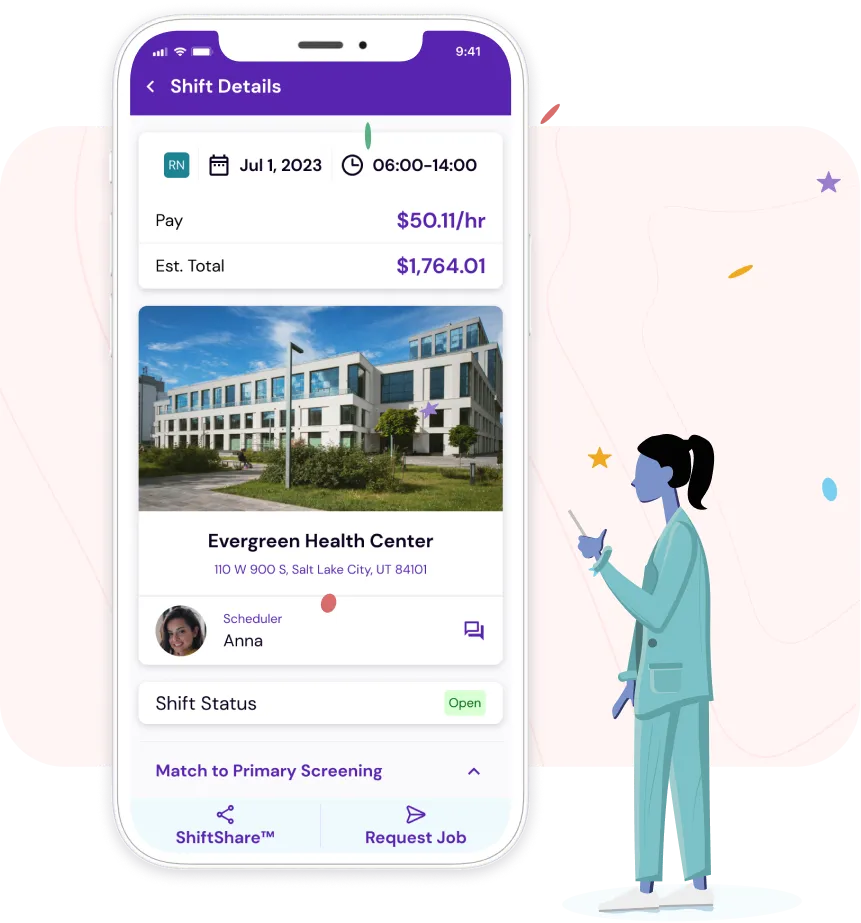
If you want to work in rehabilitation on your terms, sign up with Nursa to pick up single shifts, book shift blocks, or apply for full-time and part-time jobs with facilities.
Sources: