

Explore PRN nursing jobs in Louisiana, which offer work flexibility and higher hourly rates. The state's unique healthcare landscape features coastal and Gulf health considerations, seasonal festival surges (e.g., Mardi Gras), and high demand in urban and regional centers. Nurses gain professional development and work-life balance using the Nursa app to find shifts.
Louisiana
Jump to section on this page

Anchor Link

PRN nursing in Louisiana: Work with flexibility
Ready to switch rigid schedules for flexible PRN nursing jobs in Louisiana, but don’t know where to start?
Are you interested in learning what Louisiana has to offer?
Louisiana offers an unmatched blend of coastal care complexity, culture-rich cities, rural community medicine, and festival-season surges that create seasonal peaks in clinical demand.
Nurses can find a strong variety—high acuity metro environments, unique Gulf health considerations, and community hospitals that rely heavily on adaptable staffing.
What makes nursing in Louisiana a unique experience?
Nursing practice in the state is significantly influenced by unique regional factors that affect clinical demand, patient presentation, and workflow complexity. Understanding these nuances is key for any clinician considering nursing jobs in Louisiana, especially those focusing on PRN work.
Festival and event-driven surges
Louisiana's cultural calendar, most notably the Mardi Gras nursing surge in the New Orleans metro area, as well as numerous regional events and festivals, precipitates seasonal peaks in clinical demand.
These surges drive an urgent need for flexible staffing in emergency rooms (ERs) and urgent care settings, as well as an increased requirement for resources in medical-surgical and telemetry units.
Coastal and Gulf health considerations
The proximity of the Gulf Coast introduces clinical considerations related to environmental exposures, regional infectious disease patterns, and hurricane preparedness. This environment necessitates a heightened level of clinical adaptability and a strong understanding of community health challenges.
The culture of coastal care in Louisiana mandates that facilities are frequently in a state of readiness, impacting staffing models and opening the door for PRN work opportunities for registered nurses (RNs), licensed practical nurses (LPNs), and certified nurse aides (CNAs).
Metro versus regional contrasts
Nursing in urban academic centers, hospitals, and medical centers in major transport hubs offers high-acuity, complex case mixes.
This contrasts sharply with the practice in community hospitals and long-term care (LTC) facilities in less populated areas. These regional facilities often rely heavily on adaptable PRN staffing to cover essential shifts and maintain continuous service.
Culture of community rapport
A strong heritage of culture, food, and music influences the care environments across the state, requiring clinicians to approach patient interaction with sensitivity to community history and traditions.
These elements combine to make Louisiana an environment where flexibility is paramount, making PRN shifts an ideal fit for clinicians who excel in dynamic settings.
The nursing landscape and demand trends across Louisiana
The underlying structure of the Louisiana healthcare system dictates where the demand for RN, LPN, and CNA jobs is most heavily concentrated. Strategic use of flexible staffing is a core solution to the persistent challenges of the nursing shortage in Louisiana.
Snapshot of the nursing workforce
Here is some data to give an idea of the Louisiana nursing workforce according to the Louisiana State Board of Nursing:
- RNs who are 60 years and older represent 18% of the workforce.
- RNs who are 50 years and older reach 38%.
- RNs between 30 and 39 represent 25%.
- Minorities comprise 24% of Louisiana’s RN workforce.
- 75% of Louisiana’s RN workforce works full-time.
- RNs with part-time jobs comprise 7% of the nursing workforce in Louisiana
- PRN clinicians also comprise 7%.
Additional workforce data from other sources:
- According to the Health Resources and Services Administration, by 2030, the supply of RNs will meet 86% of the demand.
- By 2030, the workforce will have a surplus of 2,050 LPNs.
- According to the Louisiana Board of Regents, there is a demand for nurse faculty in order to admit more students to nursing programs.
Where demand is geographically focused
Demand for clinical staff is particularly high in key areas across the state:
- Major metro areas: Cities like New Orleans, with its complex medical centers and hospitals, and Baton Rouge, with its concentration of academic and regional facilities, consistently require staffing support. These areas see high patient volumes and a breadth of specialties.
- Coastal and tourism hubs: The Gulf Coast nurse workforce faces unique pressures due to the demands of the seafood, oil, and tourism industries, which can result in spikes in injury and illness presentations.
- Regional community facilities: Rural hospitals and regional LTC facilities often struggle with recruitment and retention, creating continuous, predictable demand for PRN shifts in Louisiana to cover core operational needs. Clinicians seeking positions outside the largest metropolitan areas can find opportunities in places like Covington, Alexandria, or Hammond.
Implications of seasonal surges and specialized care
Seasonal patient surges necessitate flexible staffing to prevent burnout and maintain quality of care. The nursing demand in Louisiana during the festival season is a primary example of a predictable peak:
- ER, urgent care, and med-surg: During major events, ERs and urgent care centers experience a rapid influx of patients due to accidents, acute illness, and intoxication. Medical-surgical (med-surg) units, which are often the default receiving unit for admitted patients, require increased staffing to handle the throughput.
- Intensive care unit and telemetry: High-acuity units, including the intensive care unit (ICU)—a common specialty for PRN work—and telemetry units, also see increased pressure. Telemetry nurses are essential for monitoring patients who require continuous cardiac surveillance, a critical function for managing post-event admissions.
Furthermore, LTC nursing jobs in Louisiana are in high demand due to an aging population and high utilization of skilled nursing facilities (SNFs) and other long-term care facilities statewide. Behavioral health and substance use care demand is also a significant factor, requiring specialized staffing solutions.
Nursing roles and Louisiana workforce dynamics
The clinical workforce in Louisiana, like that in other states, is composed of various licensed and certified professionals. Understanding the official terminology and the varied scope of practice is crucial for any clinician looking for work.
Official terminology for certified roles
It is important to use the correct professional titles recognized by the state. In Louisiana:
- Certified nurse aide: This is the official title in Louisiana (other states often use the term certified nursing assistants). CNAs provide essential direct care under the supervision of a licensed nurse.
- Medication attendant certified (MAC): This is the official title for the role sometimes referred to as certified medication aide (CMA) or similar terms in other states. The MAC is a CNA who has completed additional, specific training to administer certain medications in licensed long-term care facilities (LLCFs), such as nursing homes and adult residential care providers. This role operates under the delegation and direct supervision of a licensed nurse.
MACs interested in PRN opportunities in Louisiana can browse med aid jobs here.
RN and LPN roles
A registered nurse has the broadest scope of practice, involving comprehensive assessment, care planning, and clinical decision-making.
A licensed practical nurse provides basic patient care, often focusing on technical skills and patient comfort, under the supervision of an RN or physician.
RN and LPN jobs in Louisiana can be found across all settings, but the responsibilities differ significantly between urban academic centers and rural clinics.
PRN roles
PRN nursing jobs in Louisiana are uniquely positioned to fill the seasonal and surge variance gaps.
A clinician working flexible shifts may pick up a week of nursing shifts in a major medical center to support the Mardi Gras surge and then pick up PRN jobs at an LTC nursing facility in another city in Louisiana the following month.
PRN nursing in Louisiana requires adaptability, as clinicians often float between settings or pick up shifts in different types of facilities. This cross-setting flexibility broadens a clinician’s experience and skills.
Where nurses work in Louisiana: Primary settings
The array of healthcare facilities in the state provides a wide spectrum of practice environments for clinicians wondering where to pick up nursing shifts in Louisiana.
- Urban academic centers and hospitals in Louisiana: These shifts are typically found in high-volume environments, such as those found in New Orleans or Metairie. They offer experience with high-acuity patients, advanced technology, and complex case mixes. For RNs, these settings often include specialties such as the intensive care unit and the emergency room.
- Community hospitals: Essential to regional care, these facilities often require nurses who are capable of managing a broad case mix and functioning effectively in a setting where resources may be more limited than in a large teaching hospital in Louisiana.
- Skilled nursing and LTC facilities: These facilities are high-utilization settings in Louisiana. LTC nursing job offers involve managing chronic conditions, rehabilitation, and long-term care needs. These facilities also serve as primary workplaces for CNAs and MACs.
- Rehab and recovery centers: Given the need for behavioral health and substance use care, these centers are important practice locations, particularly in metro and suburban areas like Harvey or Central.
- Urgent care and ER surge sites: These locations are central during peak tourism times and the festival season. For clinicians seeking high-impact, short-term work, these sites offer significant opportunities for flexible shifts.
High-level licensing overview for practicing in Louisiana
To legally practice and secure PRN nursing jobs in Louisiana, clinicians must hold the appropriate credentials. This section provides a high-level overview of the requirements.
Licensure and state authority
The Louisiana Boards of Nursing (the Louisiana State Board of Nursing for RNs and the Louisiana State Board of Practical Nurse Examiners for LPNs) are the governing authorities that issue and regulate licenses.
- License types: These boards oversee licenses for RNs and LPNs. For certified personnel, such as CNAs and MACs, the Louisiana Department of Health (LDH) maintains the registries.
- Compact participation: Louisiana is a member of the Nurse Licensure Compact (NLC), which allows nurses who hold a multistate license from another compact state to practice in Louisiana without obtaining a separate Louisiana license.
- Verification: Clinicians should maintain active and unencumbered licensure. (The Nursa app conducts recurring license verification.)
PRN shifts offer an excellent strategy for nurses who are moving to the state. Nurses can utilize temporary nursing jobs as a means of earning income and becoming familiar with local facility environments in Louisiana while completing the necessary steps for permanent licensure or reciprocity.
Economic factors and work flexibility considerations
For nurses in Louisiana, embracing work flexibility through PRN shifts offers significant financial and professional benefits, particularly in a state with diverse local economies.
Financial flexibility through PRN jobs
Flexible scheduling allows clinicians to manage their finances strategically:
- Extra income: Flexible nursing shifts in Louisiana enable clinicians to work extra hours without the constraints of traditional overtime or the long-term commitments associated with a travel contract. This is an effective way to boost household income or save for large purchases.
- PRN hourly rates: Clinicians working PRN often benefit from higher hourly rates than internal staff nurses. PRN jobs might be among the highest-paying in Louisiana.
- School and family responsibilities: The ability to choose shifts that accommodate educational pursuits, family needs, or a second job is a primary benefit of flexible nursing shifts in Louisiana. This control makes a significant contribution to achieving a work-life balance.
Clinical exposure and career management
Working PRN nursing jobs in Louisiana allows clinicians to manage their professional development:
- Broadening clinical experience: Nurses can work across multiple types of settings, from major hospitals to small, regional healthcare facilities in Louisiana. This broad exposure helps develop a wider skill set and better understand the overall patient flow in the region.
- Higher shift availability: Certain specialties, such as ER, ICU, or LTC, may experience consistently high demand, especially during peak seasons or when specific certifications are required. The highest demand areas are excellent sources of ongoing PRN work.
Pay context, cost of living, and earning potential
The earning potential for nurses in Louisiana is influenced by geographic location, the specific care setting, and the employment model.
Regional pay variation
Pay rates for staff positions vary across the state, with major metro areas like New Orleans and Baton Rouge typically offering a higher base rate than smaller, more rural areas. However, considering the overall cost of living in Louisiana, that advantage shifts when looking at affordability.
- Cost of living: While cities like New Orleans have a higher cost of living, many non-metro areas are the cheapest places to live in Louisiana. This allows nurses working flexible shifts to stretch their earnings further.
- PRN maximization: Clinicians who pick up PRN nursing jobs in Louisiana strategically can maximize their take-home earnings. By earning a higher rate for in-demand shifts, the clinician is in a better position to capture the financial advantages of the region.
Want to know how nurse pay in Louisiana compares to the rest of the country? Check out this state-by-state nurse salary comparison guide.
Influence of seasonal demand
Seasonal and event-driven patterns have a pronounced impact on shift rates. The spike in patient volume during Mardi Gras or periods of intense healthcare needs due to weather events typically leads to increased hourly rates for emergency preparedness nursing shifts in Louisiana.
Nurses using Nursa to find PRN shifts in Louisiana have real-time visibility into these higher-paying opportunities.
Skills and clinical strengths that benefit Louisiana nurses
Success in Louisiana’s dynamic healthcare environment depends on more than just core clinical competence. Specific soft and hard skills allow clinicians to integrate effectively into the local practice environment.
Rapid assessment and stabilization
Given the high acuity in metro centers and the rapid-onset patient volumes during festival periods, the ability to perform rapid assessment and stabilization is crucial. This is particularly relevant in the emergency room setting.
Flexible case mix adaptability
The difference in patient presentation between a coastal regional facility and an urban teaching hospital is substantial. Nurses must demonstrate flexible case mix adaptability and be comfortable floating to various units, such as medical-surgical or telemetry, as demand dictates.
Cultural communication awareness
A deep understanding of the local culture and the ability to communicate respectfully and effectively with diverse patient populations and their families are essential for building community rapport.
Comfort with event-driven peak volume
Nurses who thrive in a fast-paced environment and maintain composure during high-volume periods, such as those caused by the nursing demand during festival seasons in Louisiana, are highly valued by facilities.
Chronic and acute co-management competency
Nurses in Louisiana frequently care for patients presenting with complex chronic conditions alongside acute issues. Competency in co-managing these issues is a core strength.
Culture and lifestyle draw clinicians to Louisiana
Beyond the professional challenges, Louisiana offers a distinctive quality of life that attracts and retains clinical staff. This professional lifestyle often provides an ideal environment for nurses who prioritize work-life balance.
Strong cultural identity
The state's unique cultural identity, centered on its history, food culture, music, and sense of place, offers a rich and uplifting personal lifestyle. Nurses find opportunities for cultural engagement and community participation everywhere, from Lafayette to Metairie.
Dynamic practice variety
Louisiana offers perhaps the most diverse range of practice options in the Gulf South, encompassing highly specialized medicine, complex disaster preparedness, and community health. This makes it a great state for clinicians who value a professional experience that is never static.
Lifestyle built around seasonality
By choosing PRN nursing jobs in Louisiana, clinicians can structure their career around the state’s natural and cultural seasonality. A nurse may elect to work intensively during the Mardi Gras nursing surge or take on shifts during harvest seasons and then take time off during slower periods to enjoy personal time. This allows for a self-determined career and life schedule.
Nurses seeking the best cities for nurses in Louisiana often look for a blend of strong hospital systems and rich cultural life.
Why work PRN in Louisiana with Nursa?
Nursa is a platform that connects clinicians with healthcare facilities in Louisiana, giving clinicians ultimate control over their schedules and professional lives. Using Nursa in Louisiana is the most direct way to capitalize on the state’s staffing dynamics.
Maximizing seasonal earnings
The ability to see and claim shifts during festival seasons in Louisiana is a unique earning and experience advantage. Clinicians maximize their income options by securing these high-demand shifts first.
Year-round flexibility and consistency
Whether a clinician is seeking short-term, intensive work or wants to supplement a full-time staff position with PRN shifts, Nursa provides the platform to achieve either goal.
Variety of care environments
Nursa provides real-time visibility into the shifts available across all care environments—from coastal regional hospitals to urban long-term care facilities. Clinicians can choose to work in various settings, aligning their clinical interests with available job opportunities.
Control over work
By focusing on the Nursa platform, clinicians regain control over their work life. They request shifts based on the setting, the time, and the compensation, freeing them from facility mandates and rigid scheduling.
Louisiana PRN shifts: How clinicians join with Nursa
The process for taking advantage of PRN nursing jobs in Louisiana is streamlined and centered on the clinician’s preferences.
- Sign up and credential verification: Clinicians create profiles and upload their licenses and certification documents. The platform verifies credentials, including those for RNs, LPNs, CNAs, and MACs, ensuring compliance with the state Board of Nursing standards.
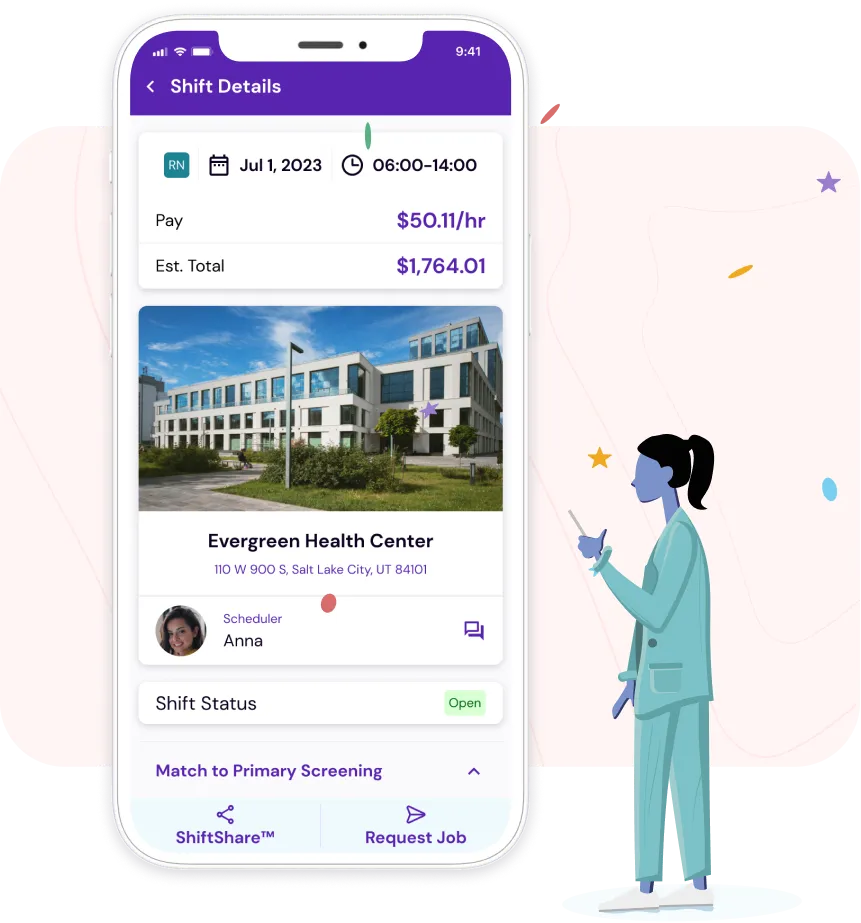
- Real-time shift visibility: The platform provides real-time visibility into shifts across the entire state. Nurses can easily filter to see where to pick up nursing shifts in specific cities in Louisiana, such as New Orleans, Metairie, or Alexandria, or in their preferred specialties.
- Claim and work: A clinician can select a shift that matches their schedule, income goal, and preferred facility type. They can choose to supplement income seasonally to take advantage of the high rates during the Mardi Gras nursing surge, or maintain a schedule of consistent shifts year-round.
- Get paid: After working the shift, payment is processed quickly, ensuring that the financial benefit of flexible work is realized efficiently.
This simple process enables Louisiana nurses to fully utilize the flexibility and premium earning potential that the state's dynamic healthcare landscape has to offer.
Sign up for PRN shifts in Louisiana today
Louisiana offers numerous job opportunities for nurses, is rich in culture, and boasts a low cost of living.
Choosing PRN nursing jobs in Louisiana means deciding to open the door to a better work-life balance, gain more flexibility, and take control of your schedule.
Nursa helps achieve those goals by providing an open nurse marketplace that allows clinicians to connect with various facilities, enabling them to choose the shifts that best align with their preferences.
Louisiana nurses can choose when and where to work—year-round or during seasonal surges like Mardi Gras and peak tourism periods.
Sources:
Share this page:


GO BEYOND A SINGLE JOB
Nursa isn't just about finding a job; it's about crafting your ideal work schedule by selecting shifts. Once you create a Nursa profile, you will experience the convenience of scheduling shifts in real-time.
Loading shifts…
Completed! We will notify you when we have desired shifts for you.
Until then, you can continue with the app to signup or login.
Continue
Until then, you can continue with the app to signup or login.
Oops! Something went wrong while submitting the form.
See More Shifts and Apply Now
Explore and find where you would like to work
Search ShiftsPer Diem JobsPopular Topics
Start exploring PRN jobs opportunities here
These quick links are here to streamline your search and discover a range of opportunities tailored to your preferences.
Interested in healthcare shifts?
Apply for Jobs
Pick Up a Job Today
Find per diem PRN job opportunities in your area. High paying CNA, LPN and RN and many more licences are available now.
Join Nursa
Post Your Jobs Today
Facilities who use Nursa fill 3 times as many open per diem shifts, on average, compared to trying to fill the shifts themselves.
Post Jobs