

Driven by a significant nursing shortage and a high chronic disease burden, Kentucky's healthcare landscape offers abundant per diem (PRN) shifts—especially in rural areas and regional medical centers—allowing clinicians to achieve better work-life balance and capitalize on the state's affordable cost of living.
Kentucky
Jump to section on this page

Anchor Link

What do you need to work, practice, and pick up shifts as a nurse in Kentucky?
Kentucky blends small-town community values with stunning landscapes, a deeply rooted nursing culture, and a strong demand for clinicians willing to work across rural, suburban, and regional hospitals.
Your guide to nursing in Kentucky
In Kentucky, nurses play a central role in preventing and managing chronic disease while supporting an aging population and underserved rural communities.
In this guide, find information about:
- Kentucky nursing jobs
- Workforce trends
- Economic factors
- Lifestyle considerations
- Per diem opportunities in Kentucky with Nursa
Whether you're an experienced nurse, a newly licensed clinician, or exploring per diem nursing jobs in Kentucky, taking the time to understand the local landscape, roles, licensure, and flexible work opportunities can set you up for success.
What’s unique about nursing in Kentucky?
.jpg)
Community is deeply ingrained in Kentucky’s culture, particularly within small-town and rural healthcare settings. This ethos permeates nursing practice through a steadfast commitment to patient-centered care.
Nurses usually get to know patients and families over time, further developing trust, which can lead to better adherence to treatment plans and improved outcomes.
The nursing philosophy of Kentucky reflects the following values:
- Empathetic communication
- Cultural sensitivity
- Personalized education
Ultimately, this community approach creates a meaningful professional practice environment, in contrast to the high-volume models often found in metropolitan areas.
Community-based care
The state of Kentucky faces a pronounced nursing shortage, primarily in Appalachian and other rural healthcare regions, where workforce recruitment and retention are most challenging.
According to the Kentucky Board of Nursing, these areas of the state lack sufficient nursing clinicians, fueling high demand and opening doors for nurses willing to serve in these settings.
Rural and regional demand
The demand for PRN nursing jobs is amplified across Kentucky due to a dual dynamic. Large city regional medical centers, such as Louisville and Lexington, are key in supplementing rural staffing shortages.
These major centers require flexible nursing shifts to maintain high-quality care without excessive overtime for their permanent staff. This combined need creates significant opportunities for per diem nurses across all facility types.
Chronic disease burden
Kentucky consistently ranks among states with the highest rates related to chronic diseases, including heart disease, diabetes, and obesity. The Kentucky environment of chronic disease care significantly influences the responsibilities of nurses.
For example:
- Nurses are very important in managing complex medication regimes, monitoring symptoms, and educating patients about lifestyle modifications.
- Clinicians practicing in outpatient clinics, specialty centers, and hospitals should know disease-specific protocols and transitions of care.
- Long-term care (LTC) facilities depend on nurses to provide care for multiple comorbid conditions and to prevent hospital readmissions.
This high chronic disease burden requires nursing professionals who can perform strong clinical assessments, educate patients, and understand care coordination.
Growing interest in flexible work models
Across the country, more and more health professionals are looking for jobs that offer flexibility in scheduling and an improved balance between work and personal life. Clinicians also look for possibilities to make extra money.
Kentucky is no different, with growing interest in flexible nursing shifts in Kentucky and temporary nursing jobs in Kentucky models.
Per diem nursing shifts in Kentucky answer this need by allowing nurses to:
- Supplement their primary income without committing to overtime or travel assignments.
- Choose shifts that work well with school, family, and other life commitments.
- Acquire experience in a variety of settings and specialties that promote professional growth.
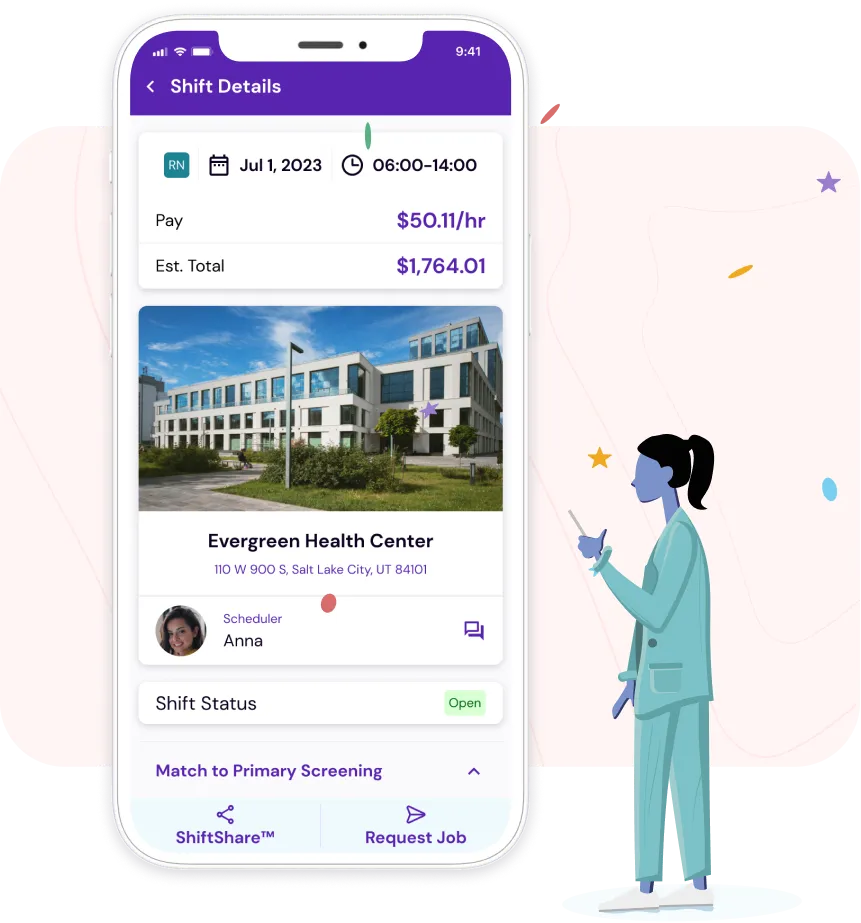
Apps like Nursa in Kentucky make access to these PRN shifts in Kentucky easier, as it shows real-time openings across hospitals in Kentucky, clinics, and long-term care facilities.
What are the primary nursing roles in Kentucky?
Healthcare facilities in Kentucky require a spectrum of nursing professionals to meet population needs. By understanding the primary nursing roles, where they are most likely found, and employer priorities, clinicians can make strategic career decisions:
Kentucky registered nurse (RN) jobs
RNs are the backbone of care delivery for acute and specialty services.
They practice in:
- Hospitals: Community hospitals in Kentucky providing emergency, medical-surgical, telemetry, and intensive care
- Medical centers: Kentucky's regional medical centers managing high-acuity patients
- Outpatient clinics: Outpatient specialty clinics offering education regarding chronic disease care in Kentucky management
- Post-acute care: Long-term care (LTC) and skilled nursing facility (SNF) settings, coordinating care plans, and supervising nursing assistants
Often, RNs in the state of Kentucky are expected to exhibit strong clinical judgment, skills in managing complex care, and leadership in interdisciplinary teams.
Kentucky licensed practical nurse (LPN) jobs
LPNs thrive in rural healthcare in Kentucky.
Some of the places in Kentucky where LPNs can work and are in high demand include:
- LTCs and SNFs, where they provide hands-on patient care and administer medications under the supervision of RNs
- Rural healthcare facilities, where they are also often tasked with broader nursing responsibilities (that remain within their scope of practice), given the limited size of staff teams
Nurse aides and medication aides
These are tightly regulated roles in Kentucky that provide essential support to nursing care, not only in post-acute care settings but also in hospitals:
- SRNA vs. CNA: In Kentucky, certified nursing aides (CNAs) are officially recognized as State Registered Nurse Aides (SRNAs). They provide basic patient care, including assistance with hygiene, feeding, and mobility. The Kentucky Board of Nursing maintains the registry for these professionals.
- Certified medication aides (CMAs): The state also certifies CMAs (specifically CMA I and CMA II). This is a separate designation that permits SRNAs, after additional training, to administer certain medications under the supervision of a nurse.
With high patient dependency rates, healthcare facilities in Kentucky rely on SRNAs/CNAs and CMAs, so these are essential—and often available—positions.
Clinicians desiring to work as a med aide in Kentucky should check specific CMA requirements and certification processes through the Kentucky Board of Nursing.
The nursing landscape and demand trends across Kentucky
What are the common trends for nurses and nursing professionals across Kentucky?
Rural access care challenges
While rural healthcare in Kentucky demonstrates strong community support, it faces challenges, including geographic isolation and transportation barriers to healthcare. These are not just deficits; they are signs of opportunity:
- Many nurses working in rural Kentucky healthcare have long-lasting relationships with their patients.
- These settings offer rich professional and personal fulfillment, often requiring a resilient and adaptable mindset.
Facilities and policymakers continue to recruit nurses, making PRN nursing jobs in Kentucky an important stopgap within critical access facilities.
High chronic disease burden shaping care needs
Kentucky's ranking among the top states for:
- Cardiovascular disease mortality
- Diabetes prevalence
- Chronic Obstructive Pulmonary Disease (COPD) and respiratory conditions
This drives demand for nurses versed in complex medication management, lifestyle coaching, and acute nursing interventions.
Aging population impact
Aging demographics in Kentucky propel demand for:
- Skilled nursing and LTC services
- Home health nursing
- Specialty roles in geriatric care
The density of the SNFs underscores the importance of LPN and SRNA/CNA jobs as first-line caregivers.
Care needs: Behavioral health and substance recovery
The opioid crisis continues to raise demand for nurses specializing in behavioral health, substance abuse treatment, and recovery programs. This demand is particularly high in rural areas with limited resources. PRN nurses specializing in behavioral health may find more opportunities.
Where does Kentucky need per diem nursing the most?
- Eastern Kentucky Appalachia: High rural acuity, burden of chronic disease, and workforce gaps
- Louisville and Lexington Metro: Large hospitals, medical centers in Kentucky, and specialty facilities with sizable PRN demand
- Regional medical centers in Kentucky: Often seek per diem nurses for critical care, telemetry, and surgical units
- LTC and SNFs statewide: Have a continuous need for SRNAs, LPNs, and med aides
Where to work in Kentucky: Key settings
Wondering where to find work in Kentucky?
Nurses in Kentucky can find work in community hospitals, regional medical centers, long-term care facilities, and more:
Community hospitals
These play a significant role in both rural and suburban care; they usually manage:
- Emergency care
- General medical-surgical patients
- Maternity and pediatrics in some areas
Community hospitals are often the backbone of Kentucky healthcare and provide various PRN shift opportunities.
Regional medical centers
Facilities like the University of Kentucky Albert B. Chandler Hospital act as tertiary care centers with:
- Specialized intensive care units (ICUs)
- Medical-surgical units
- High-volume telemetry and emergency services
- Specialty clinics
This is where nurses can often have access to the highest-paying nursing jobs in Kentucky, particularly PRN shifts that offer premium rates for specialty skills.
Post-acute care
LTCs and SNFs offer numerous Kentucky CNA jobs and Kentucky LPN jobs, particularly in PRN work that caters to fluctuating census and seasonal staffing needs.
Rural critical access facilities
These smaller hospitals require versatile clinicians who are comfortable working autonomously and often providing both inpatient and outpatient care.
Skills and clinical strengths that benefit nurses working in Kentucky
Nurses who thrive in Kentucky often possess a versatile toolkit tailored to the state's specific health needs:
- Chronic disease management: Proficiency in managing complex conditions like diabetes, COPD, and heart disease, which have higher prevalence rates in the region
- Rural autonomy: The confidence to work with leaner teams and limited resources in rural health clinics
- Health literacy education: The ability to explain complex medical terms simply to patient populations
- Adaptability: Comfort switching between fast-paced acute care and relationship-focused long-term care
Shift flexibility and acuity expectations
You can find per diem nursing shifts in Kentucky with the help of Nursa. These roles allow clinicians to customize their work-life balance, but they also require adaptability.
Per diem nurse jobs in Kentucky often come with:
- Variety in shift length, with 8-hour and 12-hour shifts being common.
- Exposure to diverse acuity levels, ranging from stable patients in LTCs to high-intensity care in ICUs and ERs.
- Flexibility to select shifts that align with the clinician’s competency, availability, and preference.
PRN clinicians must be discerning to pick up shifts in settings that are within their experience and capabilities, and maintain consistent quality of care despite variable schedules.
Licensing overview for practicing in Kentucky
.jpg)
Kentucky is a nursing licensure compact state, which makes practicing across the participating state border easier.
Basic steps to licensure
To gain licensure in Kentucky, nurses need to:
- Complete an approved nursing education program.
- Pass the NCLEX-RN or the NCLEX-PN for RNs or LPNs, respectively.
- For SRNAs and CMAs, complete state-approved certification courses.
- Submit licensure application and pay required fees.
- Maintain continuing education and renew licenses according to state requirements.
Clinicians should check licensure information on the updated Kentucky Board of Nursing website.
Economic factors and work flexibility considerations
How much will I earn if I live as a nurse in Kentucky?
Nurses should consider economic and work-related scenarios before committing to living in a new state. Living and working as a nurse in Kentucky offers a unique economic proposition. While raw salary figures are often lower than in high-cost coastal states, the "real wage" value is often significantly boosted by Kentucky's affordable cost of living—approximately 8-11% lower than the national average.
Let’s take a look at some other factors to consider.
Financial flexibility without long hours or travel
Kentucky’s healthcare landscape is increasingly relying on flexible staffing models.
- Burnout reduction: PRN and part-time roles allow clinicians to bypass mandatory overtime and the exhaustion of 60-hour workweeks.
- Retention: By controlling their own schedules, nurses often report higher job satisfaction and better work-life balance.
- Localized work: Unlike travel nursing, which requires long stints away from home, local per diem shifts in Kentucky allow you to earn premium rates while sleeping in your own bed every night.
Managing school, second jobs, and family responsibilities
Flexible nursing shifts in Kentucky are designed to support a multifaceted life:
- Students: Those pursuing a degree can schedule shifts around exams and clinical rotations.
- Caregivers: Nurses balancing childcare or caring for aging parents can choose shifts that align with school runs or family obligations.
- Side income: Professionals with a primary job can pick up single shifts to pay down debt or save for vacations without the commitment of a second permanent position.
Broadened paid clinical exposure across various settings
Kentucky allows for a diverse application of licensure.
Clinicians can work across various settings to expand their skill sets:
- Hospitals: High-acuity experience in urban centers and critical access facilities
- Long-Term Care (LTC): Building relationships with geriatric populations in skilled nursing facilities
- Outpatient/Rural Health: Gaining autonomy and broad diagnostic skills in community clinics
Seasonal shift variability
Kentucky has distinct seasonal health trends that drive demand for PRN shifts:
- Respiratory season (Fall/Winter): Hospitals often see surges in respiratory/med-surg units due to flu and RSV, increasing demand for RNs and LPNs.
- Allergy & asthma season (Spring): Kentucky’s high pollen counts can lead to increased outpatient and urgent care visits.
- Summer activity: Outdoor recreation in areas like the Red River Gorge increases demand for emergency and trauma support, as well as seasonal roles for camp nurses.
Salary expectations in Kentucky
Salaries vary by location (urban vs. rural), experience, and facility type. The following salary guides present market averages, based on level of licensure and state.
Lifestyle, culture, and professional fit for nurses
Kentucky offers nurses distinct advantages when it comes to work-life balance, mental health, recreation, and family life. Beyond the workplace, the state provides a supportive environment that blends relaxation with vibrant culture.
Natural beauty and outdoors
Kentucky is an ideal destination for nurses who recharge in nature or enjoy cultural exploration.
Highlights include:
- Outdoor recreation: Extensive opportunities for hiking, camping, and boating in areas like the Red River Gorge and Lake Cumberland
- The Bourbon Trail: World-famous tours that explore the history and craft of America's native spirit
- Arts and culture: Access to authentic Bluegrass music festivals and diverse local cultural events
Slow-paced communities
For those seeking a break from the high-stress "rat race," Kentucky offers a refreshing change of pace.
- Community values: Many towns prioritize family, continuity, and preservation of local traditions
- Nursing environment: These values are often reflected in the nursing culture, where patient care is relationship-based
Underrated urban pockets
Kentucky is not just rural landscapes; it boasts unique urban environments that offer robust economic and nursing opportunities:
- Lexington: Known as the "Horse Capital of the World," offering a blend of agricultural wealth and city amenities
- Louisville: A hub of urban rebirth, culinary excellence, and major healthcare systems
- Bowling Green: An emerging economy providing new growth and distinct professional opportunities
Why choose Nursa for your per diem shifts in Kentucky?
Kentucky nurses can thrive when they have control over their schedules. Nursa connects clinicians to opportunities that meet rural and regional staffing needs while empowering them to prioritize their personal lives.
Using Nursa offers clinicians several distinct advantages:
- A mobile-friendly platform for real-time access to shifts across the state
- The ability to supplement income without committing to a set schedule or travel
- Accommodation for diverse life situations, such as family obligations, school schedules, and career transitions
- Exposure to a variety of clinical settings, preventing burnout, and broadening skill sets
- Same-day availability that offers greater visibility into shifts in rural and underserved regions
Clinicians have the opportunity to choose when, where, and how often they want to work in Kentucky.
Join Nursa to access real-time per diem nursing shifts in Kentucky across the state on your schedule, on your terms.
Sources:
- Preventing Chronic Disease: Prevalence of Overweight, Obesity, and Comorbid Conditions Among U.S. and Kentucky Adults, 2000–2002
- Martin-Gatton College of Agriculture, Food, and Environment: Aging 2023 Population Estimates
- How do I Become a State Registered Nurse Aide (SRNA) - KBN
- Cost of Living in Kentucky 2026 | RentCafe
Share this page:


GO BEYOND A SINGLE JOB
Nursa isn't just about finding a job; it's about crafting your ideal work schedule by selecting shifts. Once you create a Nursa profile, you will experience the convenience of scheduling shifts in real-time.
Loading shifts…
Completed! We will notify you when we have desired shifts for you.
Until then, you can continue with the app to signup or login.
Continue
Until then, you can continue with the app to signup or login.
Oops! Something went wrong while submitting the form.
See More Shifts and Apply Now
Explore and find where you would like to work
Search ShiftsPer Diem JobsPopular Topics
Start exploring PRN jobs opportunities here
These quick links are here to streamline your search and discover a range of opportunities tailored to your preferences.
Interested in healthcare shifts?
Apply for Jobs
Pick Up a Job Today
Find per diem PRN job opportunities in your area. High paying CNA, LPN and RN and many more licences are available now.
Join Nursa
Post Your Jobs Today
Facilities who use Nursa fill 3 times as many open per diem shifts, on average, compared to trying to fill the shifts themselves.
Post Jobs