Congratulations—you've landed a travel nursing assignment! Now comes the part that trips up even experienced travelers: figuring out what to actually bring.
Pack too much, and you're hauling around things you'll never use. Pack too little, and you're scrambling to find basics in an unfamiliar city.
This guide covers everything travel nurses need to know about luggage, packing strategies, and what not to forget before your first (or next) assignment.
Does your housing affect what you pack?
One of the most important packing decisions starts before you even open a suitcase—understanding what your housing will provide.
Agency-provided housing
Some agency-provided accommodations come fully stocked with pots, pans, bedding, towels, and even a TV. Others offer little more than furniture.
Before accepting agency housing, ask your recruiter for a complete list of what's included. Knowing this up front will save you from overpacking—or from arriving to find you have no cookware for a 13-week assignment.
Short-term rentals and extended-stay hotels
These accommodations, such as Airbnbs and furnished apartments, are popular options for travel nurses. Short-term rentals tend to be well-equipped, but confirm the details in advance.
Amenities vary by property, and assumptions can leave you without something you really need.
RV and camper accommodations
Many travel nurses who own RVs or campers keep the essentials packed between assignments and only swap out a few items. It's one of the more convenient arrangements once you have the packing system down.
How long is your assignment?
Travel nursing contracts typically run 8 to 13 weeks, though shorter and longer placements exist. Your assignment length should directly influence how much you pack.
For a shorter stint, a minimalist approach makes sense—you're likely heading home after.
For longer assignments, or if you're planning to go back-to-back without returning home, you'll need to think about clothing rotation, resupply options in your destination city, and whether shipping items ahead is worth it.
What to pack based on your destination
Where you're going shapes what goes in your bag. Climate is the obvious factor—scrubs and swimwear for a Florida assignment, layers and waterproof gear for the Pacific Northwest or Alaska. But there's more to consider.
Think about what you'll do in your off hours:
- Are there hiking trails, beaches, or ski slopes nearby?
- Will you need outdoor gear or athletic equipment?
A good-quality backpack that doubles as a daypack for exploring is worth adding to your travel nurse packing list.
Research your destination before you leave, not after. Knowing the local weather patterns, terrain, and culture helps you pack outfits that work both on and off shift—rather than bringing things you'll never reach for.
The travel nurse's packing list
Whether you're heading to your first assignment or your fifteenth, packing smart makes the transition smoother. Here's everything you'll want to have on hand before you hit the road.
Documents and credentials (non-negotiable)
These are the items you simply cannot replace on short notice—keep them together in a dedicated folder or travel wallet so they're easy to grab and verify.
- Nursing license (and any compact state documentation)
- Travel nursing contract and agency recruiter contact info
- Driver's license, passport, social security card, and birth certificate
- Health insurance cards and any medication documentation
Work essentials
Be ready for your first shift and leave nothing to chance by taking:
- Enough scrubs for your typical workweek
- Personal medical accessories, such as a stethoscope
- Comfortable, supportive shoes for long shifts
Clothing strategy
You can't bring your whole wardrobe, and you shouldn't try. Focus on versatile, mix-and-match pieces. Neutral basics that work across multiple outfits are your best bet.
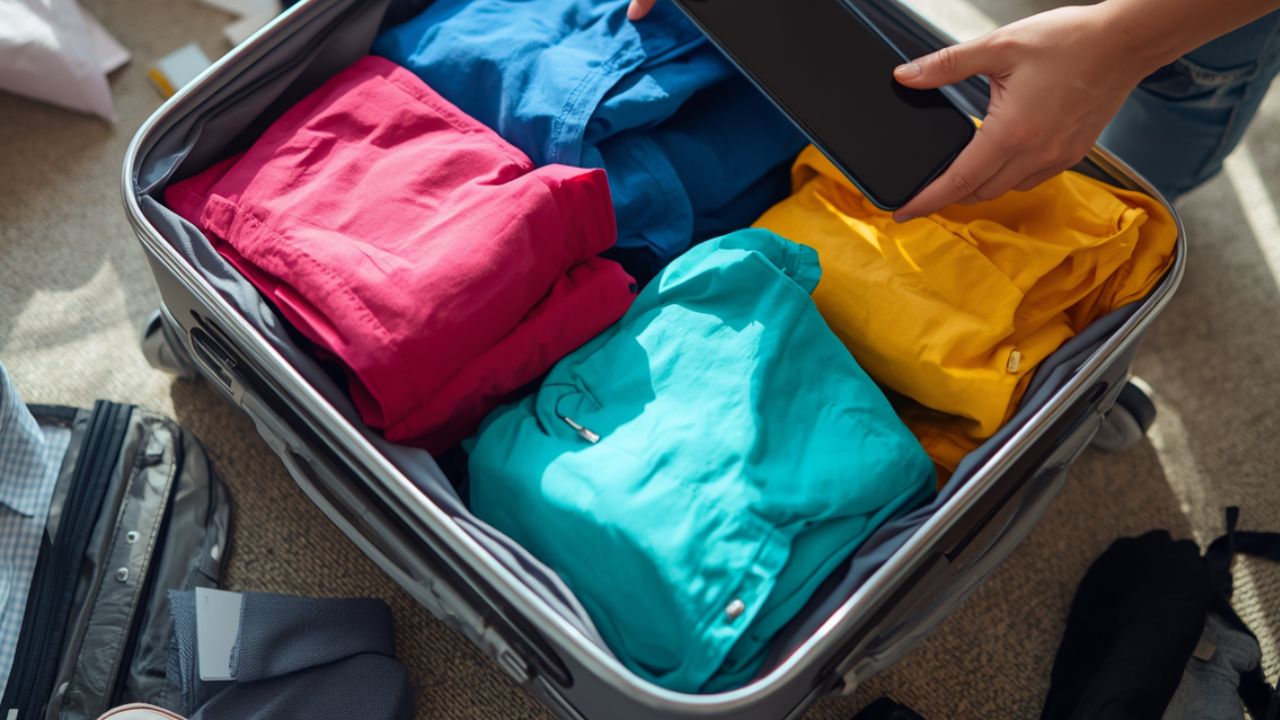
Rolling clothes compresses them and prevents wrinkles, making it a standard trick for experienced travel nurses.
Everyday essentials
The small stuff is easy to forget when you're focused on the big move, so add these items to your list:
- Toiletries
- Medications
- Electronics (don’t forget your chargers)
For nurses traveling with pets
Pack food and water bowls, leash, collar, toys, litter supplies (if applicable), and your pet's vaccination records.
Check your housing's pet policy well in advance—not all properties allow them.
How to choose the right luggage
The luggage you choose matters as much as what goes in it—here are a few things to look for.
Durability and weather resistance
Your bags may sit outside during loading, get rained on, or take a beating through multiple moves. Invest in quality—it pays off over multiple assignments.
Lightweight and versatile
Heavy luggage works against you, especially if you're flying. Lightweight duffels, packing cubes, and expandable suitcases give you flexibility.
Many travel nurses swear by large duffel bags that convert into backpacks—they're easy to carry and double as gear bags on days off.
Right-sized for your situation
If you're flying, know your airline's checked and carry-on limits. If you're driving, you have more flexibility but still benefit from staying organized.
A common approach among experienced travel nurses is taking 1 large rolling suitcase for clothing and essentials, 1 medium bag or duffel for work gear and extras, and a personal backpack for daily use.
Packing mistakes travel nurses should avoid
Even experienced travel nurses fall into these traps—a little awareness before you pack can save you a lot of frustration on arrival.
- Packing for every scenario: You won't use everything—pack for likely situations, not hypothetical ones.
- Forgetting to account for laundry access: Most housing has it; if it does, you need fewer clothes than you think.
- Skipping the list: Write down what you use daily for a week before your assignment. What you don't write down, you probably don't need.
- Forgetting to research housing before packing: This is the biggest one—knowing what your accommodations provide can cut your load in half.
Final tips for the road-ready nurse
Whether it's your first assignment or your fifteenth, a thoughtful packing approach makes for a smoother start.
Build a base list, customize it for your destination and housing, and refine it after each job. Most experienced travel nurses say it takes 2 or 3 assignments to really nail their system—so give yourself some grace and enjoy the process.
Ready to find your next assignment? The right agency makes all the difference in how smoothly you land—from housing support to contract clarity. Here's what to look for when choosing a travel nursing agency.
FAQs: Travel nurse packing
Here are answers to some of the most common questions nurses ask before their first—or next—assignment.
How many scrubs should a travel nurse pack?
Most experienced travel nurses pack 5–7 sets, which is enough for a full workweek without needing to do laundry midweek. Check your assignment's dress code first, as some facilities have color requirements.
Should I ship items to my travel nursing assignment?
If you're driving, shipping usually isn't necessary. If you're flying and have more gear than you can check, shipping 1-2 boxes ahead via a service like USPS Priority Mail can save on extra baggage fees and hassle.
What's the best luggage for travel nurses who fly?
Look for a hardshell carry-on that fits overhead bins, a large checked bag with spinner wheels, and a packable daypack. Keep your total bag count to 3 or fewer for easy management.
Do travel nurses need to bring their own medical equipment?
Usually, just personal items like your stethoscope. Most clinical equipment is provided by the facility. Confirm with your recruiter before packing anything bulky.


.jpg)



.jpg)