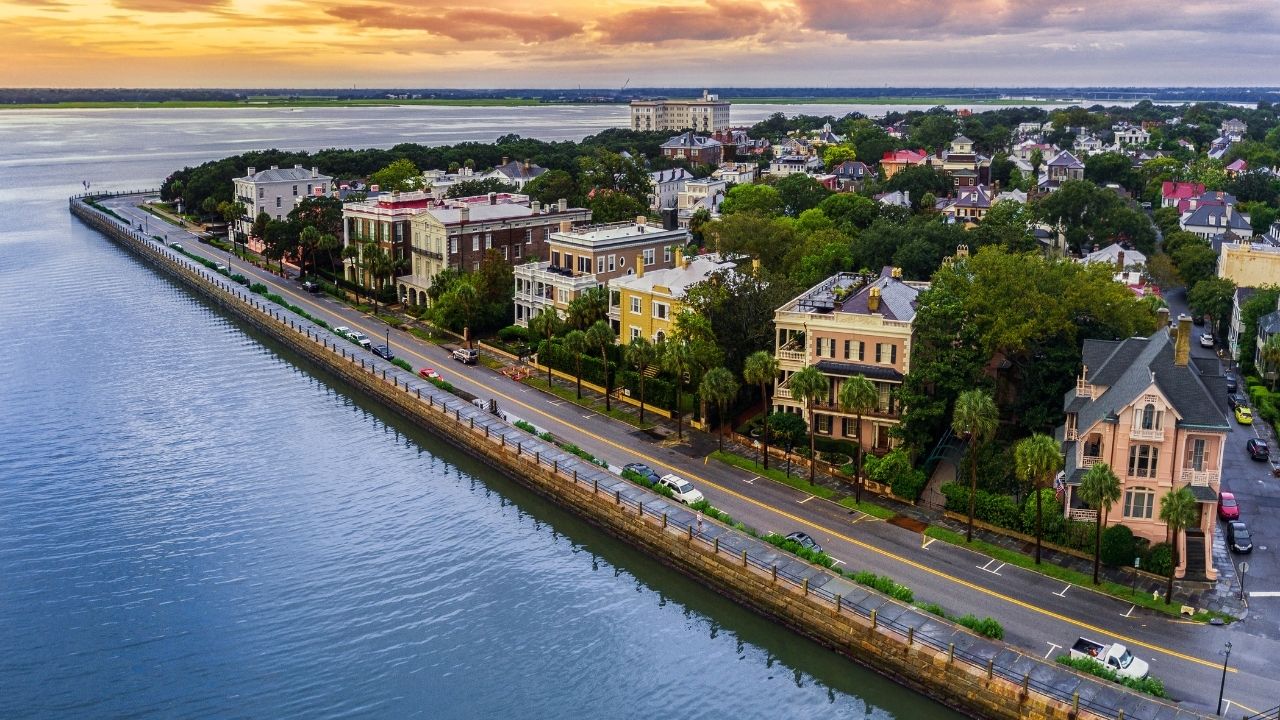
Whether you're a director of nursing, an administrator, or a scheduler at a Boise-area hospital, nursing home, or home health agency, choosing among healthcare staffing solutions in Boise, ID, starts with the local nursing market. That market is growing quickly.
Metro employers reported about 8,550 registered nurse (RN) jobs in May 2025, up from about 6,600 in May 2023. That pace points to rising demand for care across the metro—and to more employers competing for the same nurses when a shift opens.
Your options for healthcare talent in Boise
Most facilities mix 4 models, and the right blend of healthcare staffing options in Boise depends on how predictable your gaps are and how long they last.
Per diem shifts
Per diem staffing covers single shifts, such as weekend call outs or a sudden census spike. It gives facilities on-demand staffing for short, hard-to-predict gaps without a long commitment.
Watch out for continuity of care: Continuity-sensitive units do better with familiar faces, so look for a model that lets you rebook your favorite clinicians.
Float pool
A float pool is an internal group of experienced clinicians, often intensive care unit (ICU) or emergency room (ER) nurses, who move between units. It suits larger facilities that have a fluctuating patient census across departments and want flexible scheduling in-house.
Watch out for pool depth: A small float pool can run dry when several units surge at once, so size it to your census history rather than a typical week.
Block booking or travel
Block booking reserves the same clinician for a run of shifts, while travel contracts cover a gap for weeks or months. Both fit known, extended needs such as nurse leave coverage, a unit ramp-up, or the winter respiratory season.
Watch out for fixed commitments: A block or travel contract usually runs its full term, so a census that drops mid-contract still carries the cost.
Direct hire
Direct hire fills permanent full- and part-time roles and anchors your core team. It is usually the best fit for baseline census, and steady staff nurse recruiting helps a facility recover from sudden turnover.
Watch out for time-to-fill: Permanent roles usually take the longest to fill, so plan interim coverage for the gap.
Groups that manage sites around the metro can weigh these same 4 models in nearby communities such as Meridian and Eagle.
Local staffing insights for Boise
Boise's nursing workforce is growing, and so is the demand on it. These figures help facilities anticipate gaps rather than react to them.
Supply: Workforce, schools, and competing employers
- Nursing workforce: The Boise metro had about 8,550 RNs and about 3,790 nursing assistants in May 2025, and both groups grew over the past 3 years.
- Training pipeline: Metro schools, led by Boise State University, awarded about 640 associate and bachelor's nursing degrees in 2024-25. Statewide, about 91% of the roughly 1,280 first-time candidates for the RN licensing exam (NCLEX-RN) passed in 2025, compared with 86.7% nationally.
- Competing employers: St. Luke's holds about 40% of metro hospital beds, and Trinity Health, which operates Saint Alphonsus, holds about 29% (2023). Those 2 systems shape local wage expectations.
Demand: An aging, growing population
- Older residents: Residents 65 and older made up about 18% of the metro in 2025, and that group has grown about 26% since 2020, roughly double the pace of the total population.
- Projected openings: Idaho expects about 1,220 RN openings a year and 22% RN job growth from 2024 to 2034.
- Post-acute capacity: The metro has 24 skilled nursing facilities (SNFs), with about 14 certified beds per 1,000 residents 65 and older (2026).
Pay benchmarks: The range you compete within
The median RN wage in the Boise metro was $47.06 an hour in May 2025, above the Idaho median of $44.45 and just over the U.S. median of $46.90. The middle half of Boise RNs earned between about $39 and $49 an hour. That range sets the pay expectations a facility competes against when it recruits.
Seasonality: A long respiratory season
Idaho averaged about 9 weeks per season at high or very high respiratory illness activity from 2021-22 through 2025-26, compared with a median of about 7 weeks across states. The measure reflects flu, respiratory syncytial virus (RSV), and COVID-19 waves. Activity usually reaches high levels by mid-December, peaks around the turn of the year, and eases by late February.
What this means for your facility
Boise is adding nurses, but its growing older population and long respiratory season keep demand high. Facilities that staff core roles to the typical census and line up block coverage before December are better prepared for the winter peak. With 2 large systems shaping local pay, pricing roles near the metro median can help smaller employers stay competitive.
Staffing and compliance requirements in ID
Idaho's staffing rules below come from our guide to RN-to-patient staffing ratios by state, current as of March 4, 2026.
- Hospital staffing model: Idaho hospitals follow a sufficient-staffing model under IDAPA 16.03.14. A qualified RN directs nursing service, staffing patterns are documented monthly alongside census, RNs assign nursing care, and critical care areas have RN coverage 24 hours a day.
- Consecutive duty limit: Under the same rule, no one may be assigned nursing duties after being on duty in the facility for the preceding 12 hours, except in a declared emergency. Back-to-back shifts and block schedules need to account for that limit.
- Licensure: Idaho has been a Nurse Licensure Compact (NLC) member since Jan. 19, 2018, so nurses with an active multistate license may practice in Idaho. That matters when booking out-of-area clinicians for block or travel coverage.
- Background checks: Idaho participates in the Centers for Medicare & Medicaid Services (CMS) National Background Check Program, with its award made in June 2018 and a supplement in 2021.
- Federal nursing home rules: On Dec. 2, 2025, the U.S. Department of Health and Human Services (HHS) repealed the staffing provisions of the 2024 CMS minimum staffing rule. The federal floor still requires RN services for at least 8 consecutive hours a day, 7 days a week, and a licensed nurse on duty 24 hours a day.
These rules apply statewide, so facility groups with sites in Twin Falls or Pocatello plan under the same Idaho requirements.
How to match your strategy to your needs
Diagnosing the gap comes before choosing a model. These 5 questions point most facilities toward the right mix:
- Is the gap predictable, like a planned leave, or sudden, like weekend call outs?
- Will it last 1 shift, a few weeks, several months, or indefinitely?
- Does it require a specialty or unit-specific competency?
- How much does your census swing week to week and season to season?
- What are your current overtime rates and time-to-fill averages for open roles?
Build a hybrid model
Permanent staff covers baseline census, sized to a typical low-to-mid census from your history rather than your peak, and flexible models absorb the rest. A healthcare workforce management approach that tracks census next to staffing can make that flex layer easier to size.
Tailor by setting
Memory care, behavioral health, and pediatrics favor consistent faces through repeat per diem clinicians, block booking, or a float pool. High-acuity units need tighter credential matching to meet the staffing ratios or patterns they run.
Compare true cost, not hourly rates
Picture a 6-week leave covered by 3 RN shifts of 12 hours each per week, or 216 hours.
At Boise's middle-half RN wage range of $39.12 to $49.45 an hour (May 2025), base pay runs about $8,450 to $10,680. Covered as overtime at time-and-a-half, the same hours cost about $12,670 to $16,020 before burnout and turnover costs.
Recruiting fees and the cost of unfilled shifts, such as closed beds or diverted admissions, widen the gap further.
Track the metrics that show whether your mix works
Key metrics include fill rate, time-to-fill, overtime hours as a share of total hours, contingent staffing share, turnover, and cost per worked hour.
Facilities moving off manual scheduling often track these in a platform that can build compliant schedules in seconds. Operators with sites in nearby Caldwell can run the same comparison with their own census history.
Questions to ask healthcare staffing companies
Whether you are comparing healthcare staffing agencies in Boise or a marketplace platform, these questions keep the comparison even:
- How are credentials verified?
- What are the fill rates for my shift types?
- What is the cancellation policy?
- Can I request repeat clinicians?
- How do you handle Idaho requirements, such as the 12-hour consecutive duty limit?
How Nursa supports Boise facilities
Nursa is a workforce management platform, not an agency, and it is one option to weigh alongside the models above.
Clinicians who pick up shifts through Nursa work as independent contractors, while facilities that want to hire full-time nurses in Boise, ID, can post full-time jobs on the Nursa Marketplace as part of a broader healthcare recruiting strategy, using tools such as:
- Central Staffing: Builds compliant schedules from staff credentials, availability, preferences, and cost, and manages call outs, shift swaps, and time-off requests.
- Per diem marketplace: Shifts your team can't cover reach local, qualified RNs, licensed practical nurses (LPNs), certified nursing assistants (CNAs), and allied professionals.
- Auto-Schedule and the Favorites List: Instantly schedules clinicians from your Favorites List when they request your shifts, supporting continuity of care.
- Screening lists and credential verification: Custom screening lists set the credentials each shift requires, and Nursa verifies licenses through Nursys, nurse aide registries, or state databases and runs background checks.
- ShiftReady: Lets facilities share their own training materials with clinicians and track completion.
- Permanent positions with no hire-away fees: Post open roles that clinicians apply to directly, and hire favorite clinicians full-time without hire-away fees.
Sign up with Nursa to start building schedules, filling open shifts, and hiring for permanent roles.
Sources:
- Occupational Employment and Wage Statistics
- Projections Central
- Population and Housing Unit Estimates
- IPEDS Completions Survey, 2024-25
- 2025 NCLEX® Examination Statistics
- Compendium of U.S. Health Systems, 2023
- Provider Information
- CDC FluView Interactive
- NCSBN, Nurse Licensure Compact
- CMS National Background Check Program State Award Chart