Some facilities accept either a fit to work statement or a completed physical. Both answer the same question, whether you can safely perform the work, and they differ mainly in how much they involve. Either way it sits with your other nursing credentials.
Which one does a shift actually require?
Read the credential name on the listing, then read what sits under it. When a requirement is written as one or the other, either document generally satisfies it and you can take whichever is easier to obtain. When a facility names only the physical, a statement will not substitute, because they want the examination documented rather than just the conclusion. The reverse happens too, with some facilities wanting a statement on their own form.
What does a physical include that a statement does not?
Findings. A physical is an examination producing documented results, which can include vital signs, a review of systems, and sometimes screening the facility asks for alongside it, such as TB testing. A fit to work statement records the conclusion drawn from an evaluation without listing what was found. That difference is why a physical takes longer, and why a statement discloses less about you.
Which route is quicker?
Usually the statement, assuming you have a provider who has seen you recently. A short appointment can produce one. A full physical means a longer visit, and if screening tests come with it, a wait for results as well. When a shift is close, the statement is generally the faster path, provided the facility accepts it.
Keeping your documentation
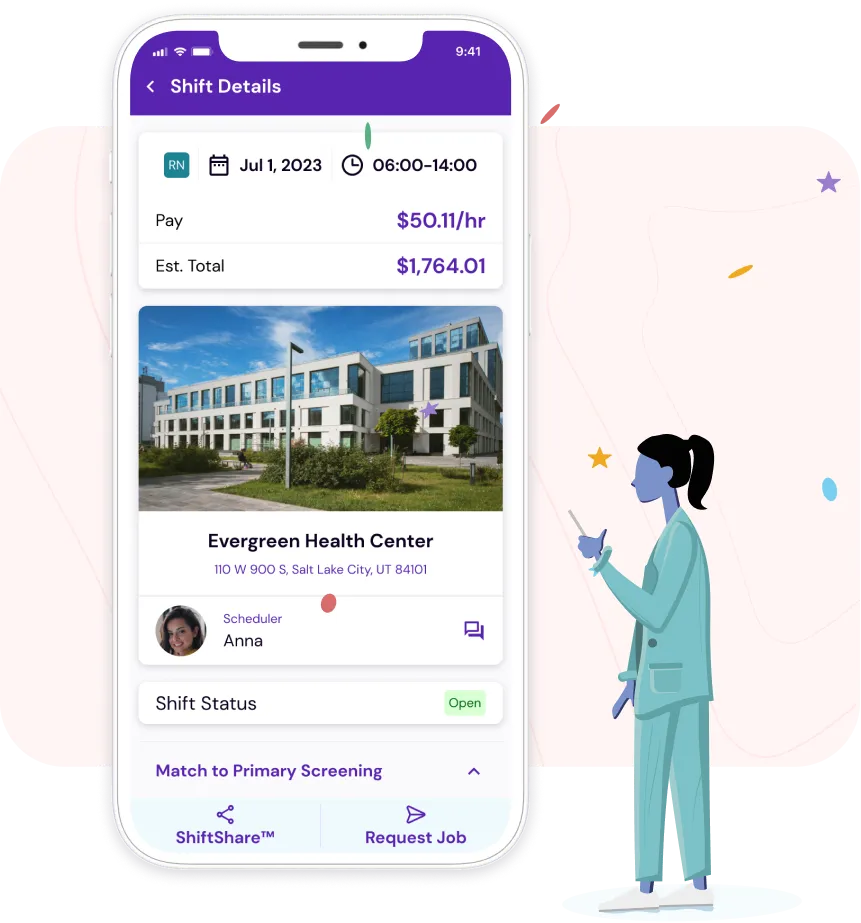
This credential is not handled in the Nursa app, so keep whichever document you obtained somewhere you can produce it quickly. Note the date on it, since facilities usually want something recent rather than whatever has been sitting in your records.
Sign up as a clinician and confirm which document a facility wants before you book anything.