


Loyola University Chicago


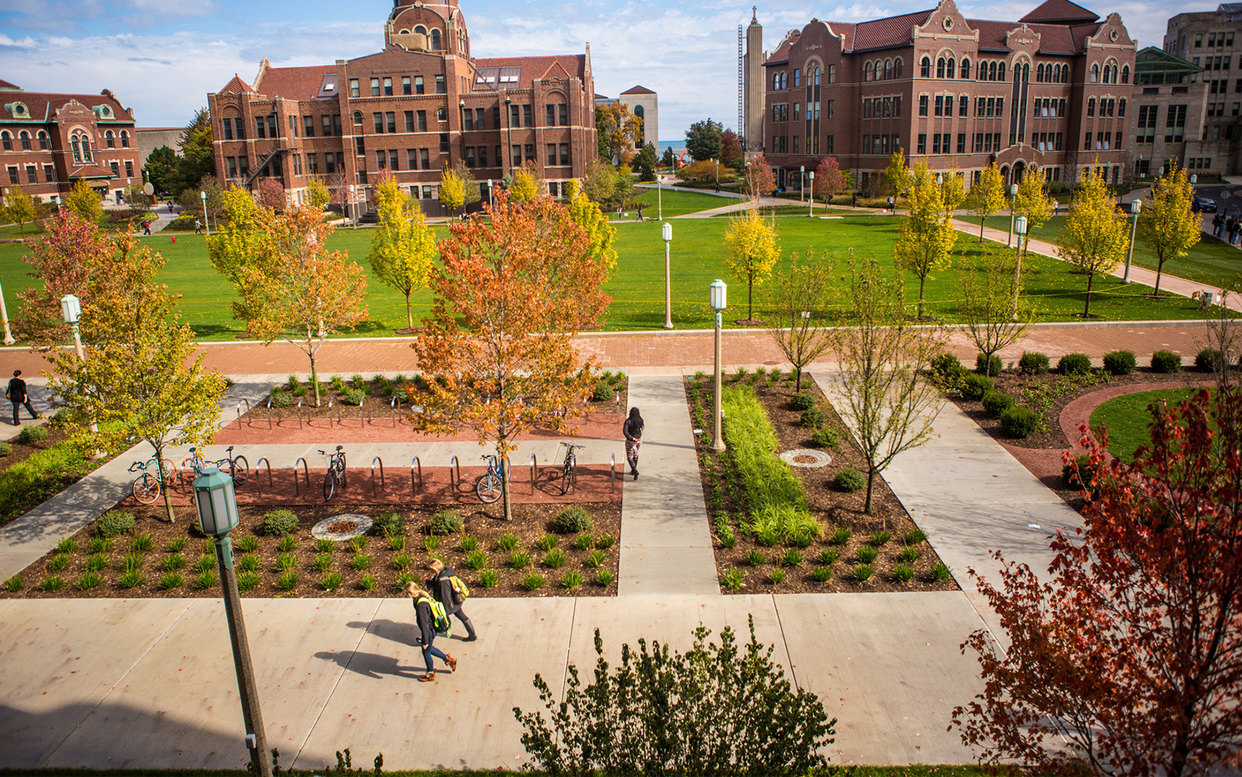


Loyola Nursing provides a transformative education that balances high-level clinical science with social justice and ethical leadership. The Four-Year BSN is based at the Lake Shore Campus for the first two years before transitioning to the Health Sciences Campus for clinicals. For career changers, the Accelerated BSN (ABSN) is a 16-month hybrid program that utilizes the Health Sciences Campus for intensive lab work. Graduate offerings are extensive, including a Direct Entry MSN for non-nurses and a Doctor of Nursing Practice (DNP) with tracks in Family, Psychiatric-Mental Health, and Emergency Nurse Practitioner. The curriculum is distinguished by the I-HEART model, a reflective framework that encourages students to consider the spiritual and emotional needs of their patients alongside their physical ailments.
Shutterstock
The clinical centerpiece of the program is the Walgreen Family Virtual Hospital, located on the third floor of the school’s Maywood facility. This 7,000-square-foot simulation center features six state-of-the-art simulation bays equipped with high-fidelity manikins, including SimMan 3Gs and SimBaby. Students engage in Interprofessional Education (IPE) sessions, training alongside medical students from the Stritch School of Medicine to foster team-based communication. Clinical rotations leverage Loyola’s partnership with the Loyola University Medical Center—a quaternary care facility and Level 1 Trauma Center—as well as other premier Chicago systems like Lurie Children’s Hospital and Shirley Ryan AbilityLab.
Compared to other Chicago-area programs, Loyola stands out for its CARE (Collaboration, Access, Resources, and Equity) Pathway, a nationally award-winning initiative designed to support underrepresented students in the BSN program. The school’s reputation for excellence is backed by a 99% financial aid rate for nursing students and a consistent 100% job placement rate for advanced practice graduates. Admission is competitive; the four-year BSN program reviews applications on a rolling basis, while the ABSN typically requires a minimum 3.0 cumulative GPA and specific prerequisites in organic chemistry and microbiology.
Do you manage this facility? Claim your profile now to suggest edits to this page.
Manage your clinical education on Nursa
Programs
A BSN is a 4-year university RN degree, widely preferred by employers and required for many advanced roles, whose graduates are eligible to take the NCLEX-RN.
An MSN is a 2–3 year graduate degree that prepares RNs for advanced practice, leadership, and specialized roles such as nurse practitioner or nurse educator.
A DNP is the highest clinical nursing degree, taking 2–4 years, preparing nurses for advanced practice, executive leadership, and policy roles—distinct from the research-focused PhD.
A post-graduate APRN certificate is a 12–24 month credential that lets MSN-prepared nurses add or change an advanced practice specialty without earning a second degree.
Address
Manage your clinical education

Pick Up a Job Today
Find per diem PRN job opportunities in your area. High paying CNA, LPN and RN and many more licences are available now.
Join Nursa
Track Your Clinical Placements
Nursa Study helps nursing schools, students, and clinical sites easily coordinate clinical placements.
Learn More