

By using our website you agree to our use of cookies to deliver a better user experience. Cookie Policy.
Accept
Reject

Share this job
Join our growing network of dedicated and detail-oriented certified medication technicians (CMTs) finding high-paying per diem job opportunities in
Timonium
,
Maryland
.
A certified medication technician working with Nursa administers medications and supports resident care under the supervision of a licensed nurse. As a PRN CMT, your responsibilities may vary from one work setting to another. PRN medication technicians work in a variety of healthcare settings, such as:
CMTs work in different environments, and while their duties vary from one setting and state to another, the following are general responsibilities. As a per diem CMT, you must be adaptable and ready to integrate seamlessly into various facility teams:
CMTs administer medications and support safe medication practices, including:
CMTs monitor patients for medication effects and help maintain a safe environment:
CMTs help keep medications accurate, secure, and available:
CMTs document care accurately while protecting patient privacy:
CMTs should be able to meet the following physical and emotional demands:
The following qualifications, compliance requirements, and skill standards are typically expected of CMTs who pick up shifts with Nursa:
CMTs who pick up shifts with Nursa enjoy the following advantages:
Nursa gives certified medication technicians the flexibility to choose their shifts, gain experience across care settings, and get paid quickly.
Nursa is always looking for Respiratory Therapist to pick up per diem shifts
Join NursaGO BEYOND A SINGLE JOB
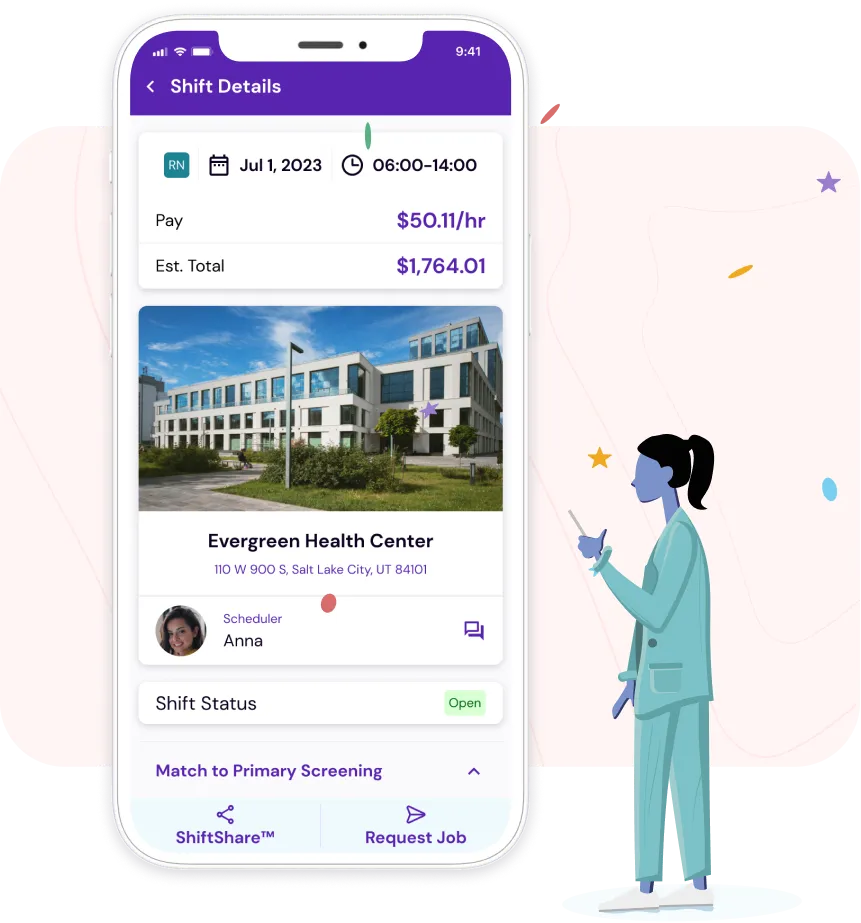
Lutherville-Timonium, Maryland, affectionately dubbed "Lutherville," is a suburban community with a vibrant healthcare landscape. The area boasts a diverse workforce, increasingly engaging in temporary staffing roles. Both healthcare facilities and clinicians benefit from per diem shifts, allowing for flexible scheduling and optimized patient care.
Want to pick up high-paying PRN jobs in Maryland? Nursa is a marketplace that connects nurses and CNAs with shifts near them.
Are you looking for high-paying certified medication technician (CMT) jobs? Join Nursa and find PRN CMT jobs in Maryland at facilities near you.
Nursa is always looking for Certified Medication Technician to pick up per diem shifts
Join Nursa
Find per diem PRN job opportunities in your area. High paying CNA, LPN and RN and many more licences are available now.
Join Nursa
Facilities who use Nursa fill 3 times as many open per diem shifts, on average, compared to trying to fill the shifts themselves.
Post Jobs


