What is a certified medication Technician (CMT)?
A certified medication technician (CMT) is a trained healthcare worker who is certified by their state to administer non-parenteral medications to patients under the delegation and supervision of a licensed nurse, usually a registered nurse (RN) or licensed practical/vocational nurse (LPN/LVN).
CMTs are not nurses; they are assistive personnel with a specific, state-granted scope of practice focused on safe medication administration.
CMT is its own profession, and the title itself is state-specific. Medication-administration roles go by different names in different states, and "certified medication technician" is the credential recognized in states such as Missouri and Maryland. Each state sets its own training program, exam, and registry, so a CMT credential is tied to the state that issued it rather than being a single national certification.
What does CMT stand for, and is it the same everywhere?
CMT stands for certified medication technician. Because each state regulates medication-administration roles independently, the same general function can carry a different title depending on where you work—for example, medication aide, med tech, or medication assistant-certified (MA-C) in some states, and QMAP in Colorado.
The "certified medication technician" title specifically is used in states including:
- Missouri: The CMT credential is issued by the Department of Health and Senior Services (DHSS), and is focused on intermediate care and skilled nursing facilities.
- Maryland: The CMT credential is issued by the Board of Nursing and is focused on assisted living and community-based settings.
Because the title, training, and scope vary by state, always confirm the exact credential your state and employer require.
What does a CMT do?
Under the direction of a supervising nurse, a CMT typically:
- Sets up and administers non-parenteral medications—such as oral, topical, ophthalmic, otic, and inhaled medications—to the correct patient at the correct time.
- Documents each medication administration accurately in the patient record.
- Observes patients and reports physical or behavioral changes related to medications to the supervising nurse.
- Supports medication management by performing medication cart audits.
A CMT's scope is defined by state regulation and by what the supervising nurse is permitted to delegate. CMTs do not diagnose, prescribe, or perform tasks outside their certified scope.
Where do CMTs work?
CMTs most often work in long-term and residential care, including skilled nursing facilities, nursing homes, assisted living facilities, residential care homes, and adult day care centers. In some states, CMTs also work in community-based and home settings under nurse delegation. The specific settings a CMT can work in depend on the state's regulations.
How to become a CMT
Requirements vary by state, but the path generally follows these steps:
- Meet the basic eligibility requirements, which usually include being at least 18 years old and holding a high school diploma or GED.
- In most states, you must first become a certified nursing assistant (CNA) and stay in good standing on the state registry. Some states require a minimum amount of CNA work experience—Missouri, for example, requires at least 6 months as an active CNA—while a few states allow entry into medication technician training without a CNA credential.
- Complete a state-approved medication technician training program that combines classroom instruction with supervised clinical practice. Program length varies widely—for example, roughly 60 classroom hours plus clinical practice in Missouri, and about 20 hours in Maryland.
- Pass your state's medication technician competency exam, which includes a written portion and, in many states, a practical component.
- Once you pass, your name is added to your state's medication technician registry, and you are certified to administer medications within your state's defined scope.
Because requirements differ from state to state, confirm the current rules with your state's board of nursing or health department before enrolling in a program.
How to find PRN CMT shifts near you
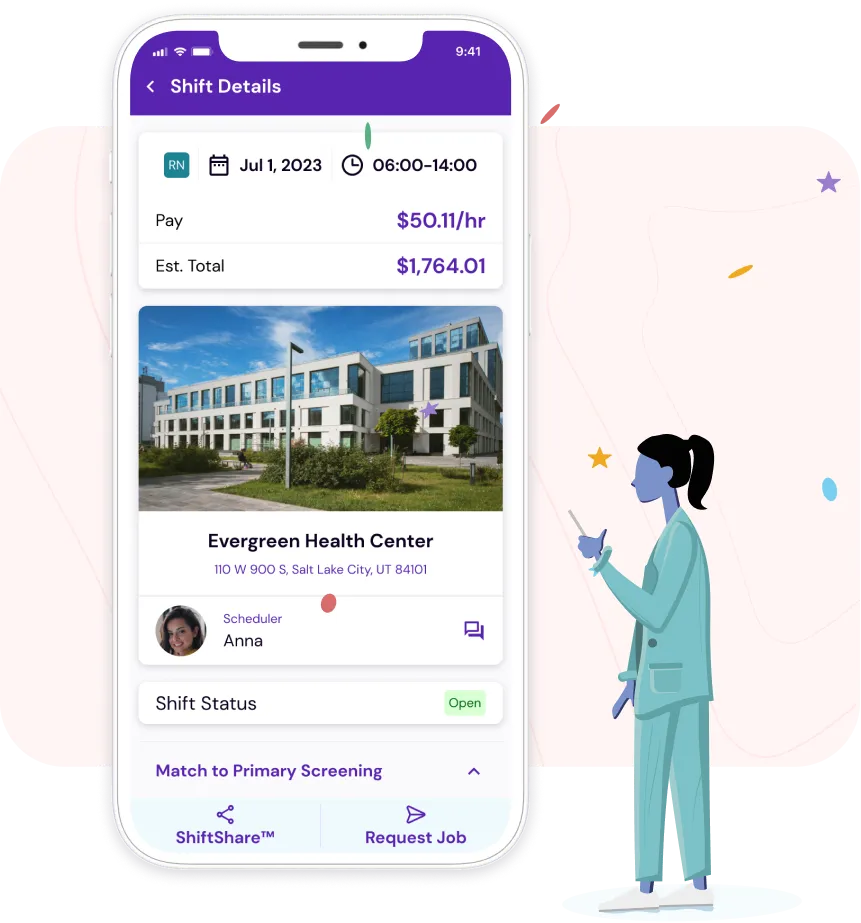
Once you are certified, Nursa connects you with per diem (PRN) CMT shifts at facilities near you, so you can pick up work that fits your schedule instead of being locked into a single employer. Browse open shifts, see the details up front, and claim the ones that work for you.