

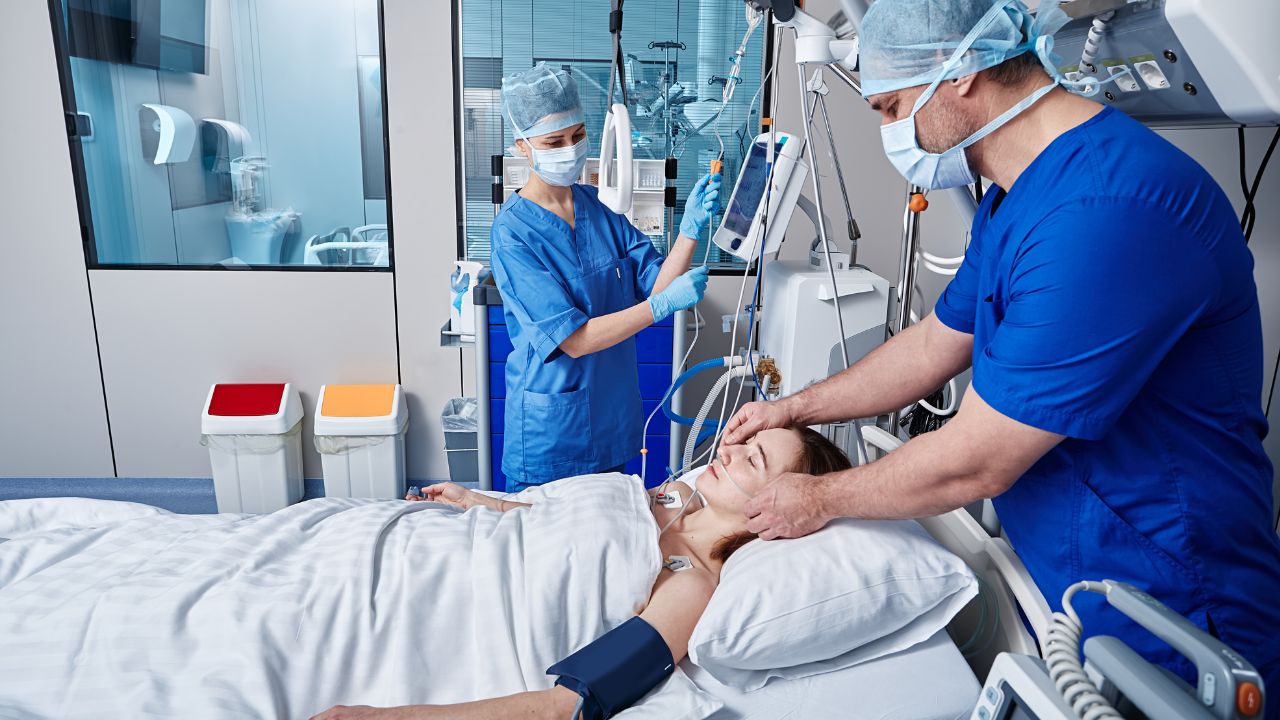
This article analyzes the neuro ICU, a complex setting requiring specialized monitoring for patients with strokes, TBIs, and neurosurgeries. We explore the strict 1:1 and 1:2 ratios, advanced technology, and protocols that define this high-acuity environment.
The guide also details the necessary operational ecosystem, including staffing models, certifications, and compliance standards. Finally, we address clinician burnout and retention, emphasizing the strategies needed to sustain this highly skilled workforce.
Neuro ICU: Critical care mastery
The neurological intensive care unit (neuro ICU) is one of the most demanding environments in modern medicine.
It's a place of high stakes, advanced technology, and profound human vulnerability, where patients with conditions like severe traumatic brain injury, massive strokes, or brain tumors fight for their lives and neurological function.
For healthcare facilities, staffing this unit effectively is a monumental challenge that requires a strategic approach to finding, training, and retaining a highly skilled team. For clinicians, working in the neuro ICU is a calling that demands a unique blend of critical care expertise, neurological precision, and emotional resilience.
This article examines the complexities of the neurological intensive care unit, from its unique patient population and team to the staffing models, technology, and support systems necessary for optimal outcomes.
Defining the neurological intensive care unit
What makes the neuro ICU a distinct setting of care?
While it shares critical care principles with a general ICU, its focus is laser-sharp: the brain, spine, and central nervous system.
What makes the neuro ICU unique?
The primary difference lies in the margin for error. In a general ICU, a patient's blood pressure might fluctuate within a wider acceptable range. In the neuro ICU, a swing of just a few points in blood pressure or a subtle change in pupil response can signal catastrophic, irreversible brain damage. The core mission is to protect the brain from primary injury (the initial event) and secondary injury (subsequent swelling, bleeding, or lack of oxygen).
This environment is characterized by constant, meticulous assessment and meticulous attention to detail.
Patient populations: Stroke, TBI, seizures & post-neurosurgery
The patients in a neuro ICU are facing some of the most complex conditions.
Common diagnoses include:
- Ischemic and hemorrhagic stroke: Patients who have received tPA, undergone a thrombectomy, or are recovering from a devastating subarachnoid or intracerebral hemorrhage
- Traumatic brain injury (TBI): Patients recovering from falls, car accidents, or assaults who require intensive monitoring of brain swelling and pressure
- Status epilepticus: Patients with prolonged, uncontrolled seizures who require continuous EEG monitoring and heavy sedation
- Post-neurosurgery: Patients recovering from complex procedures like tumor resections, aneurysm clippings, or craniotomies
- Spinal cord injury: Patients with acute spinal injuries requiring stabilization and management of potential systemic complications
- Neuromuscular disorders: Patients with conditions like Guillain-Barré syndrome or myasthenic crisis that lead to respiratory failure
- Infections and inflammatory conditions: Patients with severe cases of meningitis, encephalitis, or neuro-autoimmune disorders
High-acuity, monitoring, and technology requirements
To manage these conditions, the neuro ICU is equipped with highly specialized tech in neuro ICU. The environment is a stream of quiet alarms and complex data.
Key technologies include:
- Intracranial pressure (ICP) monitoring
- External ventricular drains (EVDs)
- Continuous EEG (cEEG)
- Advanced hemodynamic monitoring
Comparing neuro ICU to general ICU
While both units care for critically ill, ventilated, and sedated patients, the focus differs:
Neuro ICU team: Roles, coverage, and special skills
A neuro ICU cannot function without deep, interdisciplinary collaboration. The team is a complex ecosystem of specialists, each bringing a vital perspective to patient care.
Neuro ICU RN, intensivist, NP/PA, and bedside tech
- Neuro intensivist: Leads the medical plan of care as a physician (typically neurology or neurosurgery-based) with fellowship training in neuro critical care
- Neuro ICU RN: Serves as the cornerstone of the unit by performing constant neuro assessments, managing complex drips (like hypertonic saline), and operating monitoring devices like EVDs to detect subtle, emergent changes
- Advanced practice providers (NP/PA): Work alongside the intensivist to manage daily patient care, perform bedside procedures, and help coordinate the overall treatment plan
- CNA/tech: Supports the RN with turning, hygiene, and mobility while maintaining safety protocols, such as C-spine precautions and seizure recognition
Respiratory, PT/OT, case management
The collaborative team extends far beyond the core medical staff:
- Neuro-pharmacist
- Respiratory therapist
- Physical and occupational therapist (PT/OT)
- Speech-language pathologist (SLP)
- Case manager
- Social worker
Specialty certifications (CCRN, CNRN, SCRN)
Due to the unit's high acuity, standard RN licensure is just the beginning. Facilities actively seek nurses with advanced neuro nurse certification to validate their expertise.
- CCRN (Critical Care Registered Nurse): Establishes the standard for all critical care nurses by demonstrating a broad base of knowledge
- CNRN (Certified Neuroscience Registered Nurse): Represents the gold standard for neuro nurses by proving specialized knowledge in neuroscience nursing
- SCRN (Stroke Certified Registered Nurse): Validates expertise in the specific and time-sensitive care of stroke unit patients
Unit culture and team-based nursing
The culture in a neuro ICU is one of precision, vigilance, and teamwork. Siloed care is impossible. The nurse's assessment informs the intensivist's plan, which is supported by the pharmacist and executed with the help of the respiratory therapist. This constant, closed-loop communication is essential for patient safety.
Staffing models, shifts, and flexible coverage
The nurse-patient ratio guidelines in the neuro ICU are among the strictest in the hospital.
Ratio, PRN coverage, and float pool
Typically, the ratio is 1:1 or 1:2.
- 1:1 ratios are assigned to the most critical patients: These patients include those with an EVD or ICP monitor, those on continuous EEG, fresh post-operative neurosurgery patients, or any hemodynamically unstable patient.
- 1:2 ratios are assigned to more stable patients: These patients include those weaning from a ventilator or stable stroke patients who still require ICU-level monitoring.
Maintaining these safety ratios is why neuro critical care staffing is so challenging. Units rely heavily on their internal float pool and a bench of experienced PRN neuro ICU nurse clinicians to manage illnesses, vacations, and fluctuations in census.
Handling census surges and emergent admissions
A neuro ICU can become chaotic in minutes from a multi-car pile-up bringing in several traumatic brain injury care patients or a "code stroke" alert signaling an emergent admission. The charge nurse must be a master of logistics, reallocating assignments and calling in PRN staff to handle the surge without compromising care.
This is where flexible staffing solutions become critical. The agency vs. platform staffing debate is evolving; traditional agencies can be slow and expensive. Modern staffing platforms enable facilities to post open positions and connect directly with verified, credentialed PRN neuro ICU nurse professionals seeking flexible scheduling.
Orientation and rapid onboarding for specialized neuro care
Nurses cannot simply "float" to the neuro ICU. The orientation and neuro unit onboarding process is lengthy and intense.
A new graduate or transferring nurse may spend 12 to 16 weeks with a dedicated preceptor.
This neuro unit onboarding typically includes:
- In-depth neuroanatomy and physiology
- Mastery of the detailed neurological exam
- Competency in managing EVDs, ICP monitors, and other neuro-specific devices
- Protocols for "code stroke," seizure management, and herniation
For experienced PRN nurses, a more rapid orientation may be required, focusing on unit-specific workflows, equipment, and documentation systems.
Credentialing, compliance, and ongoing training
Given the stakes, credentialing and regulatory compliance are pillars of neuro ICU management.
Neuro-specific competencies, onset management, and safety drills
A nurse's credentialing file must show unit-specific competencies before they work independently.
This may include:
- EVD/ICP management
- Seizure precautions
- Onset management
Regulatory compliance is also a major driver, particularly for facilities certified as Comprehensive Stroke Centers by organizations such as The Joint Commission. These bodies mandate strict adherence to care protocols and documentation.
Continuing education and annual skills checks
Education doesn't stop after orientation, as neuroscience is a rapidly evolving field. Units must provide ongoing learning opportunities on new research, medications, and treatment guidelines. Annual skills checks are common to ensure every nurse on the unit remains competent in high-risk procedures.
Documentation for neuro checks, monitoring, and sedation
In the neuro ICU, documentation is exhaustive. Nurses must chart detailed neurological assessments every hour (or more).
This includes:
- Glasgow Coma Scale (GCS) score
- Pupil size and reactivity
- Motor strength in all four extremities
- ICP and CPP readings
- Sedation scores (e.g., RASS) for appropriate sedation management
Interdisciplinary teamwork and patient progression
No patient gets better in the neuro ICU without interdisciplinary collaboration.
The path from critical illness to recovery is planned from day one.
Daily rounds, therapy integration, and rehab planning
The centerpiece of teamwork is daily rounds. The entire team—intensivist, RN, pharmacist, RT, PT, and case manager—gathers at the bedside to discuss each patient's goals and plan. Here, the nurse's bedside assessment is crucial for identifying subtle changes that the rest of the team may not have noticed.
Therapists are integrated early to begin mobility, even in sedated patients, to plan for the long, intensive rehabilitation process that often follows a neuro ICU stay.
Family inclusion and communication best practices
The team must also manage the immense emotional burden on families. A brain injury can change a person's personality, memory, and future. Communication must be clear, consistent, and compassionate. Nurses spend a significant amount of time educating families, managing expectations, and providing emotional support during the most difficult time of their lives.
Workflow optimization and technology
To manage this level of complexity, the neuro ICU relies heavily on technology to streamline workflows and improve safety.
Smart alarm devices, advanced monitoring, and digital charting
The tech in the neuro ICU provides a continuous flow of data.
- Advanced monitoring
- Smart alarms
- Digital charting
Workflow optimization with technology
Technology optimizes workflow.
EMRs that pull data directly from monitors reduce manual transcription, freeing the nurse for direct patient assessment. Data from all patients can be analyzed to spot trends, predict declines, and improve unit-wide quality and safety.
Burnout, retention, and professional support
The neuro ICU's specialized, emotionally devastating work can lead to burnout. The work is intellectually stimulating but emotionally challenging.
Emotional toll of neuro ICU: Stress management programs
Nurses face profound moral distress when caring for patients with catastrophic, non-recoverable brain injuries. They may be providing aggressive medical care to a patient they know will never have a meaningful recovery. This, combined with high stress, leads to high rates of burnout and turnover.
Progressive units combat this by building robust support systems:
- Debriefing sessions after a difficult patient death
- Access to mental health professionals
- Formal stress management and resilience training
Career growth, mentorship, and ongoing learning
Retention is closely linked to support and growth; investing in nurses is the most effective strategy.
This includes:
- Mentorship
- Career ladders
- Education
- Flexible scheduling
Common neuro ICU questions
Navigating the world of neuro critical care can be confusing for both facilities and clinicians.
Here are some common questions.
What skills distinguish a neuro ICU nurse?
A great neuro ICU nurse has unique skills beyond standard critical care:
- Hyper-vigilance in detecting subtle neurological changes
- Expertise with neuro-specific technology like EVDs and ICP monitors
- Specialized knowledge of medications for brain swelling and seizures
- Calm decisiveness during acute patient declines or herniation
- Strong communication skills for physician collaboration and family education
How does PRN staffing work with advanced neuro patients?
Facilities are cautious about temporary staff in this high-acuity unit.
This is why robust credentialing is essential. A PRN neuro ICU nurse is not a generalist; they are a specialist who has prior, verifiable experience in a high-acuity neuro ICU. When they are onboarded, they demonstrate their competencies on the specific devices and monitoring protocols used by the unit.
What’s the orientation process for neuro ICU clinicians?
The neuro unit onboarding process is among the longest in the hospital. For a new nurse, it's typically a multi-month preceptorship.
It involves:
- Classroom/didactic: Intensive education on neuroanatomy, neuropharmacology, and common diagnoses
- Simulation lab: Hands-on practice with EVDs, ICP monitors, and mock "code stroke" scenarios
- Preceptorship: A 1:1 pairing with an experienced nurse on the unit for several weeks or months, gradually taking on a full patient load
Which monitoring tech is required in a neuro ICU?
A modern neuro ICU requires specific technology:
- Continuous cardiac and hemodynamic monitoring
- Ventilators
- ICP monitoring capabilities (e.g., bolts, probes)
- EVD systems
- Continuous EEG monitoring machines
- Temperature management devices (for therapeutic hypothermia)
- Easy access to CT and MRI scanners
Find your fit in critical care
The neurological intensive care unit is the pinnacle of specialized critical care.
For facilities, maintaining a safe, compliant, and fully-staffed unit requires a flexible and robust staffing strategy. For clinicians, it offers a challenging and deeply rewarding career, but one that demands balance to prevent burnout.
Whether you're a facility looking to fill critical shifts or a clinician seeking flexible scheduling, sign up with Nursa today.


