

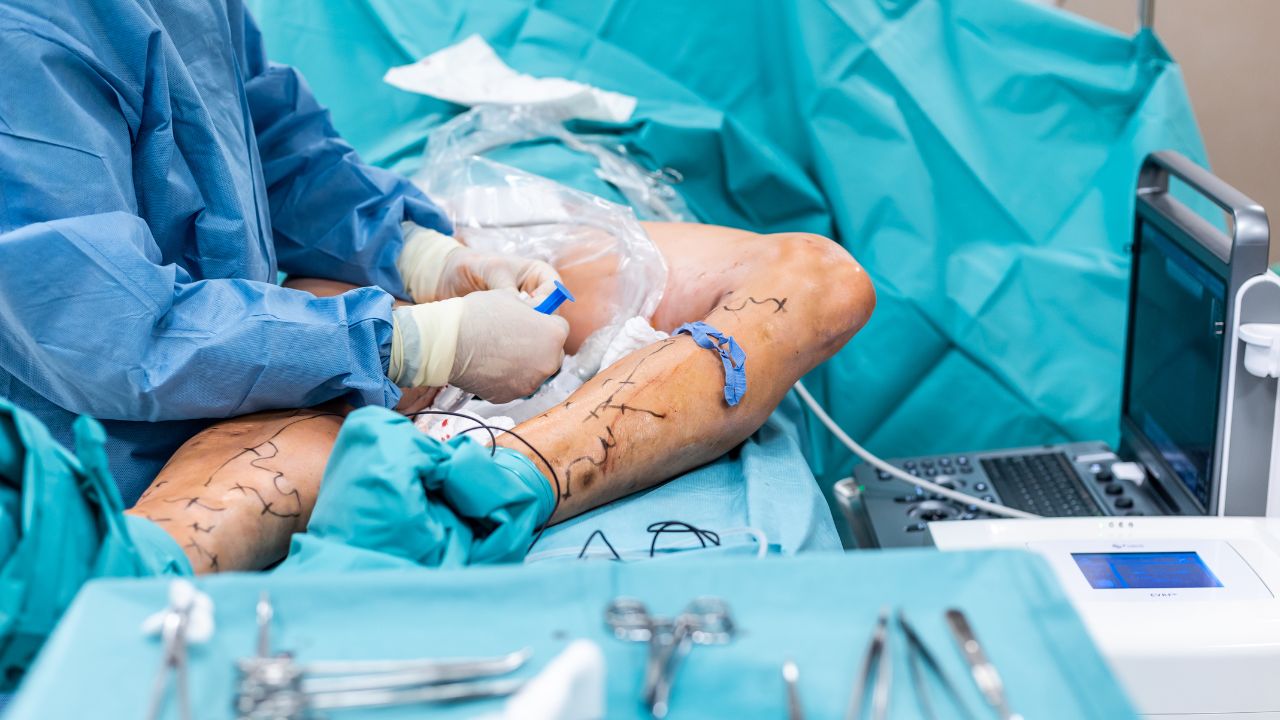
Vascular surgery is the surgical specialty that diagnoses and treats diseases of arteries, veins, and the lymphatic system—excluding coronary and intracranial vessels.
In this article, learn all about vascular surgery.
What is vascular surgery, and what does it treat?
Vascular surgery addresses aneurysms, arterial occlusion, venous disorders, vascular trauma, and complex vascular reconstruction using a spectrum of vascular procedures ranging from open operations to endovascular surgery.
Vascular surgery blends judgment and technique to restore or preserve blood flow, prevent stroke or rupture, control hemorrhage, and improve function.
A vascular surgeon is trained in both open and catheter-based vascular surgery techniques and selects the most appropriate approach—open, endovascular, or hybrid—based on anatomy, comorbidities, and patient goals. The field increasingly emphasizes prevention, surveillance, and patient-reported outcomes in vascular surgery alongside traditional metrics like patency and limb salvage.
Indications: When is vascular surgery needed?
Deciding when to intervene balances natural disease history, symptom burden, anatomic feasibility, and procedural risk.
Typical triggers include limb-threatening ischemia, aneurysm size or growth, carotid stenosis with stroke risk, bowel or renal ischemia, symptomatic venous disease, dialysis access needs, and damage-control in vascular trauma and surgical repair.
To illustrate the range of presentations treated with minimally invasive vascular surgery techniques, open operations, or both, here are common scenarios:
- Peripheral limb ischemia from atherosclerosis: Vascular surgery for peripheral artery disease (PAD)
- Aneurysmal disease of the aorta: Vascular surgery for aortic aneurysm repair
- Carotid artery stenosis: Carotid endarterectomy (a type of vascular surgery) or carotid stenting for stroke prevention
- Renal and mesenteric artery disease: Vascular surgery in renal/mesenteric arteries
- Venous disease: Varicose veins, chronic venous insufficiency, deep vein thrombosis, and post-thrombotic obstruction
- Surgical repair: Vascular trauma and surgical repair after penetrating/blunt injury
- Dialysis access creation: Arteriovenous fistulas and grafts
Age, frailty, diabetes, renal function, smoking, and cardiopulmonary status shape the timing and type of arterial disease management in vascular surgery.
Techniques and approaches in vascular surgery
Modern practice compares endovascular vs. open vascular surgery for each patient, targeting the best blend of safety, durability, and recovery.
Endovascular techniques use catheter-based access through small punctures; open surgery uses an incision to directly expose and repair vessels. Each approach has distinct risks, durability profiles, and recovery expectations.
Open/traditional approaches
Open operations remain essential for complex anatomy, infected fields, and when durability is paramount. Examples include bypass grafting, open aortic repair, and endarterectomy—cornerstones of vascular reconstruction and bypass surgery that demand meticulous dissection and anastomosis.
Endovascular and minimally invasive approaches
Endovascular surgery encompasses procedures such as angioplasty, stenting, atherectomy, embolization, and endograft placement, including EVAR/TEVAR (endovascular aneurysm repair). These minimally invasive vascular surgery techniques often shorten hospital stays and broaden eligibility to higher-risk patients while enabling staged or repeat interventions.
Hybrid procedures and guidance tools
Hybrid strategies combine limited incisions with catheter-based work, well-suited for multilevel disease and redo fields. Advanced imaging guidance—fusion fluoroscopy, intravascular ultrasound, 3D planning—improves precision and reduces contrast, radiation, and operative time.
Planning, imaging & preoperative workup
Thorough preoperative planning involves mapping anatomy, quantifying disease, and optimizing risk factors.
The role of imaging in vascular surgery (CTA, duplex, MRA) is central, as it defines lesion morphology, access routes, landing zones, and sizing. Duplex adds information on hemodynamics, and angiography provides dynamic decision-making during interventions.
Before listing common components of workup and optimization, it helps to note that both anatomic and physiologic data guide safe, effective care:
- Imaging and hemodynamics: CTA/MRA, duplex ultrasound, angiography; ankle-brachial index, toe pressures, and transcutaneous oxygen
- Risk stratification: Cardiopulmonary assessment, renal function, anemia/nutrition, frailty
- Medication planning: Antiplatelets/anticoagulation, statins, glycemic control
- Lifestyle optimization: Smoking cessation, supervised exercise therapy for PAD
Recovery, outcomes & risks
Recovery depends on the complexity of the procedure, the access route, and the presence of comorbidities.
Many endovascular cases are same-day or 1–2 nights in the hospital; open reconstructions typically require several days, with full recovery over weeks. Counseling on vascular surgery recovery time and outcomes sets expectations, including the need for surveillance and secondary prevention.
What are typical complications after vascular surgery?
Complications can occur even with the best practices.
Common complications after vascular surgery include access-site bleeding, thrombosis or embolization, graft or stent failure (e.g., endoleak after EVAR), wound or graft infection, limb ischemia or compartment syndrome, renal injury from contrast or ischemia, and procedure-specific risks like stroke (carotid) or spinal cord ischemia (thoracoabdominal repair).
Strategies to mitigate these risks include careful patient selection, meticulous technique, antithrombotic therapy, glycemic control, neuro/renal protection protocols, and structured follow-up that incorporates imaging surveillance and patient-reported outcomes in vascular surgery.
Vascular reconstruction, grafts & stents
Reconstruction restores flow around blockages or excludes aneurysms. The use of stents and grafts in vascular surgery encompasses autologous vein conduits, prosthetic grafts, and endografts to treat occlusive disease, aneurysms, and injuries.
To clarify typical selections and surveillance considerations, here are common choices and principles:
- Conduits: Great saphenous vein for infrainguinal bypass; prosthetic grafts for aortoiliac and extra-anatomic bypass; biologic options in infection
- Stents: Balloon-expandable for precise placement; self-expanding for flexibility in tortuous vessels; covered stents to exclude aneurysms or seal injuries
- Endografts: Modular EVAR/TEVAR components sized to seal zones while preserving branch flow when possible
- Surveillance: Duplex and CTA/MRA protocols to detect stenosis, intimal hyperplasia, endoleak, or migration; antiplatelets/statins to enhance patency
Vascular surgery across disease domains
Care is tailored to each vascular bed, often integrating open and endovascular options to balance risk, durability, and recovery.
PAD and limb salvage
For claudication, supervised exercise, risk-factor control, and medications are recommended before intervention. For rest pain, tissue loss, or infection, revascularization—often endovascular first—prioritizes limb salvage, with open bypass favored for complex, multilevel disease when a suitable vein is available.
Aortic aneurysm repair
Indications include size thresholds, rapid growth, symptoms, or rupture. EVAR/TEVAR is most suitable for anatomically favorable aneurysms; open repair remains the standard for unfavorable necks, connective tissue disorders, infected aneurysms, and certain thoracoabdominal patterns.
Carotid interventions
Carotid endarterectomy, a type of vascular surgery, removes plaque via arteriotomy and patch angioplasty. Carotid artery stenting (transfemoral or transcarotid) re-expands the lumen with embolic protection. Selection hinges on symptoms, anatomy, and procedural risk.
Renal and mesenteric ischemia
For renovascular hypertension or mesenteric ischemia, endovascular stenting is a common treatment; however, complex lesions or failed endovascular therapy may require bypass, exemplifying the breadth of vascular surgery in the renal/mesenteric arteries.
Venous disorders
Therapies range from office-based thermal or adhesive ablation for varicose veins to thrombolysis/thrombectomy and stenting for iliofemoral obstruction. Durable outcomes rely on compression, anticoagulation when indicated, and lifestyle measures.
Vascular trauma
Rapid hemorrhage control and limb salvage employ tourniquets, balloon occlusion, temporary shunts, covered stents, and definitive open repair, reflecting the urgency and adaptability required for vascular trauma and surgical repair.
Dialysis access
Creation and maintenance of arteriovenous fistulas and grafts require vein mapping, precise anastomosis, and coordinated surveillance to support long-term hemodialysis.
The vascular surgery team & professional roles
High-quality outcomes flow from multidisciplinary care in vascular surgery. Collaboration spans preoperative optimization, intraoperative execution, and longitudinal follow-up.
To clarify how professionals contribute across the care pathway, here are the core roles:
- Vascular surgeon: Leads evaluation, planning, and open/endovascular procedures
- Interventional radiologist/endovascular specialist: Partners on complex catheter-based work
- Anesthesiologist with vascular expertise: Manages hemodynamics, analgesia, neuro/renal protection
- Surgical nurses and OR technologists: Enable safe, efficient open and endovascular cases
- Vascular technologists/sonographers: Perform duplex and physiologic testing; provide intraoperative guidance
- ICU/PACU and ward nurses: Monitor perfusion, bleeding, neurologic status; manage protocols
- Advanced practice providers (PA/NP): Coordinate optimization, education, and surveillance
- Radiology/imaging specialists: Deliver advanced CTA/MRA protocols and intraoperative imaging
- Rehabilitation/physical therapy: Implement walking programs and functional recovery pathways
- Vascular access/dialysis nurses: Educate and help maintain AV fistulas/grafts
See also: Telemetry Nursing Specialty: Guide to Nurse Pay, Skills and More
Innovations, research & future trends
Progress is accelerating toward safer, more durable, and less invasive solutions. The field is pushing toward more minimally invasive and hybrid solutions; devices and closure systems continue to improve.
Advances in imaging, navigation, and computational modeling support augmented planning; machine learning, simulation, and 3D printing personalize endografts and rehearsal of complex reconstructions. As practice evolves, patient-reported outcomes in vascular surgery and long-term quality-of-life measures increasingly guide therapy choices.
Frequently asked questions about vascular surgery
This brief FAQ addresses common questions and reinforces key concepts for clinicians, trainees, and informed patients.
How do endovascular and open vascular approaches differ?
Endovascular procedures utilize percutaneous access with balloons, stents, and endografts; they typically have a lower upfront risk and faster recovery, but may require more surveillance and reintervention. Open surgery utilizes incisions for direct repair or bypass; it often offers greater durability for certain anatomies but involves a longer recovery period.
How long is the recovery from vascular surgery?
Many endovascular procedures are ambulatory or require a 1–2 day hospital stay with a rapid return to light activity. Open reconstructions usually require several inpatient days and weeks to regain baseline function. Individual recovery depends on the procedure type and the presence of comorbidities.
How are vascular grafts and stents used in surgery?
Grafts (vein, prosthetic, biologic) reroute flow around blockages or replace diseased segments; stents scaffold stenoses, and covered stents or endografts exclude aneurysms and seal injuries. Selection depends on anatomy, infection risk, and durability goals.
How does vascular surgery address peripheral artery disease?
For claudication, supervised exercise and risk-factor control precede intervention. For limb-threatening ischemia, prompt revascularization—often endovascular-first—prioritizes limb salvage, with open bypass for complex disease when a suitable vein is available.
When is an aortic aneurysm repaired surgically?
Repair is indicated when size thresholds are reached, rapid growth occurs, symptoms appear, or a rupture develops. EVAR/TEVAR is favored when anatomy is suitable; open repair is chosen for unfavorable anatomy, infection, or connective-tissue disorders.
How is carotid surgery performed in vascular interventions?
Carotid endarterectomy involves removing plaque through an open arteriotomy, whereas carotid artery stenting (including transcarotid approaches) places a stent with embolic protection. The choice depends on symptoms, anatomy, and risk profile.
Who is part of the vascular surgery team, and what are their roles?
A multidisciplinary team includes the vascular surgeon, interventional radiologist/endovascular specialist, anesthesiologist, surgical nurses and technologists, vascular technologists/sonographers, ICU/PACU/ward nurses, advanced practice providers, imaging specialists, rehabilitation, and vascular access/dialysis nurses.
Learn about the role of clinicians in the cardiovascular intensive care unit (CVICU).
How do volume and experience affect vascular surgery outcomes?
Higher procedural volume and team experience correlate with lower complications, shorter length of stay, and better durability, particularly for complex aortic, carotid, and limb-salvage cases.
Vascular surgery as a subspecialty
Vascular surgery is a critical subspecialty that combines open operations, endovascular surgery, and hybrid strategies to treat arterial and venous diseases throughout the body. Success depends on thoughtful selection between endovascular vs. open vascular surgery, rigorous imaging and preoperative planning, vigilant recovery pathways, and multidisciplinary collaboration.
Want to explore how this specialty fits into the broader surgical landscape? Continue learning about the major branches of surgery and how they intersect to deliver comprehensive, patient-centered care.


