

Loudonville is a suburban hamlet in the town of Colonie, located just north of Albany in New York's Capital Region. Residents are close to Albany Medical Center, the region's academic medical center, and St. Peter's Health Partners hospitals.
Loudonville
New York
Jump to section on this page

Anchor Link
Go Beyond a Single Job
Choose Multiple Per Diem Shifts on Your Schedule
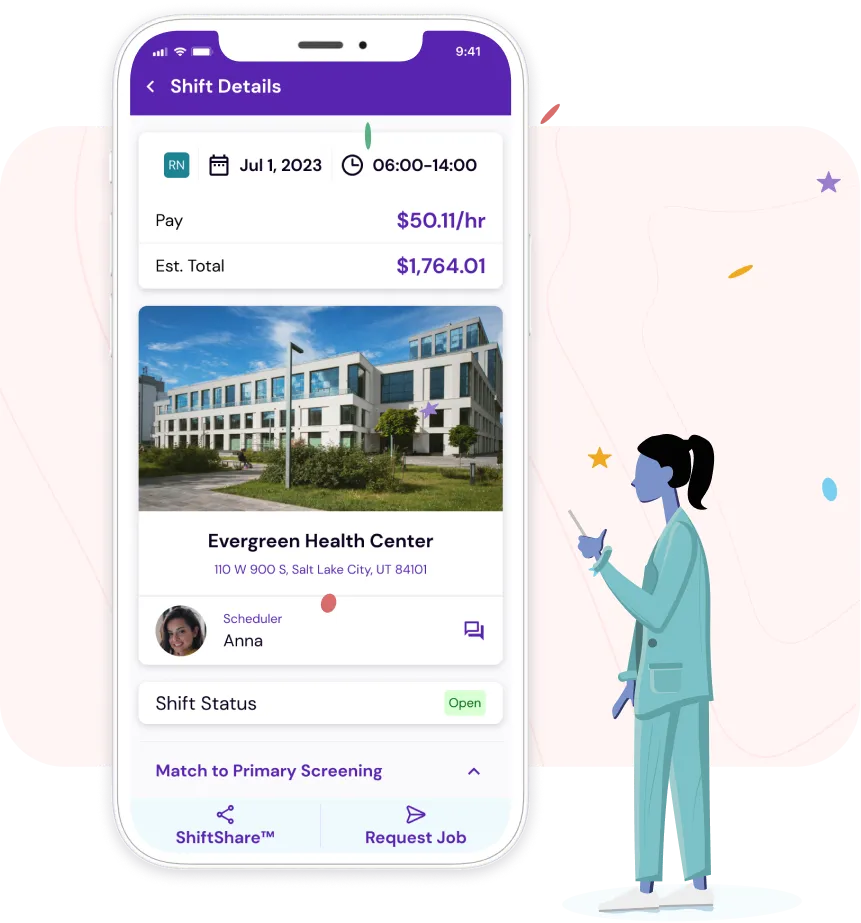
Nursa isn't just about finding a job; it's about crafting your ideal work schedule by selecting shifts. Once you create a Nursa profile, you will experience the convenience of scheduling shifts in real time.
Loading shifts…
Zip codes located within Loudonville, NY:
Loading…
Completed! We will notify you when we have desired shifts for you.
Until then, you can continue with the app to signup or login.
Continue
Until then, you can continue with the app to signup or login.
Oops! Something went wrong while submitting the form.
See More Shifts and Apply Now
Explore and find where you would like to work
Search ShiftsPer Diem JobsSelect your license and location to find the best PRN jobs
Select your license and the location you want to work in, and we'll show you the best PRN jobs available nearby.
Loudonville is home to Siena College and offers quiet, tree-lined neighborhoods with historic homes. Its location near Albany provides easy access to state government, shopping, and dining.

Per diem nursing shifts in Loudonville, New York
Loudonville is a residential hamlet in the town of Colonie, just north of Albany. About 11,000 people live here, on tree-lined streets built around Siena College.
It is quiet in a way that Albany proper is not, and it sits about ten minutes from the largest concentration of hospital capacity between New York City and Montreal.
That combination is the whole pitch. Claiming per diem nursing shifts in Loudonville, New York means coming home somewhere calm while working a market with an academic medical center, several community hospitals, a veterans campus, and a deep long-term care sector.
Here is how the work runs, what New York asks of you, and what the Capital Region offers once you clock out.
What working PRN shifts is really like
You set your own schedule. That is the premise, and everything else follows from it.
Nursa is a marketplace app where facilities post the shifts they need covered. You look at what is open, claim what fits your week, and show up. No recruiter decides where you go.
The control is the appeal. The planning that comes with it is the tradeoff, and most clinicians sort that out inside a month.
Building a week that fits your life
Plenty of people assemble full-time hours entirely from claimed shifts and treat this as their primary work. Others take three or four a month alongside a staff position or school.
The Capital Region has enough facilities inside a thirty-minute radius that either approach is realistic. That is not true in most of upstate New York.
You can also change your pattern without asking permission. Heavy in January, light in February, back up in March. Nobody signs off on it.
Moving between settings keeps you sharp
Work a single unit long enough and your range narrows without you noticing. You get fast at that building's routine and slower at everything else.
Rotating pushes back on that. A skilled nursing shift one week, a hospital floor the next, then a home health day, and your assessment skills stay current while your charting stays flexible.
It is also the cheapest way to test a direction. Take a few shifts in rehabilitation or memory care before deciding whether you want more of it.
Your time actually stays yours
If you want a Thursday off, you do not claim a Thursday shift. There is no request form and no manager weighing whether coverage allows it.
Holidays work the same way. Skip them completely, or work them deliberately because the rates climb.
The catch is that consistency becomes your job. Nobody tracks whether you have booked enough hours, so keep an eye on it yourself.
Which facilities post shifts around here
The Capital Region packs a lot into a small area. Albany, Troy, Schenectady, and the suburbs between them hold a full range of care settings.
Facilities posting PRN shifts around Loudonville typically include:
- Skilled nursing facilities caring for residents after surgery or hospitalization.
- Long-term care buildings serving residents who need daily clinical oversight.
- Assisted living and memory care communities.
- Hospitals, from community campuses to an academic medical center with a children's hospital.
- Hospice programs, both inpatient and in patients' homes.
- Home health agencies covering Albany, Rensselaer, and Schenectady counties.
- Rehabilitation and behavioral health facilities.
- Urgent care and outpatient clinics.
Albany is ten minutes south and holds the region's academic campus, a large community hospital, and a veterans medical center. Troy and Schenectady each sit fifteen to twenty minutes out with their own hospitals.
Colonie itself has a county-run rehabilitation and nursing center, and long-term care capacity spreads across Latham, Menands, and Guilderland.
Every setting asks something different. Skilled nursing rewards efficiency and a medication pass that stays on schedule. Hospital work runs faster with lighter ratios and higher acuity. Home health trades hallways for a car and a lot of independence.
Why clinicians stay with this app
Every staffing app claims to have shifts. A handful of things actually change the experience.
Rates you can see, wages you get quickly
Facilities set their own rates when they post, based on how urgently they need coverage. Since you are filling a gap rather than occupying a budgeted position, PRN rates often exceed what the building pays staff for the same hours.
Nursa Direct lets you access your wages once a completed shift is verified, instead of waiting through a regular pay cycle. When income comes shift by shift, a few days makes a real difference.
Nothing hidden before you claim
You see the rate up front and it holds. Nothing gets renegotiated afterward.
Facilities carry ratings left by clinicians who have worked there, and you add yours after a shift. That feedback tells you things a pay figure never will.
Real-time notifications push new postings to your phone as they publish, filtered to your preferences. In a market this active, the good last-minute shifts move fast.
Help when something goes wrong
Nursa Support handles account and shift problems, which beats troubleshooting alone at five in the morning before a drive into Albany.
The Nursa Community forum is where clinicians compare notes on settings, rates, and what to expect from a particular kind of building. The people answering have done the work.
Facilities generally think well of the platform too. Schedulers who trust where a clinician came from post more shifts and request the same people back, which builds you a steadier stream over time.
Getting set up to claim shifts
Setup takes a single sitting, and your phone handles all of it.
- Sign up and add your personal information.
- Verify your nursing license so the app can confirm it is active and in good standing.
- Complete your clinician profile with your work history, specialties, and preferred settings.
- Upload your credentials, including certification cards, immunization records, and required screenings.
- Request a PRN shift that fits your week.
- Complete your background check, which the shift request starts automatically.
Get your documents together first. You need your license or certification number, your BLS card and any other certifications, tuberculosis screening results, immunization records, your New York mandated training certificates, and a photo ID.
Photograph all of it in advance. The process stalls fast when you have to go hunting for something.
Once you are cleared, claiming work is easy. The facility approves your request, the shift lands on your schedule, and you work it like any other day.
Start one habit immediately. Put reminders on your calendar about two months ahead of every credential expiration, because a lapsed card blocks you from claiming until it is renewed.
New York licensing and certifications
New York does licensure differently from almost every other state, and the differences catch people out.
Start with the agency. Nursing licenses here come from the State Education Department's Office of the Professions, not a health department or a standalone nursing board. Clinicians moving here routinely look in the wrong place.
Then there is the compact. New York does not participate in the Nurse Licensure Compact, so a multistate license from another state authorizes nothing here. You apply for New York licensure by endorsement, and the processing window is long enough that it should start well before a move.
That matters locally. Vermont is about forty minutes east and does participate in the compact, but participation runs one direction at a time. A Vermont multistate license does not cover you in New York, and a New York license does not cover you in Vermont. Massachusetts, also nearby, does not participate either.
New York also has a degree requirement worth knowing before you plan a career here. State law requires registered nurses licensed after a specified date to earn a bachelor's degree in nursing within ten years of initial licensure. Confirm whether it applies to you and what the timeline is.
Rather than a general continuing education hour count, New York mandates specific coursework. Infection control and barrier precautions training repeats on a set cycle, and child abuse identification and reporting coursework is required. Facilities will ask for the certificates, so keep them accessible.
Nursing assistants are listed on a state registry maintained by the Department of Health, which is a different agency again. Certification requires an approved training program and a competency evaluation, and renewal depends on documented paid work in the role. That last point matters for per diem aides, since a long stretch without claimed shifts can jeopardize renewal.
Verify all of it with the relevant office before relying on any figure.
Certifications worth carrying
Your license lets you practice. Certifications decide which shifts you can actually claim.
- Basic Life Support (BLS) is required nearly everywhere, across settings and roles. Most facilities want American Heart Association certification specifically, so check before paying for a course.
- Advanced Cardiovascular Life Support (ACLS) is expected for nurses working hospital, emergency, telemetry, and critical care assignments.
- Pediatric Advanced Life Support (PALS) applies to pediatric, emergency, and mixed-population units. The region has a children's hospital, so that credential opens real options here.
- National Institutes of Health Stroke Scale (NIHSS) certification is standard at stroke-designated hospitals across the Capital Region.
- Dementia and memory care training comes up constantly in assisted living and skilled nursing, and memory care units often require it before you can claim.
- Crisis prevention and de-escalation training helps in behavioral health and emergency settings.
Every certification widens the pool of shifts you qualify for. In a market where strong postings attract competition quickly, that is how you keep your weeks full.
Healthcare work trends in the Capital Region
Two things drive this regional economy: state government and what people here call eds and meds. Albany is the state capital, and the universities and hospital systems account for much of the rest.
Healthcare is the larger of those two by workforce. The academic medical center in Albany is among the biggest operations in the region, and the community hospital systems across Albany, Troy, and Schenectady add substantially more.
Long-term care carries steady volume alongside it. Upstate New York skews older than the national average, and demand for skilled nursing, assisted living, home health, and hospice work does not slow down.
Several nursing programs operate across the Capital Region, which feeds the local pipeline but has not closed the gap. Clinical staffing shortages here have persisted, which is exactly the space PRN work fills.
What that means for your rates and your week
Facilities compete for clinicians across a compact geography. Someone living in Loudonville can reach Albany, Troy, Schenectady, or Saratoga without much effort, so no single facility has much pricing leverage.
Drive times are genuinely short. Albany is ten minutes, Troy fifteen, Schenectady twenty, Saratoga Springs about thirty. Those are real numbers, not metropolitan estimates that double at rush hour.
Traffic does thicken on the arterials into Albany between roughly seven and nine in the morning and again from four to six, which brackets both ends of a day shift. Build a buffer or work nights.
Seasonality follows the familiar shape. Respiratory season from December through February raises census and call-outs together, tightening coverage across every setting and pushing urgent postings higher.
Cost of living helps here too. Capital Region housing runs well below New York City and the lower Hudson Valley, though Loudonville itself is one of the pricier addresses in the area.
How to spend a day off around Albany
Loudonville is residential, so most of what you will do sits a short drive away.
Siena College anchors the hamlet and brings athletics, lectures, and campus events through the academic year. Basketball games draw real crowds and are a genuine local fixture.
The Crossings of Colonie is minutes from home, with paved paths, a pond, and open space that works well after a night shift when you do not have much left.
The Mohawk Hudson bike trail runs along the rivers through Colonie and toward Albany and Schenectady, giving a long flat route for riding or walking.
Albany, Troy, and Schenectady
Albany is ten minutes south. The Empire State Plaza dominates downtown, with the state museum, an unmistakable performing arts venue, and a plaza that hosts events through the year. Washington Park holds a tulip festival each May that has run for decades.
Lark Street carries the city's restaurant and bar scene, and a restored theater downtown books touring music and comedy.
Troy, fifteen minutes northeast, has some of the best-preserved nineteenth-century architecture in the Northeast and a waterfront farmers market that runs year-round and draws people from across the region. The music hall there is known nationally for its acoustics.
Schenectady adds a restored theater, a casino, and a walkable stretch of downtown restaurants about twenty minutes west.
Saratoga and the mountains
Saratoga Springs is half an hour north and probably the best day trip in the area. Broadway is lined with restaurants and shops, the mineral springs and spa park are open year-round, and the racing season in August transforms the town.
The performing arts center there hosts orchestral and touring concerts through the summer under an open-air roof.
Head further and the geography opens up. Lake George is about forty-five minutes north, and the Adirondack high peaks are roughly two hours. Thacher State Park on the Helderberg escarpment is half an hour southwest with cliff-edge trails and long views across the valley.
The Berkshires are about an hour east with summer music and a large contemporary art museum, and Vermont skiing is around ninety minutes.
A practical note on driving
You need a vehicle. Bus service covers the Capital Region but rarely lines up with 7 a.m. and 7 p.m. shift changes, and Loudonville is residential enough that walking to work is not an option.
Winter is the real planning factor. The Capital Region gets substantial snow and ice, and nor'easters can arrive hard. Keep your vehicle ready, allow extra time for early morning and overnight drives, and check conditions before heading out.
Beyond that, driving here is easy. The interstates ring the region and traffic is light by any metropolitan standard.
Share this page:


No items found.
Featured Facilities in this City
Searching for other types of per diem nursing jobs? Find nurse and nursing assistant jobs in similar types of healthcare facilities here.
Facility Types
See All


Pick Up a Job Today
Find per diem PRN job opportunities in your area. High paying CNA, LPN and RN and many more licences are available now.
Join Nursa
Post Your Jobs Today
Facilities who use Nursa fill 3 times as many open per diem shifts, on average, compared to trying to fill the shifts themselves.
Post Jobs