
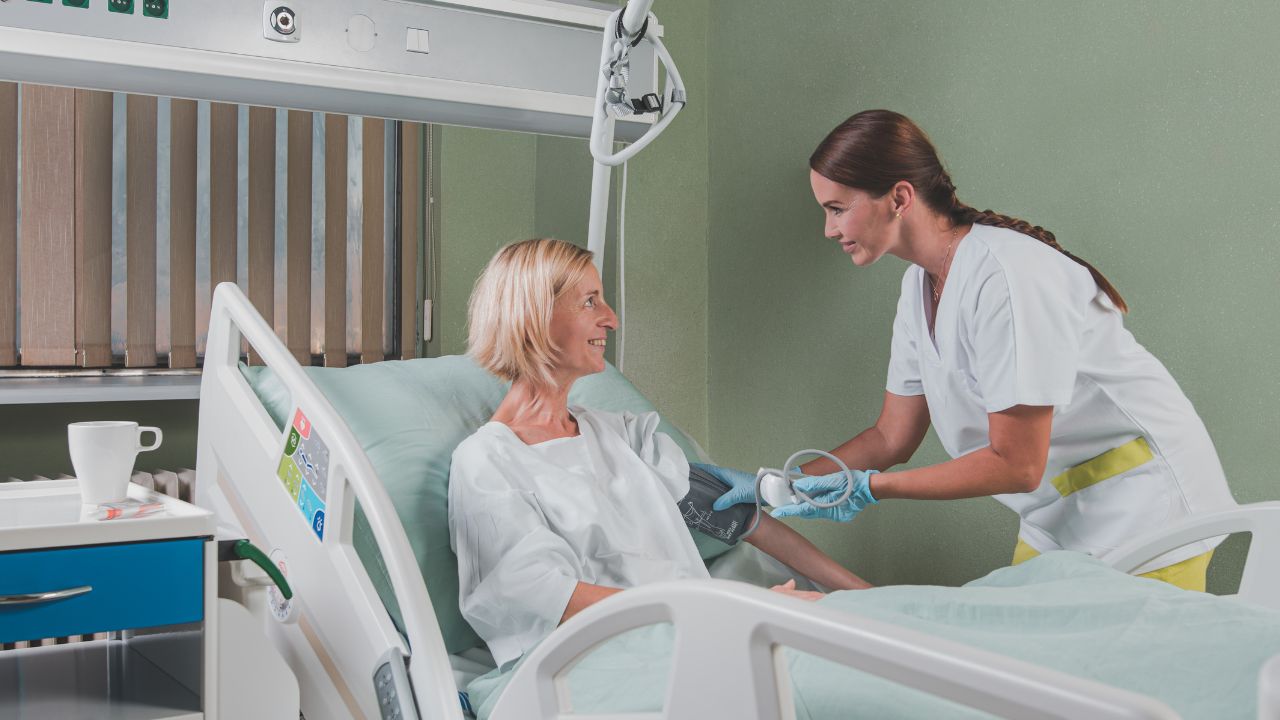
What is acute care?
For any patient who is in need of immediate medical attention, acute care facilities provide short-term treatments for:
- Injuries (especially severe injuries)
- Sudden illnesses
- Any conditions that need urgent medical attention
Acute care facilities focus on stabilizing, diagnosing, and treating illnesses that require immediate intervention.
After being treated in an acute care facility, the patient typically has a more stable condition and may be discharged home or transferred to a post-acute setting to continue their recovery and, in some cases, receive rehabilitation.
Introduction to acute care
Acute care refers to services for conditions that arise unexpectedly and require immediate, decisive attention. Such care significantly differs from long-term care or management of a chronic illness, where treatment is typically extended in cases of persistent or progressive health problems.
The primary mission of acute care is to address urgent health threats, such as:
- Heart attacks
- Strokes
- Severe infections
- Trauma
- Surgical emergencies
Acute care occupies a critical position along the healthcare continuum, from emergency response to care in the acute phases of chronic disease management.
Acute care facilities help avert complications, reduce mortality rates, and lay the foundation for long-term recovery or ongoing medical needs in patients by delivering timely interventions.
What are some types of services offered in acute care?
Acute care hospitals provide a wide range of services that all focus on the rapid diagnosis, proper treatment, and patient stabilization.
Emergency and trauma services
Emergency departments are considered the frontline access point for acute care. Available 24/7, EDs receive and examine patients who present either self-referred or through emergency transport. Common presentations include strokes, heart attacks, fractures, and severe infections; allergic reactions and toxic exposures are also common.
Many acute care centers also have trauma centers verified to treat complex injuries resulting from accidents or violence. Trauma teams consist of surgeons, emergency physicians, nurses, and specialists on standby to deliver immediate lifesaving care.
Inpatient hospital stays for surgery or serious illness
Patients who require prolonged monitoring, surgical intervention, or medical stabilization beyond the ED are admitted to inpatient services. Acute care hospitals manage a wide range of serious diseases, such as pneumonia, sepsis, acute exacerbation of chronic diseases, and postoperative and surgical recovery.
These are generally short but highly intensive stays that focus on resolving the immediate medical concern before sending the patient either home safely or to a post-acute facility.
Intensive care units (ICUs) and high-dependency care
Care is escalated to ICUs when a patient's condition is life-threatening or requires advanced monitoring and organ support. Patients in the ICU may require mechanical ventilation, cardiac support, dialysis, or continuous monitoring of vital signs.
In addition to the ICUs, many hospitals have step-down units that provide increased surveillance for patients who no longer require ICU care but are not yet ready to be cared for in general wards.
Why have multidisciplinary teams in acute care?
Acute care requires a well-coordinated, highly skilled, multidisciplinary team to achieve the best outcomes.
- Physicians: Emergency hospital medicine doctors manage immediate assessments; hospitalists oversee inpatient care; surgeons address operative needs; intensivists specialize in critical care. All work together to provide comprehensive medical care.
- Nurses: In acute care, nurses provide continuous bedside monitoring, administer medication, and educate patients. Advanced life-support equipment requires specially trained critical care nurses who are vigilant in their observation.
- Therapists: Respiratory therapists support breathing interventions; physical therapists promote early mobilization to reduce deconditioning; occupational therapists assist with functional recovery.
- Pharmacists: Pharmacists are indispensable in reviewing complex and multiple medication regimens to ensure safety and efficacy, preventing adverse drug interactions during the acute phase of treatment.
- Technicians and support staff: Radiology and laboratory technicians perform vital diagnostic tests, while respiratory and other specialized technicians assist with life-support measures.
Successful acute care stems from rapid-response teamwork, effective communication, and collaboration among different professionals who are focused on their shared objective of rapid stabilization and initiation of recovery.
Patient flow and transition of care
The patient's journey through acute care involves numerous transitions, from admission to discharge, all of which require good coordination to ensure continuity and safety.
Admission through the emergency department or referral
Most acute admissions originate from the emergency department, where rapid triage assesses severity and treatment priority. Others are admitted directly owing to urgent referrals, either for surgery or complex medical conditions.
Precise and timely collection of data at the time of admission is key to forming the initial treatment plan and activating appropriate specialty teams.
Discharge planning and transitions
Once stabilized, acute care hospitals begin the process of discharge planning to prepare patients for their next phase of care. The teams of physicians, nurses, social workers, and case managers work together to:
- Evaluate the patient's needs for continued therapies or support services.
- Coordinate transfers to rehabilitation hospitals, skilled nursing facilities, or home health care.
- Educate patients and their families about medications, follow-up appointments, and warning signs that require immediate attention.
- Effective discharge planning reduces hospital readmissions, improves patient satisfaction, and improves long-term outcomes.
What are some advances in acute care?
Acute care environments have changed with evolving technology:
- EHRs permit the instant sharing of a patient's information across their care teams, enabling quicker and safer clinical decisions.
- Telemedicine increases specialist access, especially in rural or underserved areas, and enables remote consultations with rapid expert input.
- Remote patient monitoring makes use of sensors and wearable devices to track vital signs continuously, alerting clinicians to subtle changes so that proactive treatment can be offered.
These innovations promote efficiency, enhance safety for patients, and support the precision medicine approach in acute settings.
What are some challenges in acute care?
Some challenges in acute care include these:
Staffing and burnout
Acute care settings are particularly fast-paced and demanding. Staffing shortages, heavy workloads, and emotional demands on providers have been linked to burnout, which may compromise care quality and staff retention.
Increasingly, institutions are investing in wellness programs, mental health support, team-based care models, and adequate staffing strategies to sustain their workforces and maintain high standards.
Infection control measures
Prevention of nosocomial infections remains paramount, especially in the critical care environment where vulnerable patients are. Stringent hygiene protocols, antimicrobial stewardship, and isolation precautions are continually updated to minimize infection risks and protect health.
Why is acute care indispensable?
If a patient needs immediate, short-term treatment for a sudden disease or injury, they can receive this care at an acute care facility. In summary, these facilities provide patients with:
- Emergency and trauma care
- Short-term hospital stays
- Intensive care
- Multidisciplinary teamwork
- Stabilization so that patients can later recover properly and continue their health journey
This blend of rapid response, expertise, and innovation continues to keep acute care facilities at the forefront of saving lives and restoring health in instances of critical need.


