According to the Centers for Disease Control and Prevention (CDC), there were 139.8 million emergency room (ER) visits in 2021. This means there were about 42.7 visits for every 100 people in the country. In other words, on average, nearly half of the US population requires emergency care every year.
Emergency Medicine: What Is It and How Much Does it Pay?
Without emergency nurses, ERs would come to a standstill. Learn more about the emergency room nursing specialty in this comprehensive guide.
What Is ER in Medical Terms?
The National Hospital Ambulatory Medical Care Survey (NHAMCS) defines an emergency department (ED) as a hospital facility open 24 hours a day, seven days a week. The ED provides unscheduled outpatient services to patients who need immediate care. The NHAMCS considers settings staffed less than 24 hours a day outpatient clinics.
The Emergency Nurses Association (ENA) describes the following diverse settings as emergency departments:
- Independent emergency departments, not connected to hospitals, are found in only some states.
- Teaching hospitals have ties with universities. They are typically large facilities with ample resources.
- Community ERs have moderate resources and exist in mid-sized cities.
- Rural ERs are in moderately remote regions. They have more resources within a few hours’ travel.
- Critical access ERs exist in remote settings and typically offer limited resources.
- Disaster ERs are part of federal or military responses to disasters and often have limited resources.
Healthcare providers can offer emergency medicine in various settings. Emergency medicine also includes different subspecialties that focus on specific groups with unique medical needs. Emergency care can specialize in trauma, cardiac, stroke, neuro, or burn. ER medicine can also cater to adult, geriatric, pediatric, or military populations.
What to Expect in a Hospital Emergency Room?

Patients arriving at an emergency room by ambulance are immediately taken in for treatment. Patients who arrive on their own enter the waiting room to check-in.
ER staff members collect patients’ names, addresses, and medical histories. Triage nurses check patients' vital signs, like blood pressure and heart rate. They also look at respiration rate, body temperature, and blood oxygen level.
Additionally, they review patients' symptoms and medical histories. This helps them decide how serious each patient's condition is. Emergency departments cannot turn away patients, even if they can’t pay for treatment.
After triage, emergency physicians examine patients and may order tests, such as X-rays, blood work, or EKGs. While a patient is in the emergency room, nurses and other medical staff check their vital signs and give extra care.
Patients who are not seriously ill may receive treatment, such as IV fluids or medications, in the ER. Emergency physicians discuss patients’ diagnoses and future treatment plans with them before they discharge the patients.
Patients may also receive written instructions regarding medications, restrictions, referrals to specialists, or alert symptoms indicating they should return to the emergency department. Doctors may admit patients to the hospital who are critically ill and require additional care or surgery.
Understanding Emergency Room Wait Times
Emergency room wait times are the length of time from when a patient arrives until a qualified medical professional sees them. Qualified medical professionals include doctors of medicine or osteopathy, nurse practitioners, and physician assistants.
Wait times depend on various factors. Medical staff will treat patients who arrive by ambulance or have life-threatening injuries first. They will see those with less serious issues later.
According to the CDC, emergency room staff see 41.8 percent of patients within 15 minutes of arrival.
What Types of Patients Go to the ER?
The NHAMCS shows that certain groups visit the ER more frequently than others. These groups are infants less than one year old and older adults. In 2021, the emergency room visit rate was 103 per 100 infants; for adults 75 and over, it was 66 per 100 people. Among other age groups, ER visits range from 36 to 45 visits per 100 people.
According to data from 2022, the NHAMCS found the top 10 reasons for ER visits. These are the leading primary diagnoses:
These 10 diagnoses have been the most common in emergency departments since 2016. Their rankings have changed only a little.
MedlinePlus provides a list of emergency conditions that need attention in an ER. Many of these conditions fit into the earlier categories.
- Choking
- Severe allergic reaction with swelling, trouble breathing, or hives
- Neck or spine injuries, particularly with loss of feeling or inability to move
- Electric shock or lightning strike
- Severe burn
- Trouble breathing
- Severe chest pain or pressure
- Injuries to the head with fainting or confusion
- Pain in the arm or jaw
- Sudden-onset or very bad headache
- Sudden inability to see, move, or speak
- Sudden weakness or drooping on one side of the body
- Persistent dizziness or weakness
- Exposure to smoke or poisonous fumes
- Poisoning or overdose of drugs or alcohol
- Broken bone, especially if the bone is visible through the skin
- Deep wound/heavy bleeding
- Severe pain
- Coughing or throwing up blood
- Medicine-resistant fever
- High fever with headache and stiff neck
- Continued vomiting or loose stools
- Seizures
Urgent Care vs. Emergency Room: Are They the Same?
Urgent care refers to medical treatment required within 24 hours. Therefore, treating life-threatening conditions, such as heart attacks or strokes, is not the purpose of urgent care. Medical staff should treat these conditions in the emergency room.
Urgent care centers offer a middle option between doctor’s offices and emergency rooms. Doctor’s offices are not open 24 hours and need appointments. Emergency rooms are for serious medical issues.
Urgent care is a good choice for someone with an illness or injury. This is true if there are no other symptoms or health issues.
The following are some conditions that could be treated in an urgent care center instead of an emergency room:
- Accidents and falls
- Sprains and strains
- Minor fractures
- Cuts that could require stitches
- Diarrhea, vomiting, or dehydration
- Urinary tract infections
- Breathing difficulties, including mild to moderate asthma
- Fever, sore throat, or cough
- Skin rashes and infections
- Eye irritation and redness
- Moderate back problems
Which Healthcare Professionals Work in the ER?
The main team in the emergency room consists of several roles. These include ER technicians, physician assistants, nurses, nurse practitioners, doctors, radiology technicians, and certified nursing assistants. Here are descriptions of the roles of different emergency room team members:
- Emergency room techs (EMTs) and paramedics: Ambulance staff members are paramedics or EMTs. They have some medical training but are not qualified nurses or doctors. They quickly observe the symptoms and provide emergency support while coordinating over the phone with the hospital. They do all they can to prevent the patient’s condition from deteriorating before reaching the hospital. The main difference between EMTs and paramedics is the level of training and type of care they provide. EMTs have entry-level healthcare training and can provide Basic Life Support (BLS). Paramedics can provide Advanced Cardiovascular Life Support (ACLS).
- Emergency physicians: Emergency medicine doctors assess and treat patients with various injuries or health conditions throughout the lifecycle. Their focus is to stabilize patients and determine the next best step. If a patient shows signs of a stroke or heart attack or has severe injuries, the emergency doctor starts treatment right away.
- Emergency nurse practitioners (ENPs): Nurse practitioners specializing in emergency medicine provide critical care and diagnose and treat acute symptoms of emergency patients with little to no supervision from a physician, depending on the state.
- Radiology technicians: If the emergency physician orders X-rays, CT, or MRI scans, the radiology technician performs these tests. The radiology tech shares the test results with the doctor. This helps the doctor make informed decisions about patient care. Radiologists in emergency medicine play a key role in detecting and diagnosing traumatic injuries, emergency medical conditions, and life-threatening conditions.
- Emergency room nurses: Nurses are among the first responders in the ER and must be able to assess situations quickly and make the right decisions for patients. Their role typically involves triaging patients to ensure the most critically affected patients receive care first. Their main job is to find medical problems, assess how serious they are, and give quick help. This support aims to reduce long-term harm and, if needed, keep the person alive. They treat patients with severe and often life-threatening medical conditions.
- Certified nursing assistants: Under nurse supervision, CNAs provide specific care to assigned patients, administering simple treatments and providing bedside care. They observe patients for changes in condition and communicate any changes to the supervising nurse. They also assist in keeping patients and work areas neat, clean, and stocked.
What Is the Role of Registered Nurses in the Emergency Room?
Like their counterparts in other healthcare settings, ER registered nurses provide direct and individualized nursing care to patients. Other responsibilities RNs have in emergency rooms that not all nurses share include the following:
- Performing triage, considering both physical and psychosocial factors
- Providing advanced life support, stabilizing, and treating patients until the attending physician is available
- Responding to adverse symptomatology indicated by monitoring equipment
- Working directly under physicians, assisting them during exams, diagnostic testing, and treatments
- Preparing, administering, and recording medications (orally, subcutaneously, or intravenously)
- Providing IV therapy
- Cleaning and bandaging wounds
Are All ER Nursing Positions the Same?
Although there are commonalities in ER nursing roles across state lines and in different types of emergency departments, the emergency room nursing specialty can be subdivided into diverse roles. According to the ENA, the following are various roles of nurses providing emergency care:
- Triage nurses determine the order in which patients should be treated based on the severity of their conditions.
- Trauma nurses care for patients requiring emergency treatment in trauma centers.
- Code nurses provide emergency care for patients with the highest acuity levels during code situations.
- Charge nurses manage staffing, patient assignments, and communication among ER team members, in addition to other responsibilities.
- Pediatric emergency room nurses usually work in the emergency rooms of children’s hospitals, caring for newborns, children, and adolescents.
- Burn center nurses are specially trained to resuscitate and care for burn victims in emergency settings.
- Geriatric emergency room nurses are specialized in providing emergency care to elderly patients.
- Disaster response or emergency preparedness nurses ensure that their departments are prepared to receive victims of natural or man-made disasters.
- Military emergency room nurses may work in military clinics, hospitals, or even combat zones.
- Critical-care transport (CCT) nurses care for patients in critical conditions during their ambulance transfers to facilities that can provide the necessary care.
- Flight nurses care for acutely ill or injured patients during their transports by plane or helicopter to facilities that can provide adequate care.
What Are Patient-to-RN Staffing Ratios in the ER?
RN-to-patient staffing ratios vary by state. For example, in California, ER nurses can care for four patients at a time. However, a registered nurse will care for only one critical trauma ER patient.
Furthermore, although ER nurses are typically RNs, California allows licensed vocational nurses (LVNs) to constitute up to half of an ER’s nursing workforce. However, only RNs can triage patients and care for critical trauma ER patients.
What Do Emergency Nurse Practitioners Do?
Emergency nurse practitioners (ENPs) collaborate with the rest of the healthcare team to treat patients of all ages in emergency departments, trauma centers, critical access hospitals, and urgent care clinics.
ENPs mainly provide primary care services since most ER patients are treated and discharged with minor health problems. However, they must also be prepared to treat patients with high-acuity traumas, injuries, and other health conditions and to resuscitate and stabilize patients with life-threatening emergencies. The following are typical duties of ENPs:
- Managing patients with acute and chronic diseases and prescribing treatments independently or under physician supervision, depending on the state
- Caring for women with obstetric and gynecological problems
- Caring for infants and children
- Maintaining medical records
- Providing education and counseling to patients and family members
- Participating in nursing and clinic staff meetings and conferences, as well as quality improvement/control activities
- Supervising the work of medical staff and clinical auxiliary personnel
What Do CNAs Do in the ER?
Across healthcare settings, CNAs typically provide direct personal care to patients, such as assisting them with bathing, dressing, feeding, and ambulation. Other everyday CNA duties in the ER include the following:
- Assisting nurses with nursing care of assigned patients
- Assisting physicians and other healthcare providers with routine examinations and procedures, including the procurement of equipment and supplies
- Providing for the general comfort, welfare, and safety of patients
- Maintaining cleanliness of patient area and patient care unit equipment
- Taking and recording temperature, pulse, respiration, and blood pressure
- Measuring and recording patient height and weight
- Documenting patient care and vital signs
- Responding to patient call lights promptly and providing necessary assistance
- Changing linens, checking supply inventory, restocking supplies, transporting patients/supplies/specimens
Depending on state guidelines and the specific emergency room, patient care techs (PCTs) may be used instead of or in addition to CNAs. They may perform additional responsibilities which often require further certification and training. Those responsibilities may include the following:
- Performing EKGs
- Performing capillary blood glucose checks
- Collecting specimens
- Providing catheter care, simple wound care, tracheostomy care, and ostomy irrigation and care
- Monitoring oxygen flow-rate
- Performing IV site care, and discontinuation of peripheral IV
- Performing range of motion exercises
Please refer to the guidelines set forth by the state in which you practice, in addition to the policies set forth by the facility in which you work for what CNAs and PCTs in the ER setting can and cannot do.
How to Become an ER Nurse

Emergency room nurses are mostly registered nurses. Registered nurses have completed accredited RN programs, which include Associate Degrees in Nursing (ADNs) and Bachelor of Science in Nursing (BSN) degrees. They also must pass the National Council Licensure Examination for Registered Nurses (NCLEX-RN) and meet state-specific requirements to obtain licensure. New grads may be able to work in emergency departments straight out of nursing school. However, many positions require at least one year of experience in acute care settings.
Although typically not required, nurses can also obtain specialty certifications in emergency room care.
Nurses who wish to become emergency nurse practitioners must pursue advanced degrees, such as Master of Science in Nursing (MSN) or Doctor of Nursing Practice (DNP) degrees, and specialty certifications, which require two to four more years of study after initial nursing licensure.
According to the American Association of Nurse Practitioners, the majority of ENPs are family nurse practitioners (FNPs) who pursue further specialty education in emergency medicine through academic or post-graduate fellowship programs or on-site training and continuing education units (CEUs).
Best Certifications for ER Nurses
The Basic Life Support certification is practically a given since most nursing positions require this credential. In emergency settings, the Advanced Cardiovascular Life Support (ACLS) and Pediatric Advanced Life Support (PALS) certifications are also important. These certifications can be obtained through the American Heart Association.
Besides these life support credentials, the Board of Certification for Emergency Nursing (BCEN) offers five specialty certifications for emergency nurses:
- Certified Emergency Nurse (CEN)
- Certified Pediatric Emergency Nurse (CPEN)
- Trauma Certified Registered Nurse (TCRN)
- Certified Flight Registered Nurse (CFRN)
- Certified Transport Registered Nurse (CTRN)
Nurses must hold current RN licenses to be eligible for these certifications. Furthermore, the BCEN recommends that candidates have at least two years of previous nursing work experience before pursuing certification for emergency nursing, regardless of educational path (bachelor or associate).
The ENA also offers the following courses for emergency nurses:
- Trauma Nursing Core Course (TNCC)
- Emergency Nursing Pediatric Course (ENPC)
- Geriatric Emergency Nursing Education (GENE) Course
- Triage First
- Emergency Severity Index
For nurse practitioners working in emergency settings, relevant certifications include the following:
- Emergency Nurse Practioner
- Family Nurse Practitioner
- Acute Care Nurse Practitioner (AGACNP or ACNP)
- Pediatric Acute Care Nurse Practitioner (CPNP-AC)
How to Become an ER CNA
To become ER CNAs, candidates must be high school graduates and complete certified nursing assistant programs. They also must meet other state-specific requirements to obtain certification or licensure (if applicable). Nursing students may be able to work as nursing assistants without completing additional training and would be considered either CNAs or PCTs in the ER.
Typically, nursing assistants who wish to work in emergency departments must obtain BLS credentials. Some positions may also require completing training in acute care skills.
Many positions require or prefer nursing assistants to have at least six months of experience, preferably in acute care. EKG experience is also highly valued.
Other standard requirements include the following:
- Ability to stand/walk 95 percent of the day
- Ability to lift and transport patients
- Visual and auditory acuity
- Fluent command of English
- Basic computer skills
- Skill in prioritizing assignments and completing work promptly
How Much Do ER Nurses Make?
The amount nursing professionals earn in different settings depends on several factors. Not surprisingly, one of the most significant factors is the level of licensure. Here are the average wages of different nursing professionals working in emergency departments.
ER CNA Salary
According to the U.S. Bureau of Labor Statistics (BLS), the national average wage for certified nursing assistants is $39,610 per year or $19.04 per hour. The average wage in general medical and surgical hospitals is slightly higher at $40,840 annually or $19.64 hourly. For a more precise understanding of potential ER salary, the following average wages are broken down by type of general medical and surgical hospital:
- Owned by state governments: $43,140 annually or $20.74 hourly
- Owned by local governments: $39,750 annually or $19.11 hourly
- Privately owned: $40,870 annually or $19.65 hourly
These averages represent the wages of employed CNAs; certified nursing assistants who pick up PRN ER CNA jobs as independent contractors can expect significantly higher hourly wages.
ED RN Salary
On average, RNs in the United States make $94,480 per year or $45.42 per hour. In general medical and surgical hospitals—where most ER nurses work—nurses earn, on average, $96,830 annually or $46.55 per hour. These average wages help nurses understand how much they can earn working in the ER. However, the average emergency room nurse salary can vary a lot between states and different hospitals. The following are the average annual and hourly wages for registered nurses working in different types of general medical and surgical hospitals:
- Owned by state governments: $104,170 annually or $50.08 hourly
- Owned by local governments: $92,930 annually or $44.68 hourly
- Privately owned: $96,900 annually or $46.59 hourly
Emergency registered nurses can also obtain significantly higher hourly rates through PRN ER RN jobs.
ENP Salary
Based on BLS data, nurse practitioners earn much higher average wages: $128,490 annually or $61.78 hourly. The average increases to $135,610 annually or $65.20 hourly in general medical and surgical hospitals. Here are the average yearly and hourly wages for nurse practitioners in various general medical and surgical hospitals:
- Owned by state governments: $153,470 annually or $73.78 hourly
- Owned by local governments: $134,790 annually or $64.80 hourly
- Privately owned: $134,510 annually or $64.67 hourly
The ER NP nursing specialty has an average annual salary of $137,280. This makes it the third highest-paying nursing specialty.
Is ER Nursing Stressful?
ER nursing has its challenges, as do all nursing specialties. A study published in 2023 in the National Library of Medicine found some alarming results. The following percentages reflect emergency nurses’ reports:
- High burnout: 58%
- Dissatisfaction with work: 39%
- Intent to leave their positions in the next year: 27%
One of the authors of the 2023 study continued research to shed light on these results. This new study aimed to find out why ER RNs do not recommend their workplaces to other clinicians. The nurses’ answers shared the following five themes:
- Unlimited patients with limited support: Nurses described high patient loads, insufficient staffing, inadequate specialty nurse training, and prolonged patient boarding. Staffing of unlicensed assistive personnel, such as patient care technicians and nursing assistants, was also described as insufficient.
- Unanswered calls for help: Nurses also felt that administrators’ responsiveness to their reports on unsafe working conditions was unsatisfactory. They attributed this lack of responsiveness to prioritizing healthcare financials over patient care and work environment safety.
- Concerns about their licenses: Nurses felt that unsafe staffing ratios, in addition to inadequate infection control protocols, equipment, and safety regulation transparency in their work environment, compromised patient care and outcomes. As a result, nurses were worried that poor outcomes could jeopardize their licenses.
- Multidimensional workplace violence: Emergency nurses reported physical and verbal violence from patients. They also perceived bullying across levels of clinician tenure and position type. In addition, ER nurses reported discrimination and racism, management threats of retribution, and favoritism of management toward specific nursing staff.
- Feeling undervalued and unfulfilled: The unsafe working conditions made nurses feel undervalued by hospital management. Nurses felt disappointed and frustrated. They often left work with unfinished tasks and did not provide the best care to patients.
Importance of Emergency Nursing
Emergency nursing is a crucial aspect of critical care within the healthcare system. ER nurses are the first responders in hospitals.
They are responsible for immediate assessment, stabilization, and interventions for patients in critical conditions. They are experts in making quick decisions under pressure, prioritizing, multitasking, and advocating for patients. Their dedicated roles improve patient outcomes and even save lives.
To recognize the important work of emergency nurses, the Emergency Nurses Association celebrates Emergency Nurses Day. This event takes place on the second Wednesday in October. In 2001, the association expanded the celebration to a whole week.
During Emergency Nurses Week, the association celebrates its members. It offers giveaways and provides discounts. It also engages with lawmakers for recognition. Additionally, it hosts the annual EN Week 5K event.
Working in the Emergency Room Nursing Specialty
About half of the US population needs emergency care each year. This care would not be possible without the important work of ER nurses. That fact alone is a testament to the importance of the ER nursing specialty.
That said, the importance of ER nursing does not negate the challenges that emergency nurses face in this fast-paced setting. One alternative that makes nurses’ lives a little easier is working PRN or per diem.
A PRN shift is just as challenging as an employee’s workday. However, PRN nurses can choose when and where to work. They earn higher hourly wages and enjoy more flexibility. This helps them achieve a better work-life balance.
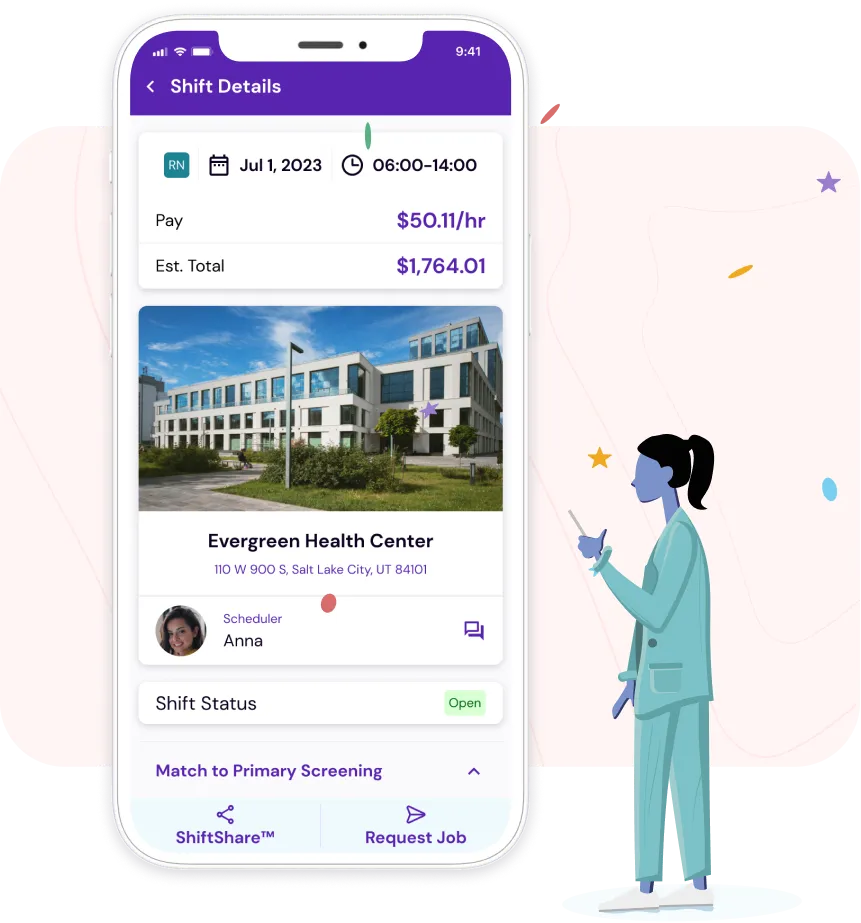
Nursa is a healthcare marketplace connecting hospitals and other facilities with nurses interested in picking up PRN assignments. Sign up with Nursa for free and begin picking up PRN ER work on your own terms.
Sources:
- Centers for Disease Control and Prevention (CDC)
- National Hospital Ambulatory Medical Care Survey (NHAMCS)
- National Library of Medicine: The association of the emergency department work environment on patient care and nurse job outcomes
- Emergency Nurses’ Reasons for Not Recommending Their Hospital to Clinicians as a Good Place to Work
- American College of Emergency Physicians: What Can I Expect When I Go to The Emergency Department?
- American Association of Nurse Practitioners: Are You Considering a Career as an Emergency Nurse Practitioner?