

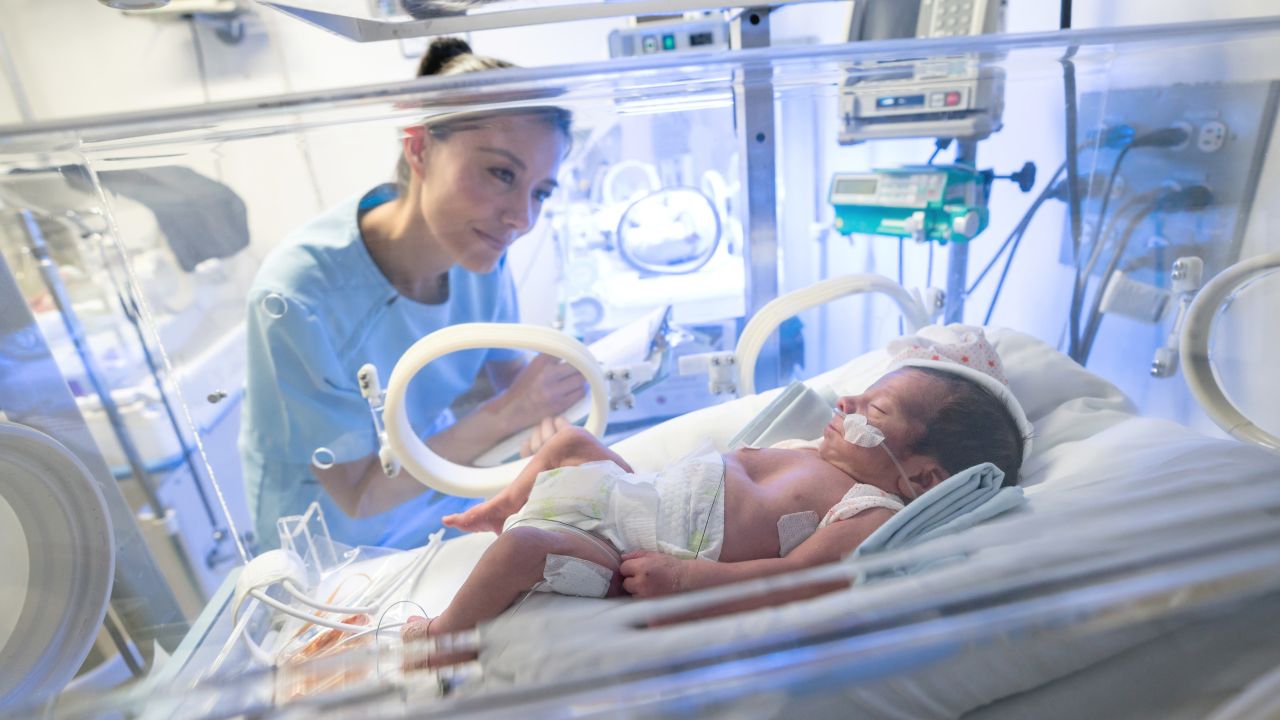
What is neonatal nursing?
According to the Centers for Disease Control and Prevention (CDC), 3,613,647 babies were born in 2020. From this total, 10.09 percent were born preterm, and 8.24 percent were born with low birth weight—both of which are reasons for admission to a neonatal intensive care unit. Thankfully, the efforts of physicians and neonatal nurses, combined with significant medical advances, have increased the survival rate of these vulnerable babies tenfold over the past fifteen years.
NICU staffing: Supporting high-acuity neonates
How would you like to be counted among these nurse heroes who care for and treat this most vulnerable population? This ultimate guide on working as a neonatal nurse will provide all the information you need to decide if this nursing specialty is right for you.
What does neonatal mean in medical terms?

A neonate or newborn is a baby four weeks old or younger. This period is characterized by significant changes and growth. Critical events that take place during this time include establishing feeding patterns, initiating parent-infant bonding, possibly acquiring serious infections, and, in some cases, detecting congenital disabilities.
When neonates are born with health problems, such as infections, cardiac malformations, congenital disabilities, or prematurity, they are cared for and treated by neonatal nurses. Even though the neonatal period comprises the first four weeks of life, neonates with health problems are often sick for months or years; neonatal nurses continue to care for them until they are discharged from the hospital or until they turn approximately two years old.
Not all neonates are born with health problems, and those who are do not all have serious conditions. Therefore, the care that neonatal nurses offer can be classified into three different levels:
- Level I: Level I neonatal nursing is also called well-baby nursing because this care is provided to healthy newborns. Level I neonatal nurses bathe babies, help mothers learn about newborn care, and perform hearing and vision tests. They are also skilled in neonatal resuscitation, caring for babies born between thirty-five and thirty-seven weeks of gestation, and stabilizing newborns with health problems born at less than thirty-five weeks until transfer is possible.
- Level II: Nurses who provide level II care work in special care nurseries. They care for premature babies born at thirty-two weeks of gestation who have moderate illness or infants who are improving and no longer need intensive care. These nurses help babies learn to breathe independently and provide oxygen therapy, medications, intravenous therapy, and specialized feeding.
- Level III: This type of care is provided in intensive care units. Nurses in these units care for very sick newborns, usually very premature neonates or newborns with congenital problems. These newborns need to be monitored constantly and require care and treatment from many specialists. They often require incubators, ventilators, supporting equipment, and even surgery.
What does NICU stand for?
The abbreviation NICU stands for neonatal intensive care unit. By definition, this unit cares for patients requiring intensive care during their first four weeks of life. This unit is where neonatal nurses and other specialists care for newborns with the highest level of complications and healthcare needs.
What is a neonatal unit in a hospital?

The term neonatal unit usually refers to a NICU; however, neonatal care may be offered in other hospital units, such as labor and delivery (L&D) and mother and baby (M&B).
Newborns are usually admitted to the NICU if they are preterm (born before thirty-seven weeks of gestation), have low birth weight (below 5.5 lbs), or otherwise have a condition that requires specialized care, including infections, congenital disabilities, heart problems, or breathing problems. Since twins, triplets, and other multiples are usually born preterm and with low birth weight, they are frequently admitted to NICUs as well.
Although each newborn must be assessed to determine whether they need to be admitted to a NICU, the following factors place newborns at a higher risk of requiring intensive care:
Maternal factors
- Being over forty or under sixteen years old
- Alcohol or drug use
- Diabetes
- High blood pressure
- Bleeding
- Sexually transmitted diseases (STDs)
- Pregnancy with multiples
- Excess or lack of amniotic fluid
- Premature rupture of membranes
Delivery factors
- Fetal distress or birth asphyxia
- Breech birth or other abnormal position
- Meconium in amniotic fluid
- Nuchal cord
- Use of forceps or cesarean delivery
Newborn factors
- Preterm or post-term birth (after forty-two weeks of gestation)
- Birth weight below five pounds, eight ounces or over eight pounds, thirteen ounces
- Small for gestational age
- Need for medicine or resuscitation in the delivery room
- Congenital disabilities
- Respiratory distress, such as grunting, rapid breathing, or apnea
- Infections, including STDs
- Seizures
- Low blood sugar
- Need for special procedures, such as blood transfusions
- Need for oxygen, intravenous (IV) therapy, or medicine
Unfortunately, not all hospitals have NICUs. If they don’t, babies with specialized healthcare needs born at those hospitals must be transferred to hospitals with NICUs, and the prognosis of those newborns is less favorable than that of babies born at hospitals with NICUs.
Which professionals work in a neonatal intensive care unit?
NICUs are staffed by various specialized healthcare professionals, including the following:
- Neonatologist: A neonatologist is a pediatrician who is specialized in caring for premature and sick newborns. These specialists supervise other healthcare professionals in the NICU.
- Neonatal fellow: This professional is a pediatrician obtaining extra training in neonatal intensive care.
- Pediatric resident: This physician in training is obtaining training in the care of children.
- Neonatal nurse practitioner: This is a nurse practitioner that has obtained extra training in newborn care.
- Respiratory therapist: This professional has special training in providing respiratory support, including managing breathing machines and oxygen.
- Physical, occupational, and speech therapists: These therapists assist newborns with their development. For example, speech therapists help babies learn to feed.
- Dietician: This professional ensures that newborns receive good nutrition and grow well.
- Lactation consultant: This professional is trained in helping mothers and their babies to breastfeed.
- Pharmacist: A pharmacist assists healthcare providers in choosing appropriate medicines, supervising medicine doses, and informing the rest of the healthcare team of possible side effects.
- Social worker: A social worker helps families by providing emotional support, information from healthcare providers, and other assistance, such as facilitating transportation or home healthcare.
- Hospital chaplain: This person is a religious advisor; they provide spiritual support and counseling to families with babies in the NICU.
What is the role of a neonatal nurse?
Neonatal nurses work in different roles depending on their qualifications and the level of care they provide. Here are some neonatal nursing roles:
- Nurse managers are responsible for the staffing and administration of the NICU.
- Clinical nurse specialists provide educational programs and support other staff. They may also provide direct patient care.
- Developmental care specialists are specialized in the developmental care of sick and preterm infants. They assist other healthcare providers in meeting the developmental needs of newborns and provide direct care.
- Neonatal nurse practitioners (NNPs) work with doctors and other nurses to provide comprehensive critical care to newborns in the NICU. NNPs share their expertise with the rest of the healthcare team as they manage a group of NICU patients.
What does a NICU nurse do?
As we have seen, neonatal nurses may care for newborns in different settings and roles and, therefore, carry out different duties. Let’s learn a little more about the specific responsibilities of a NICU registered nurse:
- They provide daily care for newborns, such as changing diapers, bathing, and feeding.
- They take infants’ vital signs and monitor fluid intake and waste output.
- They administer medication, IV fluids, and blood transfusions.
- They perform screenings, such as hearing and vision tests.
- They maintain patients’ records and update parents on their babies’ conditions.
- They operate specialized equipment.
- They also may attend high-risk deliveries and assist in L&D units when emergencies arise.
How to become a neonatal nurse and how long does it take?

The first step to becoming a neonatal nurse is becoming an RN. Aspiring neonatal nurses have multiple options for becoming RNs:
- Aspiring RNs can obtain associate’s degrees in nursing at junior or community colleges in as little as two years.
- They can complete bachelor’s of science in nursing (BSN) degrees at colleges or universities in approximately four years.
- Additionally, individuals with bachelor’s degrees in other fields may be eligible for accelerated programs to obtain BSNs or master’s of science in nursing (MSN) degrees in one to two years.
Additionally, RNs may pursue higher studies to become advanced practice registered nurses (APRNs). An aspiring APRN must first obtain a BSN and then a master’s or doctoral degree.
Some NICUs may hire newly graduated RNs, but others may require previous nursing experience. If you are having trouble finding a job in a NICU straight out of school, consider picking up per diem nursing shifts to beef up your resume. Per diem work is also a great way to explore different work settings and roles to help you discover the type of nursing work you are passionate about.
Neonatal nurse certification
Nurses may also improve their chances of obtaining their dream neonatal nursing jobs through certification. The National Certification Corporation (NCC) offers multiple certification options for neonatal RNs and APRNs. Here are the neonatal certifications RNs can pursue:
- Inpatient Obstetric Nursing
- Low Risk Neonatal Intensive Care Nursing
- Maternal Newborn Nursing
- Neonatal Intensive Care Nursing
- Inpatient Antepartum Nursing
These certifications require nurses to fulfill the following requirements:
- Hold valid RN licenses
- Accrue two years of specialty experience (at least 2,000 hours) in direct patient care, education, administration, or research (at any point of a nurse’s career)
- Obtain employment in the specialty within the previous twenty-four months
Here are the certification options the NCC offers for APRNs:
- Neonatal Nurse Practitioner
- Women's Health Care Nurse Practitioner
Finally, the following are subspecialty certifications offered by the NCC for both RNs and APRNs:
- Neonatal Neuro-Intensive Care
- Care of the Extremely Low Birth Weight Neonate
- Obstetric and Neonatal Quality and Safety
- Neonatal Pediatric Transport
- Electronic Fetal Monitoring
How much do neonatal nurses make?
The salary of a neonatal nurse depends on many factors: residence, work experience, certifications, etc. Nevertheless, two of the most important factors are level of education and work setting. While the average salary for RNs is $82,750 per year, the average salary of APRNs is $118,040. Regarding work setting, here are average RN salaries in different types of facilities where neonatal nurses may work:
- Offices of physicians: $73,860
- Home health care services: $78,190
- Specialty hospitals except for psychiatric and substance abuse hospitals: $84,800
- General medical and surgical hospitals: $85,020
- Outpatient care centers: $93,070
The following are average salaries for neonatal APRNs in different healthcare settings:
- Offices of other health practitioners: $108,890
- Offices of physicians: $114,870
- General medical and surgical hospitals: $122,960
- Outpatient care centers: $129,190
- Home health care services: $133,170
What is neonatal nursing like?

Most neonatal nurses work in hospital settings, although some work in patients’ homes, community settings, or clinics. Since neonatal patients require care around the clock, neonatal nurses cover shifts twenty-four/seven, including weekends and holidays. Most neonatal nurses work twelve-hour shifts, but ten and eight-hour shifts are also possible. Nurse-patient ratios vary depending on the severity of patients’ conditions. Nevertheless, nurses can expect to care for an average of four patients at a time.
“NICU is my favorite. You really get to know the babies and the families, which can be good or bad. It's very specialized and not like any other area, which is something I appreciated. You may attend high risk deliveries, and you may have the opportunity to join a transport team, depending on the unit. It's also a fast moving specialty, always developing, always something to learn.” Reddit – u/Iystrian
Is neonatal nursing hard?
There’s no better way to learn the hard truths of a nursing specialty than from nurses themselves. Here are some of the aspects of neonatal nursing that NICU nurses find the most challenging:
“Cons: families can be difficult, but I don’t think it’s any worse than med surge and most families are fine. Baby deaths don’t happen that often but when they do it hits you hard. There is a steep learning curve because you don’t learn any of this in school and there is so much to learn.” Reddit – u/Redwoods_Empath
“It's hard to send a baby home with awful parents or questionable situations. Watching babies suffer unnecessarily, like when the plug should have been pulled ages ago but we're still dragging them along. Slow nights. I'm at work right now and I haven't left my chair in an hour except to pat a fussy baby who keeps trying to extubate. Feeding babies can be mind numbing.” Reddit – u/starstuff89
Why choose neonatal nursing?
Despite challenges, many neonatal nurses wouldn’t change their jobs for any other. Here are some testimonials of NICU nurses who love their jobs:
“Pros: babies. Little patients. No back pain. Better ratios most of the time. You’re not just passing meds and at least in a lvl 3 you feel like you’re accomplishing something and the babies usually go home around their due date. I literally just held a baby for an hour today, it was wonderful. Unless something absolutely crazy and absurd changes my mind, I’m going to be a NICU nurse until retirement.” Reddit – u/Redwoods_Empath
“NICU is my favorite. For the most part it's a positive environment, most of the babies do well. You develop relationships with the families of the long term kids. You work closely with them and it's great to see them growing in their confidence and abilities to care for their little ones. There's plenty for adrenaline junkies, with attending high risk deliveries and stabilizing newborns, and many units have transport teams to bring in babies from the region...” Reddit – u/Iystrian
What makes a good neonatal nurse: Tips for new nurses?
Aside from obtaining RN licensure and certification, new nurses should strive to develop the following skills and qualities to become exceptional neonatal nurses:
- Sharp observation skills
- Empathy and other social skills
- Excellent written and oral communication skills
- Ability to multitask
- Ability to work effectively as part of a team
Furthermore, here is a tip from a neonatal nurse on choosing the right work setting as a new nurse:
“...unit culture and staffing are really important. You really want an environment where you feel supported in starting a new specialty and there is an adequate amount of time/resources dedicated to your orientation, especially as a new grad. Having this will help you learn the hard skills of being a NICU nurse as well as improve communication skills with the families.” Reddit – u/coastalsoul7
Final thoughts on neonatal nursing
Does neonatal nursing sound like a dream job to you? All nursing specialties have advantages and drawbacks; there is no one-size-fits-all ideal specialty. Therefore, you will have to reflect on your own strengths, weaknesses, preferences, and personality profile to help you decide which specialty is right for you.


