

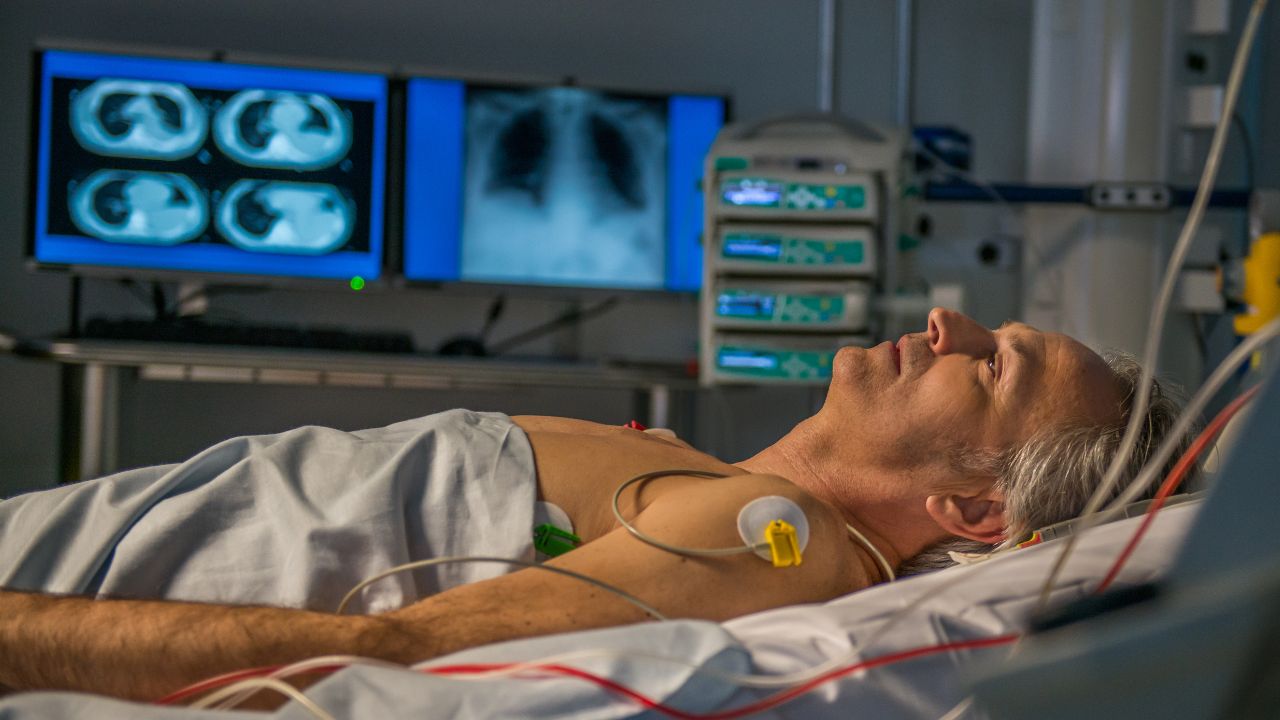
The respiratory or pulmonary intensive care unit (ICU) manages catastrophic respiratory failure, representing the highest acuity level within acute care medicine.
Achieving positive patient outcomes demands the immediate and seamless integration of expert human capital and sophisticated technological protocols.
Respiratory ICU staffing: Sustaining advanced pulmonary life support
Maintaining a high-functioning environment requires more than just staff presence; efficient staffing and operational rigor are necessary to prevent secondary complications, mitigate moral injury, and ultimately promote successful liberation from mechanical ventilation.
This comprehensive analysis outlines the specialized structure, complex clinical requirements, and operational strategies required to maintain a high-performance pulmonary ICU workforce, with a strong emphasis on precision and standardization.
Specialization, acuity, and advanced patient management
The pulmonary ICU is in charge of managing critical pulmonary pathologies and their systemic consequences, which frequently involve cascading multi-organ failure. These are some patient conditions that include:
- Acute respiratory distress syndrome (ARDS): Requires lung-protective strategies to minimize injury by strictly limiting tidal volume and driving pressure to prevent both volutrauma and atelectrauma
- Decompensated chronic obstructive pulmonary disease or asthma: Requires ventilatory support to correct respiratory acidosis and prevent air trapping, often through controlled hypoventilation to manage intrinsic positive end-expiratory pressure (auto-PEEP)
- Atypical/severe pneumonia: Often involves concurrent septic shock requiring multi-system support, necessitating rapid institution of hemodynamic protocols (vasopressors) alongside targeted respiratory interventions
- Neuromuscular respiratory failure: Involves specialized weaning and chronic airway management, particularly in conditions like Myasthenia gravis, where progressive muscle weakness dictates highly cautious ventilation and extubation planning
Each patient is very unique and requires a treatment specific to their condition; it is up to the medical professional to determine which means are needed to have a positive patient outcome. Clinical decision-making is often complex, requiring rapid interpretation of arterial blood gases, radiographic changes, and continuous hemodynamic monitoring.
The treatment plan must be constantly adapted, often on an hourly basis, to the patient's evolving physiological state, demanding high levels of vigilance and rapid technical proficiency from the entire team. The mastery of advanced life support technology is non-negotiable for all personnel assigned to this specialized environment.
Advanced invasive and non-invasive ventilation
This level of care requires precise titration of positive end-expiratory pressure (PEEP), the use of lung recruitment maneuvers, and the application of advanced ventilation modes such as Airway Pressure Release Ventilation (APRV) and Neurally Adjusted Ventilatory Assist (NAVA).
Weaning protocols
These protocols mandate the objective assessment of readiness using tools such as the rapid shallow breathing index and the implementation of formal spontaneous breathing trials (SBTs) to expedite ventilator liberation while minimizing the risk of extubation failure.
Extracorporeal membrane oxygenation (ECMO)
This intervention involves veno-venous (VV) or veno-arterial (VA) support for patients with refractory heart or lung failure when maximal conventional ventilator strategies are insufficient to maintain adequate gas exchange.
Differentiating critical care domains
The pulmonary ICU excels when its team members are prepared, experienced, and focused on applying their expertise in respiratory mechanics and gas exchange. The complexity of maintaining alveolar stability necessitates specialized staffing and technical resources, including volumetric capnography—a non-invasive monitoring tool that provides real-time data on carbon dioxide elimination and physiological dead space ventilation.
This critical data drives precise ventilator adjustments. The unit is supervised by a pulmonary and critical care board-certified intensivist, ensuring the highest level of specialized knowledge guides all complex clinical decisions and protocols.
Personnel structure, expertise, and clinical ratios
Effective operation heavily relies on a strictly defined, multidisciplinary team with overlapping competencies that work together in harmony when placed in their appropriate role. Patient management depends not just on individual skill, but on seamless, structured communication—particularly during shift change and rapid response events—to ensure continuity of care.
Core clinical roles
- Registered nurse (RN): Manages advanced hemodynamic monitoring, titrates vasoactive infusions, and operates continuous renal replacement therapy (CRRT) machines
- Respiratory therapist (RT): Specializes in ventilator waveform analysis, monitoring system compliance, and performing advanced airway management procedures
- ECMO specialists: Must be credentialed RNs or RTs responsible for continuous circuit parameter management, recognizing signs of pump cavitation or oxygenator failure
- Intensivist: Directs goal-directed therapy protocols, interprets advanced imaging, and coordinates the daily ventilator management team strategy
- Ancillary/support staff: Includes specialized dieticians for meeting high metabolic demands and pharmacy specialists for complex antibiotic and sedation regimens
Acuity-driven staffing ratios
Quantity is quality in this case; ratios reflect patient-level intensity and hands-on technical time. The patient census alone is insufficient to determine adequate staffing; instead, the severity of illness, often quantified by systems like the TISS or SAPS II scores, dictates the required personnel investment.
These specific, low ratios are necessary because a rapid deterioration in a pulmonary patient requires the immediate, undivided attention of highly skilled personnel to prevent irreversible damage.
- Nurse-to-patient ratios: Set at 1:2 for standard mechanically ventilated patients and tightened to 1:1 for patients on ECMO, multiple high-dose pressors, or active CRRT
- Respiratory therapist-to-patient ratios: Maintained at 1:8 maximum for conventional ventilation but reduced to 1:5 or 1:6 in units utilizing ECMO or requiring frequent prone positioning procedures
Surge capacity and float management
In times of need for extra staff, what are a couple of options available?
Maintaining flexible staffing mechanisms is crucial for preventing burnout in core staff and ensuring continuous, safe patient care during unpredictable census fluctuations, such as those seen during seasonal respiratory virus outbreaks. Strict guidelines must govern who is allowed to care for complex respiratory patients.
- Per diem and agency staff: Provide essential buffers for census surges and seasonal peaks, but must meet rigorous screening standards
- Float protocol: Requires floated staff to have restricted assignments and be paired with a senior mentor to mitigate risk associated with unfamiliarity with specialized pulmonary protocols
Competency acquisition and validation
High specialization mandates formalized, outcome-based training, and frequent high-fidelity simulation can be used to help maintain a high level of competency in the work environment. Training must cover both the technical manipulation of equipment and the critical thinking required for complex respiratory failure, moving staff from task-based competence to comprehensive clinical judgment.
Specialized onboarding requirements
- Length of orientation: A minimum of 12–16 weeks is mandated for new staff to achieve independent competency across the full spectrum of advanced respiratory modalities.
- Ventilator proficiency: Training includes optimizing lung protection and managing specific pressure metrics, demanding mastery in interpreting ventilator graphics (flow, pressure, volume loops).
- Simulation training: Requires mandatory high-fidelity drills for rapid sequence intubation (RSI), catastrophic vent failure scenarios, and critical ECMO emergencies to solidify decision-making pathways.
Professional credentialing
Strict adherence to professional credentialing validates specific clinical competency: This process moves beyond initial licensure to ensure specialized knowledge is maintained and updated. Credentials often require recurrent testing and continuing education to remain valid, reflecting the rapidly evolving nature of critical care technology and evidence.
- Respiratory therapists: Must hold the registered respiratory therapist (RRT) credential; the adult critical care specialist (ACCS) certification is highly preferred for senior roles
- Registered nurses: Require Critical Care Registered Nurse (CCRN) certification to confirm expertise across the spectrum of adult critical care, including pulmonary and cardiovascular support
- ECMO credentialing: Requires extensive institutional training, simulation hours, and formal clinical sign-offs due to the extreme danger posed by circuit failure or patient hemorrhage
- ARDS protocols: Involves competency validation in safe prone positioning procedures and precise sedation titration for chest wall mechanics to prevent patient harm and optimize lung compliance
Safety, compliance, and quality assurance
Maintaining a safe and sound work environment has to be maintained through evidence-based protocols and continuous quality improvement (QI) monitoring on a regular basis. Safety in the Pulmonary ICU is inherently linked to strict adherence to protocols designed to counteract common, preventable, and often devastating complications associated with mechanical ventilation and central lines.
High-reliability protocols
- Ventilator bundle compliance: Protocolized interventions are mandatory to prevent Ventilator-Associated Pneumonia (VAP).
- Airway and line safety: Rigorous protocols are enforced to prevent Central Line-Associated Bloodstream Infections (CLABSI).
- Sedation and delirium: The use of validated scoring tools (like RASS and CAM-ICU) is required.
Auditing and regulatory standards
Quality improvement efforts are aimed at reducing ventilator days and readmissions. For proper compliance, this requires continuous audit activity against the Joint Commission (JC) standards. These auditing processes involve both concurrent (real-time) chart reviews and retrospective data analysis, ensuring continuous feedback loops exist to address system failures immediately.
QI targets are publicly reported and are a key measure of institutional performance and quality of care provided.
Deep dive into quality improvement and technical monitoring
The operation of a Pulmonary ICU transitions from reactive management to proactive, data-driven optimization. Quality improvement is not a static task but a continuous loop, ensuring adherence to the highest standards set by regulatory bodies and professional societies.
Continuous quality metrics and data analysis
The core function of the RICU’s QI program is to identify and close gaps between current practice and clinical best practices. This relies on the routine capture and analysis of key performance indicators (KPIs):
- VAP rate tracking: The gold standard metric for respiratory care infection control, involving audits that track compliance with every component of the VAP bundle (head-of-bed elevation, oral care, sedation holidays)
- Duration of mechanical ventilation: Directly impacts patient morbidity and resource utilization, with QI efforts targeting minimization through aggressive, protocolized weaning that leverages technology like automated weaning protocols where appropriate
- ICU readmission rates: A critical measure of successful liberation from critical illness, where high readmission rates necessitate review of patient readiness criteria and discharge planning adequacy
- Oxygenation index and driving pressure compliance: Technical metrics crucial for ARDS management, requiring audits to verify that Intensivists and RTs consistently maintain lung-protective settings to prevent secondary injury
Regulatory oversight and mock surveys
Compliance with the Joint Commission standards is mandatory. The ICU must regularly conduct mock surveys to assess preparedness for unannounced inspections. These surveys scrutinize:
- Documentation integrity: Ensuring all procedures, medication administrations, and critical patient status changes (e.g., vent adjustments) are accurately and immediately recorded in the Electronic Health Record (EHR) for compliance and continuity of care
- Equipment maintenance logs: Verifying that all life support technology, including ventilators and ECMO components, is maintained according to manufacturer and institutional specifications, rigidly adhering to preventive maintenance schedules
- Staff competency records: Confirming that all clinical personnel (RNs, RTs, ECMO specialists) maintain current certifications and have demonstrated proficiency in low-frequency, high-risk procedures
Specialized ECMO program management
Managing an ECMO program within the Pulmonary ICU represents the highest tier of technical complexity. It requires dedicated infrastructure, highly specialized training, and rigid operational guidelines, often functioning as a referral center for regional hospitals.
Technical and physiological demands
ECMO requires continuous, minute-by-minute monitoring of the circuit and the patient’s physiology. The team must be proficient in:
- Circuit troubleshooting: Recognizing and immediately responding to issues like pump cavitation, oxygenator failure (clotting), and circuit rupture, often involving emergency bedside component exchanges
- Veno-venous (VV) cannula management: Ensuring optimal positioning and flow dynamics, as poor VV flow can lead to recirculation, drastically reducing oxygenation efficacy
- Anticoagulation Stewardship: Managing heparin or alternative anticoagulants to prevent circuit clotting without inducing hemorrhagic complications, requiring frequent monitoring of ACT or anti-Xa levels
ECMO team structure and expertise
The staffing model for ECMO necessitates a dedicated specialist at the bedside 24/7. This often involves a rotating team of credentialed nurses and respiratory therapists who have completed hundreds of hours of simulation training focused specifically on the technical demands of the circuit.
- Physician oversight: The ECMO specialist physician (usually a pulmonary/critical care or cardiac surgery specialist) must be immediately available to the bedside team for complex decision-making regarding cannulation, decannulation, and major circuit complications.
- Perfusion support: For complex setups or circuit changes, the availability of a certified clinical perfusionist is necessary, ensuring maximum safety and technical expertise during high-risk procedures like priming the circuit or changing the pump head.
Workflow, technology integration, and human factors
Operational efficiency, patient outcomes, and workplace morale require synergy between technology and human collaboration, all the while trying to mitigate the emotional toll on all involved. This holistic approach recognizes that even the most technically proficient staff cannot perform optimally if they are constantly fatigued or suffering from moral injury.
- Digital integration: Electronic Health Records (EHRs) must seamlessly display granular ventilator data, facilitating trending analysis and minimizing transcription errors during manual charting.
- Workflow optimization: Daily ventilator management team rounds reduce variance in weaning protocols, ensuring all multidisciplinary team members are aligned on the patient's daily goals.
- Advanced monitoring: Tele-ICU/tele-pulmonary systems provide remote intensivist coverage for complex cases, extending expert coverage or offering a second layer of vigilance for the in-house team.
The intense cognitive and emotional load in the pulmonary ICU risks burnout and staff turnover, posing a major threat to operational continuity and patient safety. Sustained performance requires investing heavily in staff resilience.
Proactive strategies focus on preserving the human element, acknowledging that investment in staff wellness is a critical component of maintaining high-reliability patient care.
The effective function of a Pulmonary ICU relies on the precise equilibrium between highly specialized human capital, rigorous protocol adherence guided by physiological metrics, and continuous technological optimization. This complex balance ensures the resilience required for advanced pulmonary life support.
Learn more about how to address and prevent nurse burnout in your facility.


