

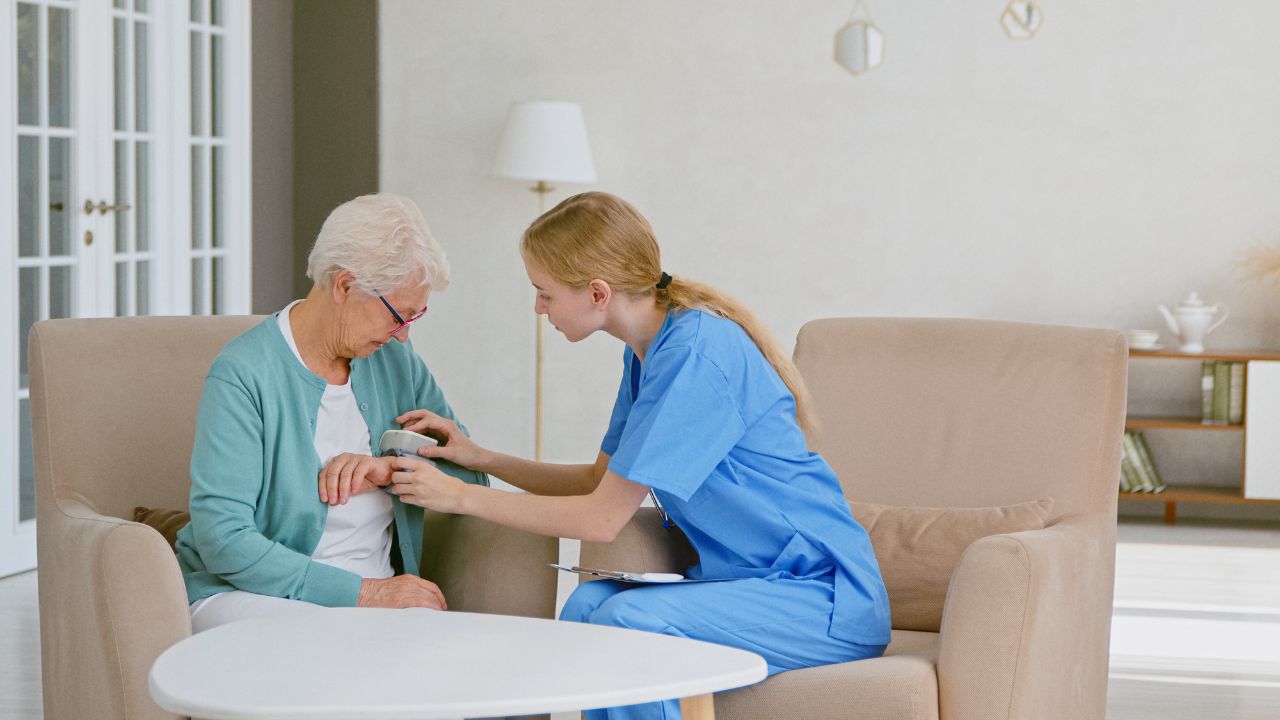
The demand for skilled nursing is rising as the US population ages. A survey by the American Health Care Association and National Center for Assisted Living (AHCA/NCAL) found that nearly all nursing homes and assisted living facilities are currently facing a staffing crisis. Therefore, skilled nursing is an excellent alternative for newly graduated nurses worried about landing their first positions and for seasoned nurses from other healthcare settings looking for a career change.
Regardless of your current situation, this ultimate guide to skilled nursing care will cover everything you need to know about this specialty to help you decide whether skilled nursing is the right career path for you.
What does SNF stand for?
The abbreviation SNF stands for “skilled nursing facility.” In addition to referring to a physical location, SNF refers to a type of care, including administering medications, caring for wounds, and feeding patients through tubes. In fact, this type of care is not only provided in skilled nursing facilities per se but also in nursing homes, assisted living facilities, hospitals, and even private homes.
What is a skilled nursing facility?
A skilled nursing facility is an institution or part of an institution that primarily provides skilled nursing care and related healthcare services for residents requiring around-the-clock nursing or medical care. SNFs may also offer rehabilitation services for injured, sick, or disabled people.
SNF residents are usually chronically ill or recovering from an illness or surgery and, therefore, need frequent nursing care and related healthcare services. According to the California Department of Aging, these facilities provide medical and social services that are usually not met in a residential care setting or at home.
In addition to being under the care of a physician, residents have an individual care plan that may include all of the following services:
- Dietary services
- Social services
- Skilled nursing pharmacy services
- Recreational therapy services
- Access to dental care
- Rehabilitation services, including gait training and bowel and bladder training
- Specialized care for dementia residents
- Regular administration of potent injectable and intravenous medications and solutions
- Ancillary services, such as physical, occupational, and speech therapies
As the length of hospital stays steadily decreases, skilled nursing facilities increasingly provide transitional care between hospital stays and patients’ homes. Residents sometimes remain in these facilities long-term since they cannot receive the care they need at home.
Skilled nursing facilities: History and regulations
The beginning of SNFs can be traced to the Social Security Act (SSA) enactment in 1935. Under the SSA, the Old Age Assistance program made federal money available to the states to provide financial assistance to poor seniors. The following timeline offers a glimpse of some of the most significant regulations that have impacted skilled nursing care to date:
- In 1950, amendments to the SSA required payments for healthcare to be made directly to facilities rather than to beneficiaries of care. Furthermore, these healthcare facilities needed to be licensed to participate in the Old Age Assistance program.
- In 1974, compliance with standards such as staffing levels, staff qualifications, fire safety, and service delivery became requirements for Medicare and Medicaid participation.
- In 1982, under the Tax Equity and Fiscal Responsibility Act, the Katie Beckett Medicaid plan option allowed states to cover children with disabilities living in the community.
- In 1990, the Americans with Disabilities Act (ADA) was enacted. The Act emphasized the importance of ending exclusion and segregation of people with disabilities and integrating them into the community.
- In 1994, The Nursing Home Reform Act finally imposed the quality standard for Medicare and Medicaid-certified nursing homes proposed in 1987 under OBRA-87. This Act responded to well-documented quality issues facing seniors in nursing homes.
- In 2014, the U.S. Centers for Medicare & Medicaid Services (CMS) finalized new rules outlining the qualities that settings needed to meet to be considered “home and community-based” and provide Medicaid services.
- In 2015, the CMS revised the Five-Star Quality rating system for nursing homes, reflecting improved performance standards.
What types of patients need skilled nursing care?
As with all healthcare decisions, there is some subjectivity regarding the type of care patients need. This particular healthcare decision also depends on other factors, such as the availability and diversity of healthcare facilities in the area. That said, one way to understand which patients receive skilled nursing care is by understanding the conditions for Medicare coverage.
Patients must meet the following conditions to receive skilled nursing care for a limited time through Medicare Part A (Hospital Insurance):
- The patient has Medicare Part A and has days left in their benefit period.
- The patient qualified for an inpatient hospital stay.
- The patient typically enters the SNF within 30 days of leaving the hospital.
- The patient’s physician or other healthcare provider has decided that the patient needs daily skilled care, such as intravenous fluids/medications or physical therapy, and must receive it from, or under the supervision of, skilled nursing or therapy staff.
- Patients need skilled services for one of the following: An ongoing condition that was also treated during the qualifying inpatient hospital stay (even if it wasn't the reason the patient was admitted to the hospital), a new condition that started while receiving skilled nursing care for the ongoing condition, or the need for skilled nursing care or therapy to improve or maintain the patient’s current condition or to prevent or delay it from getting worse.
Definitive Healthcare, which tracks data on more than 20,000 skilled nursing facilities, found that the following are the most common diagnoses (not including COVID-19) based on Medicare and commercial claims data:
- Metabolic encephalopathy: 3.30%
- Urinary tract infection, site not specified: 2.92%
- Aftercare following joint replacement surgery: 1.81%
- Sepsis, unspecified organism: 1.74%
- Pneumonia, unspecified organism: 1.73%
- Parkinson's disease: 1.64%
- Encounter for other orthopedic aftercare: 1.63%
- Encephalopathy, unspecified: 1.60%
- Chronic obstructive pulmonary disease, unspecified: 1.54%
- Acute respiratory failure with hypoxia: 1.53%
- Cerebral infarction, unspecified: 1.49%
- Unspecified dementia, unspecified severity, without behavioral disturbance, psychotic disturbance, mood disturbance, and anxiety: 1.07%
- Muscle wasting and atrophy, not elsewhere classified, multiple sites: 0.95%
- Hemiplegia and hemiparesis after cerebral infarction affecting the left non-dominant side: 0.92%
- Chronic obstructive pulmonary disease with (acute) exacerbation: 0.91%
Difference between SNFs and other healthcare settings
SNFs may be referred to as nursing homes, rehabilitation centers, or convalescent hospitals. However, these facilities should not be confused with others that primarily provide residential care and only occasional medical care, such as assisted living facilities.
Assisted living vs. skilled nursing
Although 66.1 percent of assisted living facilities provide skilled nursing care, their primary purpose is to provide assistance with basic activities of daily living (BADLs) and instrumental activities of daily living (IADLs), including the following:
- Personal hygiene
- Dressing
- Going to the bathroom
- Transferring or moving about
- Eating
- Managing finances
- Taking medications
- Preparing food
- Housekeeping
- Doing laundry
Residents of assisted living facilities require assistance with everyday care but not as much as residents of SNFs do. In fact, residents of assisted living facilities are often relatively independent, living in their own apartments or rooms and sharing common areas.
Skilled nursing vs. nursing home
According to the California Department of Aging, these terms can be used interchangeably. However, depending on how they are used, there may be some differences. In other words, if a nursing home meets the criteria to be considered an SNF, these terms are synonymous, but this is not always the case. The following aspects help clarify what constitutes a skilled nursing facility:
- Regulations: The State Department of Health regulates skilled nursing facilities. These offer intensive nursing care and other medical services such as physical therapy or injections.
- Insurance coverage: Skilled nursing facilities are sometimes covered by Medicare or other insurance programs for 100 days per illness, depending on insurance specifics. Nursing homes or residential care centers are typically not completely covered by Medicare or other insurance.
- Length of stay: Patients spend an average of five to 20 days in a skilled nursing facility. These settings typically offer care while patients recover from procedures or medical conditions that need short-term rehabilitation. However, there is no limit to a resident’s length of stay in a nursing home.
- Healthcare: Whereas SNFs provide skilled nursing care 24/7 and have physicians on staff, nursing homes typically offer skilled nursing at certain times and only scheduled doctor’s visits.
Skilled nursing in a hospital
Some skilled nursing facilities are within or on the same grounds as hospitals. These SNFs may be called Distinct Part Facilities. As is the case with all SNFs, Distinct Part Facilities serve people requiring around-the-clock skilled nursing and rehabilitative services but usually offer treatment for acute illness or injury and intensive rehabilitative services as well. Hospital patients may be transferred to these facilities when their healthcare needs transition from requiring acute to post-acute skilled nursing and rehabilitative services. Otherwise, patients may be transferred to long-term acute care hospitals.
Residents in skilled nursing settings may be recovering from acute illnesses, injuries, or surgeries. They usually stay for a maximum length of three weeks and are then discharged to a different type of facility or back home.
Skilled nursing at home
People requiring intermittent or even frequent care usually must leave their homes to receive that care. However, in some cases, people may receive skilled nursing care at home, such as those with severe mobility issues. In these cases, insurance and government programs are more likely to cover the costs of receiving skilled nursing care at home.
Skilled nursing care at home may include any of the following services:
- Dressing changes
- Wound care
- Blood draws and injections
- Intravenous (IV) therapy, such as for chemo
- Catheters
- Feeding tubes and other forms of nutrition
- Mediports
- Health monitoring
- Occupational, physical, and speech therapy
- Training of family members to perform some healthcare procedures
What healthcare professionals work in skilled nursing?

Skilled nursing facilities rely on a variety of healthcare workers, typically including the following:
- Certified nursing assistants (CNAs)
- Licensed practical nurses (LPNs)
- Registered nurses (RNs)
- Nurse practitioners (NPs)
- Occupational therapists
- Physical therapists
- Speech-language pathologists
- Dietary aides
What are the skilled nursing duties of an RN?
A registered nurse offering skilled nursing care is responsible for assessing patients and planning, providing, and documenting nursing care for a group of patients based on the physician’s plan of care. An important aspect of an RNs role in an SNF is coordinating and supervising the care and services provided by LPNs and CNAs. For this role, skilled RNs must have extensive nursing knowledge as well as teaching skills.
Although RNs may have multiple other responsibilities, the following are typical duties of registered nurses offering skilled nursing care:
- Intravenous or intramuscular injection of drugs, administered at a frequency of every eight hours or more frequently
- Initiation of intravenous (TPN) feeding
- Initiation of nasogastric tube feeding, gastrostomy, and jejunostomy feeding
- Naso-pharyngeal and deep tracheal suctioning
- Treatment of stage three or stage four decubitus ulcers or other complicated wound care requiring multiple dressing changes within a 24-hour period
- Care of a colostomy during the early postoperative period in the presence of complications
- Initial care of urinary catheters (suprapubic or "in and out" catheterization)
- Training or teaching of the patient and caregiver as appropriate for the above services
What are the skilled nursing responsibilities of an LPN?
Like RNs, LPNs provide direct care to patients who require skilled nursing. However, LPNs work under RN supervision and guidance. The following are typical skilled nursing duties of LPNs:
- Observe and record patients’ symptoms, conditions, and reactions to medications and treatments and report findings to the supervising RN.
- Provide direct patient care such as giving injections, taking vital signs, performing basic diagnostic tests, observing patients, dressing wounds, and administering medication.
- Organize care for residents to meet physical, psychosocial, and spiritual needs based on their care plans.
- Communicate effectively with patients and family members about patient care and discuss any concerns with the supervising RN.
- Assist the interprofessional healthcare team in evaluating, planning, and implementing plans of care.
- Maintain accurate patient clinical records, execute physician’s orders, and maintain accurate notes reflecting conditions, response to treatment, progress, and re-assessment.
- Carry out a variety of necessary tasks, such as responding to call lights and telephones, passing meal trays, and transporting patients.
- Supervise CNAs providing direct patient care to the LPN’s assigned patients.
What do CNAs do in skilled nursing settings?
CNAs work under nurse supervision performing the following care tasks:
- Observe residents and report any concerns to the supervising nurse.
- Take care of residents’ personal hygiene, including bed baths, shaving, etc.
- Set up meal trays and document food/fluid intake.
- Feed residents and serve nutritional supplements.
- Make beds and keep the residents’ space clean and tidy.
- Transport residents within the facility.
- Turn bedridden residents to prevent bedsores.
- Maintain confidentiality of all resident and facility data.
Physical, occupational, and speech therapists in SNFs
When admitted to SNFs following hospital stays, patients often need to work with physical, occupational, and speech therapists. The therapy team collaborates with physicians and other healthcare professionals to design individualized therapy plans to address the residents’ needs. The team works on restoring the residents’ function and preparing them for life after they leave the facility.
Physical therapy
As mentioned, care plans are specially designed for each patient. For example, physical therapy for a resident recovering from a stroke typically focuses on improving strength and function and educating the resident on using assistive devices and safely transferring from the bed or bath to a wheelchair. Physical therapy for a resident recovering from a hip fracture or joint replacement can help to reduce stiffness, pain, and inflammation and reduce the risk of additional injuries by improving balance and gait.
Occupational therapy
Occupational therapy focuses on helping residents restore lost function and teaches them how to perform everyday tasks in new ways. For example, a resident preparing to return home after an injury may need to learn how to prepare or transport a meal using a walker. The occupational therapist can help the resident transition home safely with environmental modifications and adaptive equipment.
Speech therapy
Speech therapy is also a crucial component of care in skilled nursing settings. For example, a resident who is recovering from a stroke may not be able to safely swallow many foods. A speech therapist can work on safe swallow strategies and techniques to help the resident have a safe diet that is the least restrictive possible.
How to become a skilled nursing nurse
There are many pathways to becoming a skilled nursing nurse since professionals at many levels of education can work in skilled nursing care.
- The fastest route to working in a skilled nursing setting is to become a CNA, which can take as little as four weeks. After acquiring some work experience, CNAs may pursue nursing degrees, such as through CNA-to-RN bridge programs.
- The fastest way to work as a skilled nursing nurse is to complete a one-year LPN program and pass the National Council Licensure Examination for Practical Nurses (NCLEX-PN).
- An aspiring RN can complete a two-year Associate’s Degree in Nursing (ADN), which qualifies graduates to take the NCLEX-RN. Another way to become an RN is through a four-year Bachelor of Science in Nursing (BSN), which gives these nurses a competitive edge over RNs with ADNs.
- RNs may also pursue higher education to become nurse practitioners (NPs), which takes at least another two years.
According to the U.S. Bureau of Labor Statistics, 33 percent of CNAs and 35 percent of LPNs work in skilled nursing facilities. However, only 5 percent of RNs work in skilled nursing and residential care facilities combined, and the number of NPs in SNFs is negligible. Skilled nursing is an excellent entry-level position for nurses at any level of education. That said, some positions may require six months to two years of nursing work experience in areas such as long-term care, rehabilitation, medical-surgical nursing, or home health.
Certifications for skilled nursing care
If you are a newly graduated nurse or nursing assistant, the first certification you should pursue is the Basic Life Support (BLS) certification. This credential is required for most nursing positions, and skilled nursing care is no exception.
The American Heart Association offers this course for healthcare professionals and other personnel who must be prepared to perform CPR and other basic cardiovascular life support skills in various in-facility and prehospital settings.
This BLS course trains participants to quickly recognize several life-threatening emergencies, deliver high-quality chest compressions, give appropriate ventilations, and provide early use of an AED.
Additionally, nurses may wish to pursue certifications that are especially created for skilled nursing professionals. The following are some of the certification options currently available for skilled nursing nurses:
- The Association of Rehabilitation Nurses offers the Certified Rehabilitation Registered Nurse (CRRN®) credential for nurses assisting individuals with disabilities and chronic illness in restoring, maintaining, and promoting optimal health.
- MedBridge has the Skilled Nursing Facility Essentials certificate for nurses and other healthcare staff working in skilled nursing facilities. This course provides a strong foundation necessary to provide quality, competent, and safe care to older adults as a member of a diverse healthcare team.
How much do skilled nursing nurses make?
Nurse salary varies due to numerous factors, including location and licensure. For example, registered nurses working in the best-paying states for RNs can make nearly $70,000 more per year than their counterparts in the lowest-paying states; licensed/vocational nurses in the best-paying states for LPNs/LVNs can make nearly $30,000 more per year than in some of the lowest-paying states; similarly, certified nursing assistants can make $20,000 more in the best-paying states for CNAs than their counterparts in lower-paying regions.
The average salary for nurses and nursing assistants working in skilled nursing also depends on the type of license each healthcare worker holds. According to the BLS, the following are the annual median wages of CNAs and nurses providing skilled nursing care:
- CNA salary: $37,780
- LPN/LVN salary: $61,690
- RN salary: $79,280
Is skilled nursing hard?

It is relatively common to see nurses complaining about this role on nursing forums—especially the high patient-to-nurse ratios—and claiming that once you get into skilled nursing, you can’t move on. However, others completely disagree, stating that they have learned a lot in skilled nursing and that—worst case scenario—a nurse with any experience will be more competitive than a new grad. As generally is the case, there are truths to both sides.
Should I work in a skilled nursing facility?
One reason to choose skilled nursing is that these nurses are in very high demand. However, the demand is not the only reason to work in skilled nursing. Many skilled nurses love the relationships that they are able to develop with residents and, therefore, wouldn’t change their jobs for any other.
Skilled nursing allows nurses to truly get to know the residents they care for since they are often together for longer periods of time than acute care nurses with their patients. Due to this longer relationship, they are able to offer residents greater emotional support. That said, schedules can be rough since skilled nursing care must be offered around the clock, and patient-to-nurse ratios can be very high.
Learn more about CNA-to-patient and RN-to-patient staffing ratios by state.
What makes a good skilled nurse? Tips for new nurses
Aside from the knowledge and experience acquired during your nursing program, the following are some skills and attitudes that a nurse providing skilled nursing care should strive to develop:
- Be compassionate: The truth is that all nurses should be compassionate with their patients, and most are—if they are not completely burned out. However, in skilled nursing facilities, residents deal with the added challenge of requiring a longer period of care than the average acute care patient does. Furthermore, even if their stay in a skilled nursing facility is not very long, many residents return to assisted living facilities instead of their own homes. In other words, many residents of skilled nursing facilities must resign themselves to the fact that they can no longer live independently—and for many, this is not an easy pill to swallow.
- Communicate clearly: Remember that the residents and their family members probably didn’t go to nursing school! Keep your language simple and clear when explaining their care plans, including any procedures and medications they may need. That said, the simple fact of explaining what procedure you need to carry out or what medications you are giving them will be much appreciated, even if they don’t fully understand what you say. After all, communication is a sign of respect.
- Be organized: One of the undeniable challenges of working in a skilled nursing facility is that nurses have heavy patient loads. You can expect a learning curve, but as soon as possible, you must figure out a system or routine that allows you to cover all your duties without feeling overwhelmed—and without ignoring your own needs for food, water, and bathroom breaks.
- Ask questions: No one expects a new nurse to know everything, so there’s no need to pretend that you do. Ask as many questions as needed to ensure you are doing the best job possible. Also, ask seasoned nurses for tips to help you find a routine that works for you.
- Take care of yourself: Although self-care seems incompatible with nursing, addressing your own needs will help you better care for others. If you are hungry, dehydrated, or overdue for a trip to the bathroom, you will be forgetful and moody, and no one will be better off for it. Granted, you may not be able to take a leisurely lunch, but at least give yourself time to eat some healthy snacks, stay hydrated, and do your best to go to the bathroom whenever you need to.
5 common myths about skilled nursing facilities
When you think of a skilled nursing center, what image comes to mind? Check whether your preconceptions match any of the busted myths below:
- Skilled nursing facilities are just like hospitals: Although residents of skilled nursing centers need medical care and round-the-clock nursing services, these settings tend to be much warmer and friendlier places than hospitals. The environment is also more relaxed since patients have a lower acuity level.
- Residents requiring skilled nursing care have no autonomy: Residents of skilled nursing centers receive the assistance they need. Although they require some degree of nursing care and may need assistance with some activities of daily living, residents actively participate in their care plans and have a right to privacy. Besides having to follow the rules that facilities put in place to protect patients and staff, residents can choose the activities they participate in and the doctors they see.
- All skilled nursing residents are bedridden and lonely: Skilled nursing centers typically have full activity calendars and promote resident participation in activities, including opportunities for exercise, art classes, parties, live entertainment, and games. Residents have their meals in communal dining areas so that they can socialize. They may also receive visitors and go on outings.
- Skilled nursing is only for the elderly: Although some skilled nursing facilities cater to the needs of elderly residents, others offer long- and short-term skilled nursing care for patients across age groups. Rehabilitative short-term care services may include pulmonary rehabilitation, wound care, and post-acute rehabilitation for brain injuries, amputations, and orthopedic conditions.
- Skilled nursing facilities are the same as assisted living facilities: As mentioned, both settings offer residents assistance with activities of daily living, but many assisted living facilities do not offer skilled nursing services. Even those that offer skilled nursing do not have the same level of care as a skilled nursing facility.
Final thoughts on working as a skilled nursing nurse
Skilled nursing nurses are in high demand. Although patient-to-nurse ratios are high, SNFs are great places to begin your nursing career and obtain invaluable experience offering nursing care. Working in skilled nursing does not need to be a career-long choice; you can always transition to other nursing specialties if you feel you need a change. Are you ready to give skilled nursing a try? Whether you are an RN, LPN/LVN, or CNA, you can pick up high-paying PRN jobs in settings offering skilled nursing care near you.
Sources:


