

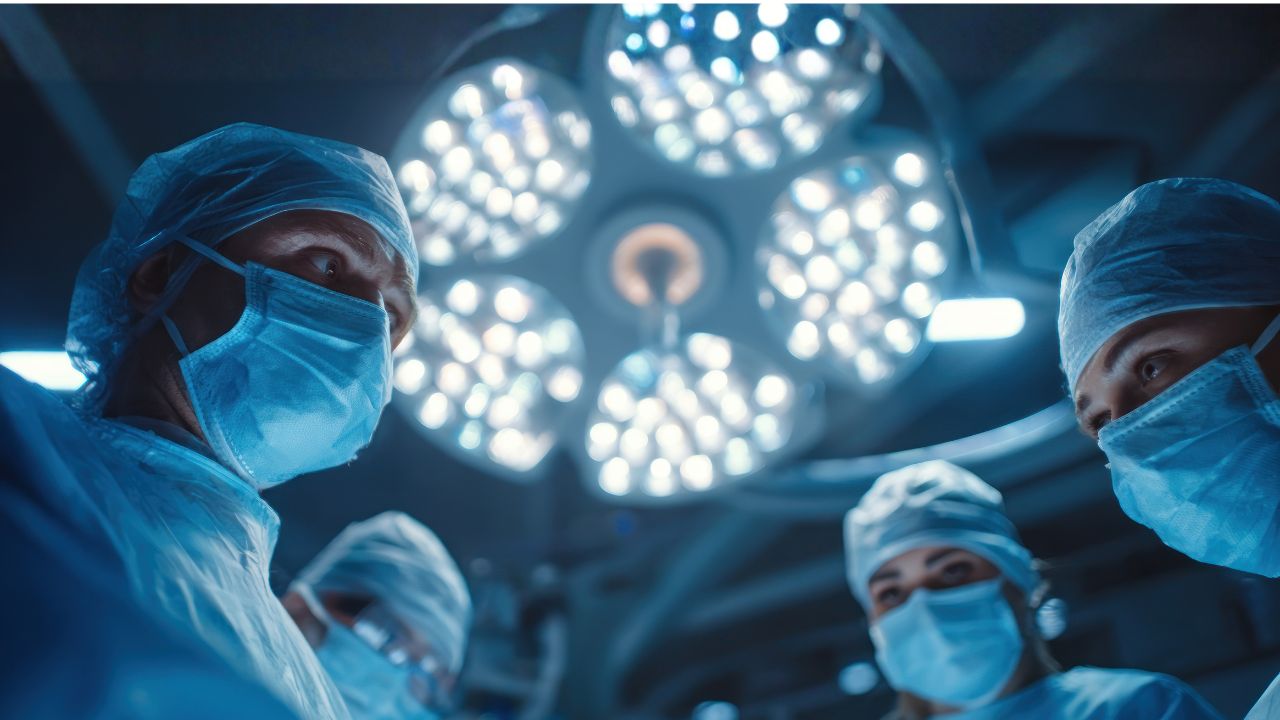
Surgical critical care is a specialized medical field focused on the intensive treatment and support of patients facing life-threatening surgical conditions or severe injuries. From managing sepsis and respiratory failure to caring for trauma victims and post-operative complications, surgical critical care specialists play a vital role in stabilizing and guiding patients through complex, high-risk situations in the surgical intensive care unit.
Surgical critical care: What it is, who needs it & more
Sepsis. Respiratory failure. Blood clotting impairment.
These are just a few of the conditions that may require surgical critical care (SCC).
At the intersection of surgery and critical care medicine lies surgical critical care—a crucial, high-stakes subspecialty dedicated to treating patients who are critically ill or severely injured, particularly those requiring or recovering from surgery.
This article serves as a comprehensive guide to surgical critical care, detailing the unique expertise of these specialists, the types of patients they treat, and the advanced life support they provide in the specialized environment of the surgical intensive care unit (SICU).
If you’ve ever wondered what surgical critical care is and what healthcare professionals do in this field, this is your essential informational resource.
Defining the high-stakes field: What is surgical critical care?
Surgical critical care is an advanced field of medicine practiced by surgeons who have completed specialized fellowship training beyond their general surgery residency. Their primary focus is the diagnosis, treatment, and support of patients with acute, life-threatening, or potentially life-threatening surgical conditions.
The SCC specialist is essentially an expert in two crucial domains: the physiology of injury and inflammation, and the advanced mechanics of life support. They don't just know how to operate; they know when and why a patient's body is failing in the context of a surgical disease or severe trauma.
Importance of surgical critical care
In September 2024, the American Hospital Association (AHA) published a report powered by Vizient®, which found that hospital and health systems performed better on key patient safety and quality measures in early 2024 than they did at the end of 2019.
Which metrics improved?
At the beginning of 2024, hospitalized surgical patients were nearly 20% more likely to survive than expected based on their underlying acuity. These improved outcomes were related to reductions in infections and falls. There were also declines in 3 high-risk complications strongly linked to mortality:
- Post-operative hemorrhage
- Post-operative sepsis
- Post-operative respiratory failure
Remember these conditions? The surgical critical care specialty is directly responsible for managing these high-risk complications.
What conditions are treated in surgical critical care?
The patients admitted to a SICU present with a wide range of complex, unstable conditions that fall under the umbrella of managing critically ill surgical patients:
- Trauma: Managing patients with multi-system injuries from car accidents, falls, or other traumatic events is a cornerstone of the specialty. The phrase “trauma and surgical critical care” is often used to describe this core function. The SCC physician is responsible for the resuscitation, "damage control" surgery decisions, and subsequent stabilization of the patient.
- Post-operative crises: Patients who undergo major surgery (cardiac, vascular, abdominal) and develop complications like severe bleeding, acute respiratory failure, or sepsis
- Acute abdominal catastrophes: Conditions like a ruptured appendix, perforated ulcers, or severe necrotizing pancreatitis that lead to overwhelming systemic infection and shock
- Severe sepsis and septic shock: Managing the body's life-threatening response to infection that often requires emergent surgical source control (e.g., draining an abscess or removing infected tissue)
- Burns and soft tissue infections: Patients with extensive burns or rapidly spreading infections like necrotizing fasciitis require immediate surgery and continuous, aggressive critical care.
The distinctive expertise: Why a surgeon in the ICU?
A common question is: Is there a difference between surgical and medical critical care? The answer lies in the specialist's foundation and perspective.
While the fundamental principles of critical care—like ventilator management and hemodynamic support—are shared across all critical care specialties, the SCC specialist brings a unique surgical perspective:
Feature
Surgical critical care specialist
Medical intensivist
Core training
General surgery residency
Internal medicine or anesthesiology residency
Pathophysiology focus
The body's response to trauma, inflammation, and surgical stress
Medical diseases like pneumonia, heart failure, and autoimmune crises
Decision-making
A heightened awareness of the need for surgical source control or immediate re-operation
Focus on pharmaceutical and non-invasive medical management
The SCC team operates with a deep understanding of when a medical problem requires a scalpel. They are uniquely trained to lead the decision-making process for the most unstable patients, bridging the gap between life support and definitive operative intervention.
Core components of advanced life support in the SICU
The surgical intensive care unit is a high-technology environment where the SCC team employs advanced techniques to stabilize the patient. The goal is two-fold: to support failing organs and to prepare the patient for the next stage of recovery.
Advanced techniques for managing critically ill surgical patients
In the SICU, treatment protocols are intense and focused. The primary therapeutic pillars include:
Hemodynamic resuscitation
This involves rapid fluid administration and the use of vasoactive drugs to maintain blood pressure and adequate oxygen delivery to organs. In cases of severe trauma, specialized massive transfusion protocols are activated, often involving the quick delivery of blood products (plasma, platelets, red cells) to address hemorrhagic shock.
Organ support and failure mitigation
- Respiratory management: The SCC specialist is an expert in ventilator management for trauma patients and those with acute respiratory distress syndrome (ARDS). This involves using lung-protective strategies to avoid further injury.
- Renal support: When kidneys fail, continuous renal replacement therapy (CRRT) or dialysis is initiated.
- Addressing multi-organ failure: Preventing and managing multi-organ failure in surgical patients is arguably the most complex challenge. It requires a holistic, minute-by-minute titration of therapies to support all vital systems simultaneously.
Invasive monitoring
Patient monitoring in the SICU is continuous and comprehensive. This includes invasive tools like arterial lines (for continuous blood pressure tracking), central venous catheters, and specialized catheters for measuring pressure within the skull (intracranial pressure or ICP) in neurotrauma cases.
Career pathway: Becoming a surgical critical care expert
The rigorous training path required to become an SCC specialist highlights the depth of their expertise. For those asking, “What are the career paths in acute care surgery?” the answer always begins with SCC training.
What are the surgical critical care fellowship requirements?
The typical path is:
- General surgery residency: Completion of a 5-year Accreditation Council for Graduate Medical Education (ACGME) accredited General Surgery residency program.
- SCC fellowship: A highly competitive, 12-month ACGME-accredited surgical critical care fellowship is completed after or during residency. This year is spent exclusively in the ICU setting, rotating through various sub-ICUs (trauma, burn, cardiovascular, neuro-ICU) to master advanced life support.
- Board certification: After fellowship, the surgeon must pass a separate qualifying examination administered by the American Board of Surgery (ABS) to achieve certification in SCC. Surgeons may enter the ABS certification process for surgical critical care either before or after obtaining initial certification in general surgery.
The role of acute care surgery (ACS)
Many SCC-certified surgeons pursue a career in acute care surgery (ACS). This specialty integrates the three pillars of high-acuity surgical care: trauma surgery, emergency general surgery, and surgical critical care.
This combined training allows the surgeon to manage the patient across the entire spectrum of care—from the initial injury in the emergency room to the operating room, and through the intense recovery period in the SICU.
The evolving role of critical surgical care
The surgical critical care specialist stands as a vital member of the healthcare team, providing the ultimate safety net for the most severely injured and sick surgical patients. They are the experts who manage the terrifying complexities of hemorrhagic shock, acute respiratory failure, and multi-organ failure with skill, technology, and compassion.
As medical technology continues to advance—with improvements in bedside imaging, mechanical circulatory support, and continuous patient monitoring—the expertise of the SCC specialist will only become more crucial.
They are not only life-savers in the immediate crisis but leaders who drive the evolution of high-quality, evidence-based care in the surgical intensive care unit, ensuring that every critically ill patient has the best chance for survival and recovery.
Explore more healthcare specialties here.


