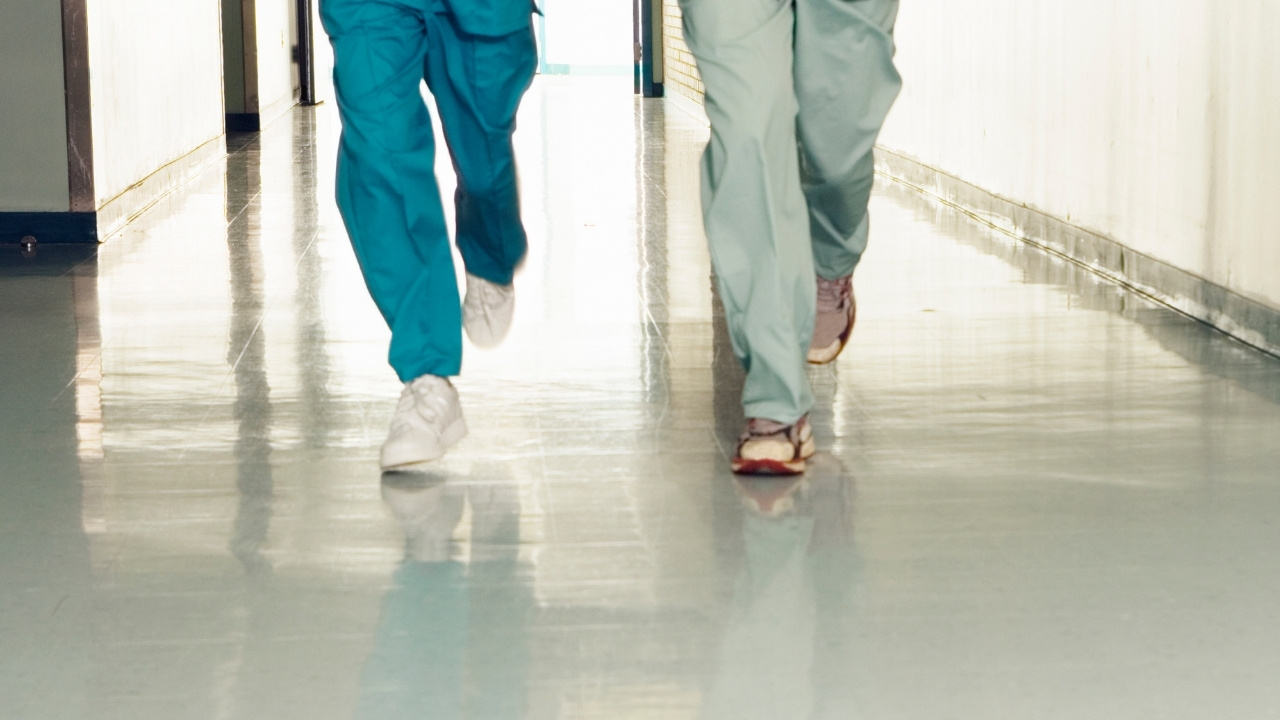
Your feet are made for walking… but not for 12-hour shifts on hard hospital floors.
Nursing is a physically demanding profession that requires standing and walking for long periods. So it’s no wonder that your feet are killing you.
Before you hit Google and get freaked out by photos of foot fungus, we’ve got a list of the 4 most common foot conditions that nurses experience: plantar fasciitis, bunions, Achilles tendinitis, and edema.
Below, we cover the causes, symptoms, prevention, and treatment of each foot ailment.
Why nurses are prone to foot problems
Nurses routinely work shifts of 12 hours or more, spend the vast majority of that time standing or walking, and often cover 4 to 5 miles in a single shift.
Apart from the physical demands of the job, nurses face additional factors that strain their feet.
Unforgiving surfaces
Foot pain from concrete hospital floors is a well-documented complaint because hard flooring offers no shock absorption, transferring impact directly into the feet, ankles, and knees.
Pace of work
Nurses rarely control when they can sit down; breaks are frequently cut short or skipped, and the constant pivoting, lifting, and hurrying places repetitive stress on their feet shift after shift.
Footwear
Finding the right footwear can be a problem for many nurses, since shoes that felt fine at hour 2 can become painful by hour 10 as feet naturally swell.
Foot pain isn't just a problem for veteran nurses
Nursing students beginning clinical rotations often experience heel pain and arch fatigue for the first time within weeks, well before they've ever worked a full-time schedule.
Early symptoms during clinicals are a signal to build good habits now, not a rite of passage to push through.
The most common foot conditions nurses experience
Here are 4 foot conditions nurses suffer from, along with the symptoms to watch out for.
1. Plantar fasciitis
Plantar fasciitis is the inflammation of the plantar fascia, the thick band of tissue that runs along the bottom of the foot and connects the heel bone to the toes. It's arguably the signature foot condition of the nursing profession.
Symptoms
The telltale sign of plantar fasciitis is a sharp, stabbing pain in your heel, which tends to show up:
- First thing in the morning
- After sitting for a long time
- After activity
Many nurses describe hobbling to the bathroom at 5 a.m. before the pain "warms up" and fades—only to return by the end of a shift.
Nurses are especially susceptible because prolonged standing and walking on hard surfaces repeatedly strain the fascia.
Prevention and treatment
How do you treat plantar fasciitis?
The first step if you suspect plantar fasciitis is to see your doctor for a diagnosis. Then a physical therapist or podiatrist can offer specialist advice to guide your recovery.
Most cases resolve with conservative treatment, but it takes time — the AAOS reports that the majority of patients improve within roughly 10 months of starting nonsurgical treatment. Left untreated, it can become chronic, which is why early intervention matters so much.
Here are some key points to help you recover from plantar fasciitis:
- Rest as much as you can. Stop any high-impact physical activities, such as running or aerobics.
- Practice stretching your calves and rolling a tennis ball under your affected foot.
- Invest in a pair of supportive shoes with firm arch support and cushioned heels. The HOKA Bondi 9 and the Brooks Adrenaline GTS 25 are both good options.
- Ask your provider about a night splint, which gently stretches the fascia while you sleep and specifically targets that first-step morning pain.
2. Bunions
A bunion is a bony bump that forms at the joint at the base of the big toe, gradually pushing it inward toward the second toe.
Genetics plays a significant role—some foot shapes are simply more prone to bunions—but footwear accelerates the problem.
Tight, narrow, or ill-fitting shoes worn over long shifts compress the forefoot for hours at a time, and that constant pressure aggravates the joint.
Symptoms
Bunions typically cause:
- Pain and swelling around the big toe joint
- Stiffness in the big toe, making walking difficult
- Redness or callusing where shoes rub
Prevention and treatment
If you think you might have a bunion, go to your doctor, and they will most likely order a foot X-ray.
Bunions are progressive, so the goal is to slow them down early rather than waiting until surgery becomes the only option.
Choosing the correct footwear is crucial to preventing your bunion from worsening. Look for roomy shoes with wide toe boxes. Clogs from brands such as Dansko or Crocs are often popular among nurses for their wide fit.
Your doctor or podiatrist may also recommend silicone pads, orthotics, or toe spacers to relieve pain.
3. Achilles tendinitis
Achilles tendinitis is the inflammation of the Achilles tendon, the strong cord connecting the calf muscles to the heel bone.
Causes of Achilles tendinitis include:
- Repetitive movement
- Quick direction changes
- Regular stair climbing
- Inadequate footwear
Symptoms
Nurses with Achilles tendinitis typically notice stiffness and aching at the back of the heel or lower calf, especially after long shifts or upon waking.
The pain often eases with light movement, which tempts many nurses to ignore it. That's a mistake—an irritated Achilles tendon that's repeatedly overloaded can partially tear, turning a manageable condition into a serious injury.
Prevention and treatment
The first step in treating Achilles tendinitis is to get a diagnosis from your doctor. Once you know what the problem is, you can follow these steps:
- Rest: Stop high-impact physical activities, such as running, and switch to low-impact exercise like swimming or cycling.
- Ice: Place ice on your Achilles tendon for 20 minutes at a time to reduce the pain. This can be done multiple times throughout the day if needed.
- Stretch: Ask your doctor or physical therapist for guidance on the best stretches to practice. Calf stretches are generally recommended for treating Achilles tendinitis.
4. Edema
Edema, or swelling caused by fluid pooling in the lower legs and feet, is one of the most common end-of-shift complaints among nurses. And the culprit? Gravity.
Symptoms
When you stand for 10 to 12 hours, fluid accumulates in the tissues of the feet and ankles faster than your circulation can return it, leaving your feet feeling tight, heavy, and sore by the time you clock out.
Prevention and treatment
Routine end-of-shift swelling that resolves overnight is usually harmless, and strategies such as wearing compression socks and elevating the affected area can help manage it. However, swelling can sometimes signal a more serious condition.
Persistent edema that doesn't resolve with rest or swelling, accompanied by pain, warmth, or redness, warrants prompt medical attention, as these may indicate circulatory problems or a blood clot.
Common foot conditions at a glance
How to prevent and relieve foot pain as a nurse
Prevention is far more effective—and far less disruptive to your career—than treating chronic foot pain after it takes hold.
Start with these self-care strategies:
- Invest in supportive, well-fitted footwear designed for 12-hour nursing shifts, and replace shoes every 6 to 12 months as cushioning breaks down.
- Add gel or orthotic insoles for extra shock absorption on hard flooring.
- Do brief foot exercises and calf stretches at work if you can.
- Wear compression socks to manage swelling and support circulation.
- Take micro-breaks to sit down when possible during long shifts.
Treating foot conditions
If your foot pain is chronic, you need to see your doctor or a podiatrist—early professional treatment usually leads to a faster, cheaper, and less invasive recovery.
These are general guidelines for foot pain relief:
- Ice the affected area.
- Rest on days off.
- Use over-the-counter anti-inflammatories as directed to manage flare-ups.
- Practice gentle stretching and foot massage.
Footwear and self-care recommendations
Your shoes are your most important piece of equipment, so select them wisely. Here are some top tips:
- Choose firm arch support that matches your foot type, whether you have high arches or flat feet.
- Look for cushioned, slip-resistant soles that absorb impact on hard floors.
- Pick a roomy toe box that doesn't compress the forefoot.
- Check that the sizing accounts for late-shift swelling—try shoe shopping at the end of the day.
Compression socks and quality insoles are excellent complementary tools, but they supplement good shoes rather than replace them.
Finally, build a quick end-of-shift routine into your day. Remove your shoes promptly when you get home, elevate your feet for 15 to 20 minutes, and spend 5 minutes stretching your calves and arches.
Evening foot care is a small investment that pays off over thousands of shifts.
Don't ignore what your feet are telling you
Foot pain may be common in nursing, but it's never something to push through indefinitely.
The conditions covered here are all far easier to manage when caught early, so take new symptoms seriously and build small daily habits before pain becomes disruptive.
Your feet carry you through every shift of your career; they've earned the same attentive care you give your patients.
Looking for footwear specifics?
Read our guide to the best shoes for nurses.
Sources:


.jpg)