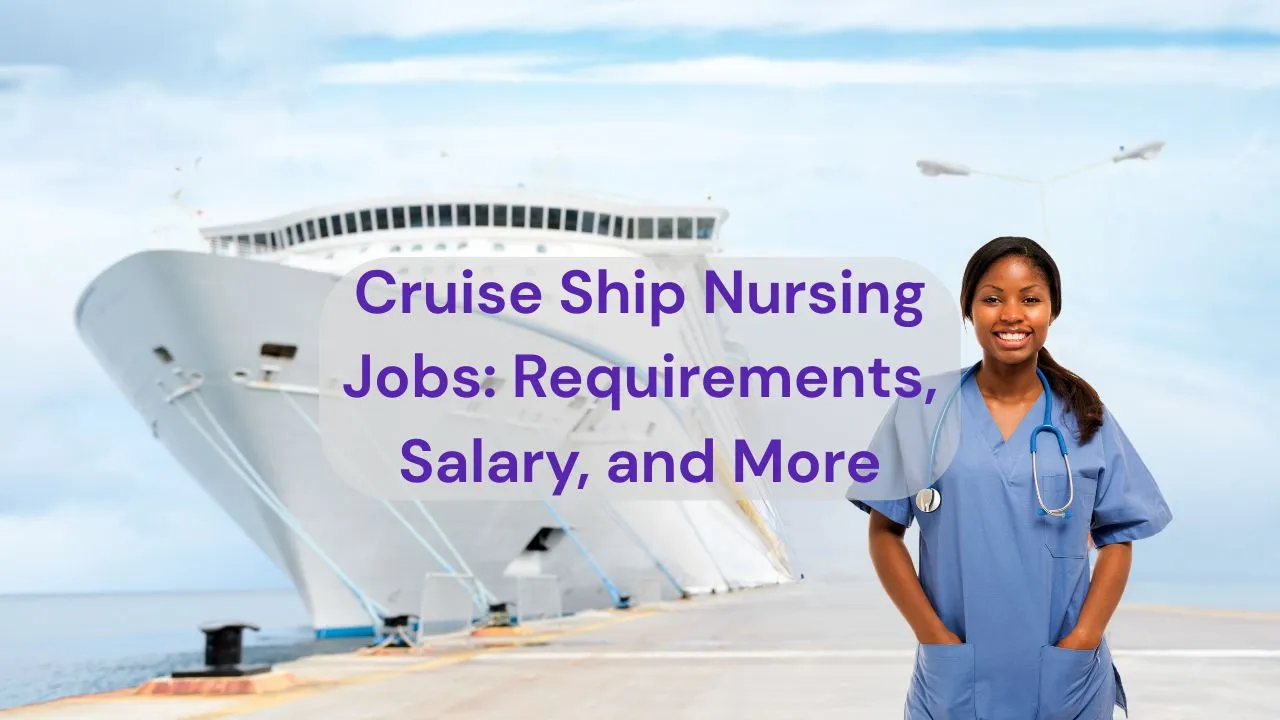
For many registered nurses, the opportunity to practice healthcare while traveling to tropical islands, European ports, or even Antarctica offers the perfect blend of adventure and purpose. Cruise ship nursing jobs allow nurses to travel internationally, gain valuable emergency care experience, and thrive in fast-paced, ever-changing environments.
But jobs in shipboard nursing aren’t just about adventure and exotic destinations—they also bring a unique set of challenges: specialized certifications, maritime training, and the flexibility to embrace life at sea.
This article explores the ins and outs of cruise ship nursing, from salary and job description to lifestyle and career path.
Cruise ship nurse job description and duties
Cruise ship nurses are responsible for providing medical care to both passengers and crew. Most ships employ a medical team that includes doctors, nurses, and sometimes paramedics.
Common duties include:
- Passenger care at sea: Treating guests for seasickness, minor injuries, or sudden illnesses
- Crew health clinic support: Providing occupational health care and routine checkups for the crew
- Emergency response team: Assisting in trauma situations, cardiac arrests, or mass casualty drills
- Shipboard clinic operations: Maintaining the onboard infirmary, medical records, and pharmacy medications and supplies
- Outbreak management on cruise ships: Implementing protocols for norovirus prevention, COVID-19 safety, and other communicable diseases
- Documentation and privacy at sea: Following HIPAA compliance while using electronic medical records on board
Nurses on ships function with more autonomy than in many land-based hospitals. In emergencies, they may be the first responder until the ship’s physician arrives.
For nurses who want more flexibility or to supplement their cruise ship income, Nursa’s PRN healthcare staffing platform offers shifts that can fit around travel schedules or time off between contracts.
Cruise ship nurse salary and benefits
Many registered nurses (RNs) are curious: How much do cruise ship nurses make?
- Cruise ship nurse salary: RNs make an average of $98,430 annually ($47.32 hourly), according to the U.S. Bureau of Labor Statistics.
- Room and board included: Living quarters for nurses are provided, usually shared with one other medical team member. Meals are also included.
- Travel benefits for cruise ship staff: Nurses often receive free travel, discounted fares for family, and access to crew recreational spaces.
- Overtime and pay differentials: Some cruise lines offer overtime pay or bonuses for extended contracts.
- Paid vacation for cruise ship nurses: A typical perk of the cruise ship nursing lifestyle is the extended time off between contracts (e.g., two months off after four months on), though this period is generally unpaid.
While cruise salaries can be appealing, it’s worth noting that per diem nursing through Nursa often provides higher hourly pay and the freedom to choose shifts without long-term contracts.
Qualifications and requirements for cruise ship nursing
Cruise ship nurse requirements are more specialized than standard hospital jobs.
Education and licensure:
- Active RN license (U.S. or international; some cruise lines accept a nursing compact license)
- Bachelor of Science in Nursing (BSN) preferred
Experience needed for cruise ship nurses:
- At least 3 years of recent acute care experience
- Emergency room experience or ICU experience for cruise ship nurses strongly preferred
- Familiarity with trauma, cardiac, and critical care
Common certifications:
- Basic Life Support (BLS)
- Advanced Cardiovascular Life Support (ACLS)
- Pediatric Advanced Life Support (PALS)
- Trauma Nursing Core Course (TNCC)
- Standards of Training, Certification, and Watchkeeping for Seafarers (STCW) basic safety training for medical staff
- Crowd management certificate for handling emergencies
- ENG1 seafarer medical certificate proving fitness to work at sea (a U.K.-specific certification that may not be required by U.S. cruise lines)
Travel documents:
- Valid passport
- C1/D crew visa for cruise ship RN jobs (for U.S.-based cruise lines)
- Immunization/vaccination requirements (i.e., yellow fever vaccine and TB testing for seafarers)
How to become a cruise ship nurse
Applying for cruise line medical jobs requires preparation and attention to detail.
How to apply to cruise line medical teams in five simple steps:
- Build a strong resume for cruise ship nurses: Highlight emergency/critical care experience, certifications, and any maritime or travel background.
- Write a tailored cover letter for cruise line medical jobs: Show your adaptability, interest in maritime nursing, and ability to handle emergencies.
- Complete background check and drug screening for cruise employment.
- Prepare for cruise ship nurse interview questions: Do some research and be ready to discuss clinical judgment in emergencies, teamwork at sea, and cultural adaptability.
- Apply directly to cruise line nurse recruiters or through cruise line career portals: Check popular cruise lines such as Carnival, Royal Caribbean, Disney, Norwegian.
For tips on resume writing and cover letters, check out Nursa’s Resume guide and Cover letter tips.
Cruise ship nurse lifestyle and work schedule
A career at sea comes with unique rhythms. This lifestyle suits adventurous RNs; it requires flexibility, independence, and resilience. Here’s a closer look:
- Contract length for cruise ship nurses: Most contracts operate on a rotation schedule of four months on, two months off.
- Cruise ship nurse work schedule: Expect shifts covering days, nights, weekends, and holidays. On-call responsibilities are common.
- Living quarters for nurses: Small shared cabins with private bathrooms are the norm. Crew areas are separate from passenger spaces.
- Room and board included: Meals, laundry, and housing are typically part of the contract.
- Crew wellness programs: Access to gyms, recreation, and health promotion activities is usually included.
- Nurse travel opportunities: Explore new ports during days off or short breaks between shifts.
Training and safety responsibilities
Maritime law requires shipboard medical staff to participate in safety drills and crew training.
Training includes:
- Mass casualty drills on cruise ships
- First aid and CPR at sea
- Automated External Defibrillator (AED) training onboard
- Lifeboat and survival craft training
- Crowd control certification
- Safety drills and muster duties
Nurses are not only caregivers but also essential members of the ship’s emergency response team.
Challenges of shipboard nursing
While rewarding, cruise ship nursing comes with challenges as well.
- Outbreak management on cruise ships: Providing rapid response to norovirus, influenza, or COVID-19
- Occupational health on cruise ships: Supporting crew who often work long hours
- Patient evacuation and medevac at sea: Coordinating medical referrals with port agents, shore-side hospitals, or even helicopter evacuation from cruise ships
- Scope of practice cruise ship nurse: Balancing autonomy with working under the shipboard doctor and remaining within the scope of practice
- Documentation and privacy at sea: Maintaining accurate documentation and HIPAA compliance in unique conditions.
Career path and advancement
Many nurses use cruise ship roles as stepping stones on the career ladder, gaining valuable experience in a unique healthcare setting while traveling the world.
This experience can lead to diverse opportunities, from leadership roles on future cruises to specialized positions in land-based hospitals or clinics that value adaptability and broad clinical exposure.
- Career path in shipboard medical: From staff nurse to senior nurse or chief nurse.
- Medical team hierarchy on cruise ships: Nurses report to the shipboard doctor but may supervise paramedics.
- Continuing education for cruise nurses: Some cruise lines provide training allowances for medical staff.
- Medical officer training cruise lines: Senior roles may involve administrative duties, inventory, and crew wellness management.
Cruise lines that hire nurses
Most major cruise companies employ RNs. Look for nurse jobs on the following cruise lines:
- Carnival cruise
- Royal Caribbean
- Norwegian Cruise Line
- Disney Cruise Line
- Princess Cruises
- Holland America
- Celebrity Cruises
- MSC Cruises
- Virgin Voyages
- Expedition cruise nurse jobs (specialized, smaller vessels)
- Seasonal opportunities like Alaska cruises or Caribbean cruises
Cruise season hiring timeline
Cruise lines typically hire from September to February to prepare for the busy summer and holiday seasons. This period is also ideal for first-time applicants and for filling positions due to crew turnover after the holidays. Additional hiring occurs mid-season (April to June) for replacements, and individual cruise lines and agencies recruit throughout the year.
Pros and cons of cruise ship nursing
Like any specialty, cruise ship nursing has advantages and drawbacks.
Pros:
- Travel to global destinations
- Free room, board, and meals
- Unique emergency and occupational health experience
- Adventure and professional growth
Cons:
- Long contracts and time away from home
- Small living quarters with limited privacy
- Heavy on-call responsibilities
- Risk of outbreaks and maritime emergencies
- Pay may not equal travel nurse rates
Related: 7 Unique nursing jobs
Is cruise ship nursing worth it?
For adventurous nurses who love travel, enjoy autonomy, and thrive in high-pressure environments, cruise ship nursing is absolutely worth considering.
Still, for those craving spontaneity and freedom, more flexible options like per diem nursing through Nursa offer the chance to earn great pay without tying yourself down to lengthy contracts.
Start your next nursing adventure with Nursa
If you’re drawn to the adventure of cruise ship nursing jobs but your circumstances don’t support so much time away from home, Nursa gives you control over your career.
With the Nursa app, you can browse hundreds of per diem shifts, set your own schedule, and choose when and where to work—no long contracts required.
Sign up today with Nursa and take the first step toward nursing on your terms.
Sources:


.jpg)