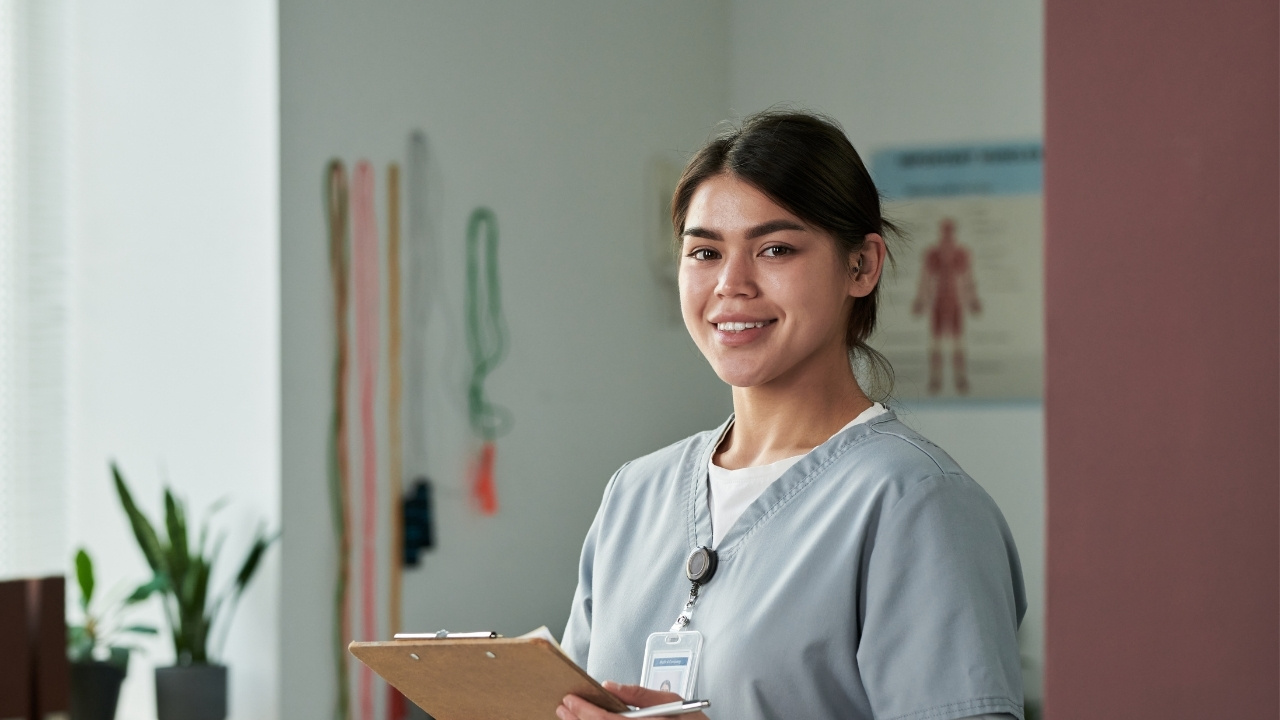
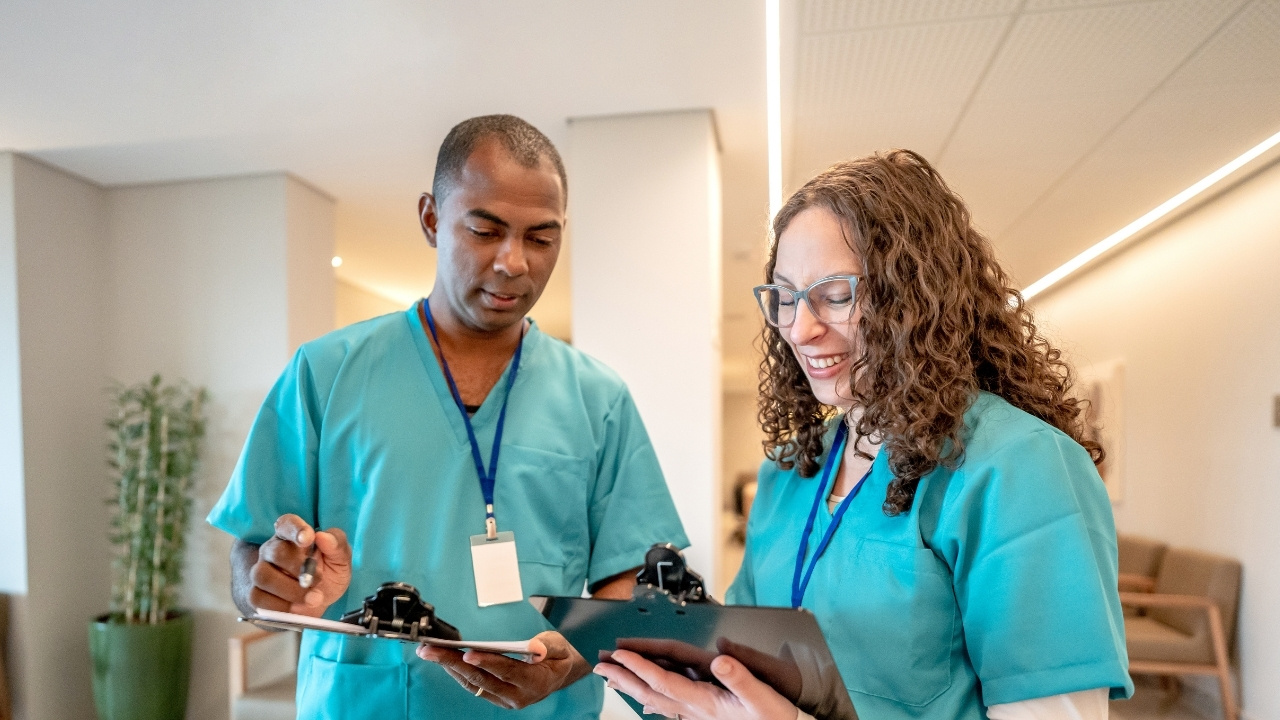
Nontraditional nursing students are no longer a niche group. Accelerated Bachelor of Science in Nursing (ABSN) and second-degree programs exist specifically because many people enter nursing with a degree and a work history already behind them.
Admissions committees and hiring managers tend to see that work history as a plus for a few reasons:
- Maturity and perspective: Someone who has already held a job, paid bills, and dealt with difficult coworkers usually brings a steady presence to clinical settings.
- Professionalism: Career changers often already know how to show up on time, communicate with supervisors, and handle feedback without taking it personally.
- A track record of follow-through: Finishing a degree, earning a promotion, or holding a demanding role for years shows you can commit to something hard and see it through.
- Clarity of purpose: Choosing nursing as a second career is rarely an accident. Programs tend to see these students as highly motivated and less likely to drop out.
None of this replaces the clinical knowledge you will need to learn in nursing school. It does mean you aren’t starting from zero. Let’s look at exactly where your head start is.
Skills that transfer no matter where you're coming from
Before getting into specific careers, there is a shared foundation that most working adults build, regardless of their field. If you have held almost any job for a few years, you likely already have these:
- Time management: Juggling deadlines, meetings, and shifting priorities is the same muscle nurses use to manage medication schedules, assessments, and charting for several patients at once.
- Communication under pressure: Delivering bad news to a client, defusing a tense meeting, or explaining a mistake to a manager builds the composure nurses need for difficult conversations with patients and families.
- Working within a team: Nursing is collaborative. Knowing how to hand off work, ask for help, and support colleagues who are struggling is a skill many have already had to learn in previous careers.
- Accountability: Owning your mistakes and fixing them is central to patient safety. Anyone who has worked in a role with real consequences already understands this.
- Adaptability: Layoffs, reorganizations, new managers, new software—if you have weathered change at work, you are better prepared for the constant change of healthcare.
Keep these in mind as you read the sections below. The career-specific advantages build on this foundation rather than replace it.
What your specific career background brings to nursing
Every field develops its own habits and strengths. Here is how some of the most common previous careers map to specific nursing skills.
Teaching
Former teachers often make a smooth transition into nursing, and patient education is the clearest reason why. Nurses spend a surprising amount of time explaining medications, discharge instructions, wound care, and lifestyle changes to people who are scared, tired, or overwhelmed. Teachers already know how to break complex information into digestible pieces and check for understanding rather than assuming it.
Other transfers include the following:
- Classroom management: Keeping 30 students on task translates into calm authority when a patient's room fills with anxious family members.
- Adapting to different learners: Teachers know that not everyone absorbs information the same way. Nurses need this when a patient can't read, doesn't speak English well, or has a cognitive impairment.
- Documentation habits: Lesson plans, grading, and progress reports build the discipline to keep thorough, timely records.
- Emotional resilience: Working with children and parents in stressful situations prepares you for the emotional labor of nursing.
Sales and customer service
People sometimes assume sales experience has nothing to do with healthcare. In practice, few backgrounds prepare you better for the interpersonal side of nursing:
- Building rapport quickly: Nurses meet new patients constantly and need to earn trust in minutes. Sales professionals do this for a living.
- Reading people's needs: Good salespeople listen to the nonverbal cues their customers convey, not just what they say. Nurses use the same skill to notice when a patient says they're fine, but their body language says otherwise.
- Staying composed with upset people: Handling an angry customer without escalating the situation is excellent preparation for a frustrated patient or family member.
- Persuasion for patient adherence: Getting a reluctant patient to take their medication, get out of bed after surgery, or follow a diet is essentially a sales conversation with higher stakes.
Military
Veterans transitioning to nursing tend to arrive with discipline and calm that instructors notice right away. Many of the environments nurses work in—emergency departments, intensive care units, trauma centers—reward exactly what military service builds:
- Performing under pressure: Staying focused when things go wrong is second nature to most service members.
- Following protocols precisely: Nursing runs on protocols, checklists, and standing orders. Veterans understand why these exist and take them seriously.
- Chain-of-command communication: Knowing how to report up the chain, escalate concerns clearly, and communicate with people of different ranks maps directly onto working with charge nurses, physicians, and administrators.
- Physical and mental stamina: Long shifts, sleep disruption, and staying alert for hours are familiar territory.
Veterans who served as medics or corpsmen have an additional advantage, since they may already hold clinical skills and, in some cases, qualify for bridge programs or advanced placement.
Business, administration, or finance
If you have worked in an office setting, you may worry that your experience is too far removed from patient care. The reality is that nursing has a heavy administrative component, and people from business backgrounds handle it better than most:
- Organization and prioritization: Managing competing deadlines is the daily reality of a nurse with 5 or 6 patients who all need something at once.
- Documentation accuracy: Nurses chart constantly, and errors have legal and clinical consequences. Anyone who has managed budgets, contracts, or compliance reporting already understands the importance of precise records.
- Systems thinking: Understanding how a process works end-to-end helps nurses spot bottlenecks and inefficiencies in patient care.
- Professional communication: Emails, meetings, and presentations build a polish that serves you well in interdisciplinary rounds and leadership roles later on.
Hospitality and food service
Restaurant, hotel, and retail work is physically demanding, fast-paced, and customer-facing. That combination is a closer match to nursing than many people realize:
- Physical stamina: If you have spent 10 hours on your feet on a Saturday night, a 12-hour nursing shift will feel familiar.
- Service mentality: Hospitality workers are trained to anticipate needs before they are voiced. That instinct is valuable when a patient is too proud or too weak to ask for help.
- Grace under pressure: Staying pleasant during a dinner rush with a short-staffed kitchen builds the same composure a nurse needs on a chaotic floor.
- Multitasking with interruptions: Holding several tables' orders in your head while handling a complaint is not far from tracking several patients while responding to call lights.
Tech and IT
Healthcare is more technology-dependent every year, and people from tech backgrounds often adapt faster than their classmates:
- Comfort with electronic systems: Electronic health records (EHRs) can be a steep learning curve for new nurses. Tech professionals usually pick them up quickly and become the go-to person on their unit.
- Problem-solving: Methodically troubleshooting an unfamiliar issue is a core nursing skill, whether it's a malfunctioning IV pump or a patient whose symptoms don't add up.
- Data-driven thinking: Nurses interpret vital signs, lab values, and trends over time. A background in data or analytics makes this more intuitive.
- Adaptability to new software: Facilities update systems regularly. People who are comfortable learning new tools are less likely to feel overwhelmed by change.
If you're already working in healthcare
People coming from other healthcare roles have a meaningfully different advantage. You already know what a clinical environment feels like, and you’re comfortable around patients. In some cases, your experience may count toward prerequisites or qualify you for a bridge program that shortens your path.
CNAs
Certified nursing assistants (CNAs) do hands-on patient care every day, and that experience shows in nursing school. Tasks that many new students find difficult at first—bathing, toileting, repositioning, feeding—are already routine for you.
You also understand floor routines, know how to work alongside nurses, and have seen firsthand how care teams function. Many nursing programs value CNA experience highly, and some require it.
EMTs and paramedics
Emergency medical technicians (EMTs) and paramedics bring high-acuity decision-making that most nursing students only develop after graduation.
You already have triage instincts, comfort with emergencies, and strong assessment skills under pressure. Paramedics in particular often have advanced skills in airway management, cardiac monitoring, and medication administration. Paramedic-to-registered nurse (RN) bridge programs exist for exactly this reason.
Medical assistants
Medical assistants (MAs) often work in clinics and outpatient settings, which gives them familiarity with vitals, patient intake, EHR systems, and the rhythm of a care team.
Many MAs have already completed anatomy, medical terminology, or pharmacology coursework that overlaps with nursing prerequisites. This makes the MA-to-RN path a natural fit, and the outpatient experience is a strength for nursing roles in primary care, specialty clinics, and ambulatory settings.
Social workers
Social workers are skilled at psychosocial assessment, navigating sensitive conversations, and connecting people to resources. These are core to whole-person nursing care, especially in settings like hospice, mental health, community health, and case management. Social workers also tend to be strong patient advocates, which is one of the most important and underappreciated parts of the nursing role.
How to talk about your previous career in applications and interviews
Knowing your skills transfer is one thing. Communicating that to an admissions committee or hiring manager is another. A few principles help:
- Be specific, not generic: "I have strong communication skills" says almost nothing. "I spent 4 years explaining insurance policies to customers who were frustrated and confused, and I learned to slow down and check for understanding" tells a story.
- Connect the skill to a nursing scenario: After naming the skill, say where you expect to use it. For example, a former teacher might describe how they would approach discharge education for a patient with low health literacy.
- Frame the change as additive: Avoid apologizing for a "late start" or explaining what you're leaving behind. Talk about what you are bringing.
- Be honest about what you still need to learn: Committees respect candidates who acknowledge that clinical skills take time to develop. Overconfidence is a red flag.
- Prepare a few stories: Have 2 or 3 concrete examples ready that show pressure, teamwork, and problem-solving from your previous job.
These same principles apply to your resume.
What to expect if you're switching careers into nursing
A career change to nursing is worth it for many people, but it helps to go in with clear expectations.
- Time: Accelerated programs are intense, and most students find it difficult to work full-time while enrolled. If you’re already working as a CNA, you can pick up flexible shifts on Nursa around class and clinical schedules.
- Financial cost: It's a good idea to review scholarships and financial aid options early, and to understand student loan debt before committing.
- Starting at the entry level: Even if you were a manager or director in your previous career, you will likely begin as a new graduate nurse. This can be a hard adjustment for people used to seniority, but it usually passes quickly as your clinical confidence grows.
- Being a student again: Nursing school involves exams, clinical rotations, and a lot of memorization.
- Choosing your entry point: Nursing has multiple levels, and the right one depends on your timeline and goals. Understanding the different levels of nursing can help you decide.
The adjustment period is real, but so is the payoff. Most career changers find that the maturity and perspective they bring make them more confident, not less, once they are on the floor.
Ready to take the next step toward nursing?
If reading this made you realize your experience counts for more than you thought, the next question is how to get there.
Our guide to how to get into nursing school walks through prerequisites, program types, and what admissions committees look for, so you can move from considering the change to planning it.
Source: