

Durham is a town in Strafford County in New Hampshire's Seacoast region, home to the University of New Hampshire. Residents have access to Wentworth-Douglass Hospital in nearby Dover and Portsmouth Regional Hospital.
Durham
New Hampshire
Jump to section on this page

Anchor Link
Go Beyond a Single Job
Choose Multiple Per Diem Shifts on Your Schedule
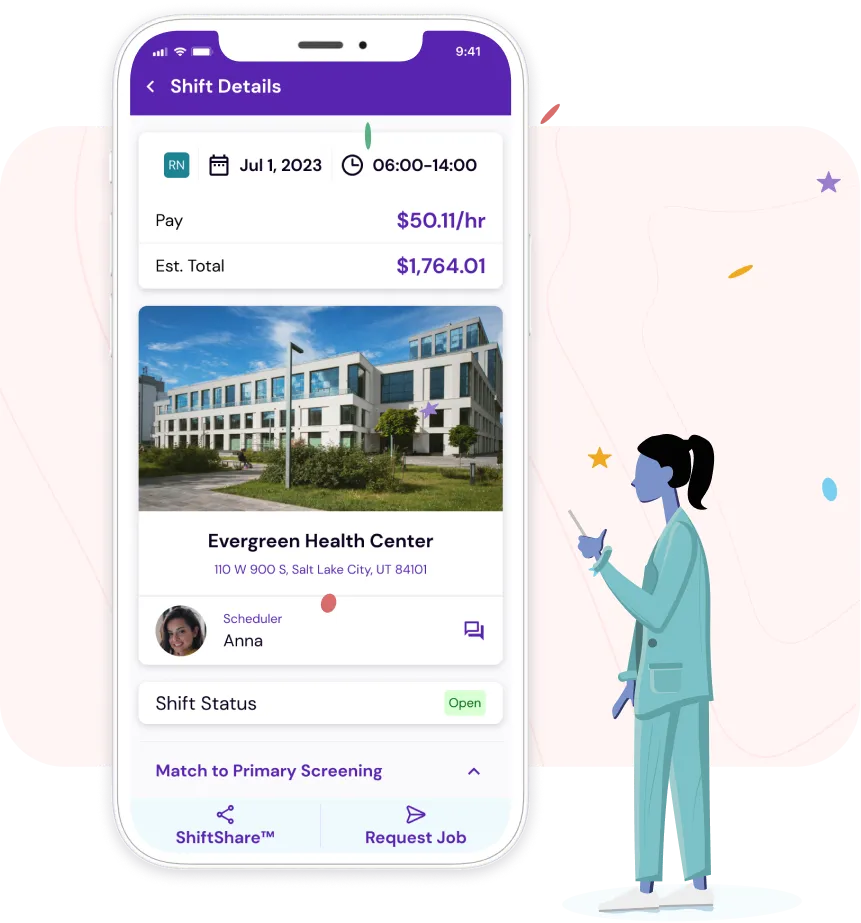
Nursa isn't just about finding a job; it's about crafting your ideal work schedule by selecting shifts. Once you create a Nursa profile, you will experience the convenience of scheduling shifts in real time.
Loading shifts…
Zip codes located within Durham, NH:
Loading…
Completed! We will notify you when we have desired shifts for you.
Until then, you can continue with the app to signup or login.
Continue
Until then, you can continue with the app to signup or login.
Oops! Something went wrong while submitting the form.
See More Shifts and Apply Now
Explore and find where you would like to work
Search ShiftsPer Diem JobsSelect your license and location to find the best PRN jobs
Select your license and the location you want to work in, and we'll show you the best PRN jobs available nearby.
Durham offers a classic New England college-town atmosphere with a walkable downtown, historic homes, and University of New Hampshire events. The nearby Great Bay estuary offers kayaking, birding, and nature trails.

Per diem nursing shifts in Durham, New Hampshire
What the seacoast market looks like
Durham sits on the Oyster River where it opens into Great Bay, about twenty minutes inland from the New Hampshire coast. It is the home of the University of New Hampshire, and the campus shapes the town in every season.
Clinicians looking at per diem nursing shifts in Durham, New Hampshire are working the seacoast market, which is compact, well served, and unusually well connected for a region this size.
A hospital sits ten minutes away in Dover. Two more are about twenty minutes out in Portsmouth and Exeter, and another is twenty-five minutes north in Rochester. Maine is a twenty-minute drive, and Massachusetts is about forty.
New Hampshire also has a tax structure that affects per diem clinicians directly, which the licensing and pay sections below cover. This guide walks through how the work functions, what the state requires, and what the area offers on your days off.
How per diem work functions
Per diem means "per day." Instead of committing to a set number of weekly hours with one employer, you claim individual shifts as facilities post them. Each listing shows the date, hours, setting, and pay rate before you decide anything.
Facilities need this model because staffing demand will not hold still. Census climbs without warning. A nurse calls out two hours before a night shift. A long-term care unit loses three aides in a month and cannot replace them quickly.
The seacoast adds competitive pressure. Facilities here recruit from the same workforce as hospitals in southern Maine and northeastern Massachusetts, all within commuting range. A building that runs short has to act fast and pay well.
Who can pick up PRN shifts
PRN shifts open across a wider range of roles than many people expect. Facilities in this region post for the following.
- Registered nurses (RNs) covering medical-surgical floors, telemetry, emergency departments, long-term care units, and charge roles.
- Licensed practical nurses (LPNs) handling medication passes, treatments, and assessments in skilled nursing, assisted living, and clinic settings.
- Licensed nursing assistants (LNAs) providing direct resident care, which accounts for the highest volume of open postings in long-term care.
- Medication nursing assistants, who hold an additional New Hampshire credential allowing them to administer medications in permitted settings.
- Allied roles including respiratory therapists and rehabilitation staff at larger facilities.
If you hold an active New Hampshire credential and keep your certifications current, there is almost always something open within a short drive.
Per diem compared to a staff position
A staff job gives you predictability. Set hours, a consistent paycheck, and whatever benefits the employer carries. What you give up is control of your calendar.
Someone else builds the schedule. Holidays rotate on a fixed cycle. Mandatory overtime arrives whether or not it works for your life.
Per diem reverses that. You choose the days you work, and no manager can hold you for a second consecutive shift. In exchange, you take on responsibility for your own consistency, your own credential renewals, and your own financial planning between shifts.
Many clinicians refuse to treat this as an either-or decision. They keep a part-time staff role for a stable floor and add claimed shifts on top. Others build a full week from per diem work alone.
Facility types across the seacoast
The mix here combines several community hospitals, a substantial long-term care sector, and a growing amount of senior living capacity. Knowing what each setting demands helps you claim shifts that match your strengths.
Skilled nursing and long-term care
Skilled nursing facilities produce the steadiest volume of open shifts across the seacoast. These buildings serve residents recovering from hospitalization, managing chronic conditions, or living with advanced cognitive decline.
Shifts follow a dependable rhythm. Mornings center on medication passes, assessments, wound care, and helping residents start the day. Evenings handle dinner, evening medications, and settling residents for the night. Overnights are quieter but demand independent judgment, since the team on the floor is smaller.
Resident-to-staff ratios run heavier than in hospitals. Organization and pace matter more here than advanced acute skills. A clinician who moves through a medication pass efficiently and documents as they go will do well.
Assisted living and continuing care communities
The seacoast has added continuing care retirement communities steadily over the past decade, including one in Durham itself. These campuses combine independent living, assisted living, and skilled nursing on a single property.
That structure shapes the work. Assistants and nurses often move between levels of care depending on the assignment, which keeps the day varied and gives you exposure to a range of acuity in one building.
Memory care units within these communities require specific skills in redirection and de-escalation. Patience matters more than speed, and clinicians with that background get requested back.
Hospitals and acute care
The hospitals serving this region operate as community facilities with regional affiliations. They cover emergency, medical-surgical, surgical, and maternity services, and several have specialty capacity beyond that.
The work suits nurses with solid general competence. Medical-surgical, telemetry, and emergency backgrounds translate directly, and these assignments typically pay at the top of the local range.
Boston's academic medical centers are about an hour south if you want higher acuity, though that requires Massachusetts licensure. The licensing section explains why that matters.
Home health and hospice
Home health means driving between residences across Strafford and Rockingham counties, handling wound care, medication reconciliation, teaching, and skilled assessments.
Visits are scheduled, so the day has structure, but you practice independently between them. Agencies generally want at least a year of prior experience for that reason.
Hospice carries different weight. You support patients at the end of life and the families walking through it with them. It is emotionally demanding and, for many nurses, the most meaningful work they do.
New Hampshire licensing and credentials
Every shift in Durham requires the correct New Hampshire credential in active status. The state's structure differs from most in ways worth knowing before you apply anywhere.
Registered nurse and practical nurse licensure
The New Hampshire Board of Nursing licenses registered nurses and licensed practical nurses. Licensure requires graduation from an approved program and a passing score on the appropriate NCLEX examination.
New Hampshire has participated in the Nurse Licensure Compact since its early years. A multistate license from another compact state authorizes you to practice here without applying separately, which matters given how many clinicians in this region live near a border.
Licenses renew on a two-year cycle. New Hampshire uses a combination of continuing education and practice hour requirements rather than a single fixed number of education hours, so review the current options rather than assuming another state's rules apply.
Confirm renewal periods, fees, and continuing education requirements directly with the Board of Nursing before relying on any figure.
Licensed nursing assistant licensure
New Hampshire licenses this role rather than certifying it, and the title reflects that. The credential is licensed nursing assistant, or LNA, issued by the Board of Nursing.
The distinction is more than terminology. Because the Board issues an actual license, the standards, renewal obligations, and disciplinary process all run through the same body that handles nurses, and a certification from another state does not convert automatically.
Qualification requires completing an approved nursing assistant program combining classroom instruction with supervised clinical practice, then passing a competency evaluation. New Hampshire's required training hours run above the federal minimum.
The license renews on a set cycle and requires documented practice hours in the role. That requirement matters specifically for per diem assistants, since an extended stretch without claimed shifts can put renewal at risk.
If you are relocating, contact the Board early. Converting an out-of-state credential takes longer than most people budget for.
Medication nursing assistants
New Hampshire offers LNAs a defined path to expand their scope, which is worth knowing if you currently work as an assistant.
The medication nursing assistant credential allows you to administer medications in the settings the state permits. The route generally runs through LNA licensure first, followed by an approved medication administration training program and a competency evaluation.
That credential opens a category of shifts otherwise closed to you. Assisted living and long-term care facilities across the seacoast rely on medication nursing assistants, and holding the credential meaningfully widens what you can claim.
Verify the current prerequisites, training hour requirement, examination process, and renewal rules with the Board of Nursing before enrolling in a program.
Working across state lines
Durham's position near two borders makes this practical rather than theoretical.
Maine is about twenty minutes east and participates in the compact. Vermont participates as well. A New Hampshire multistate license covers you in both without a separate application.
Massachusetts is the exception, and it is the one that matters most. The state does not participate in the compact, so working in Haverhill, Newburyport, or the Boston area requires separate Massachusetts licensure regardless of what you hold here.
Plenty of seacoast clinicians maintain both credentials for that reason. Verify each state's current status before planning around it, since compact membership does change.
Certifications worth carrying
Licensure lets you practice. Certifications determine which shifts you can actually claim, and a deeper credential set reaches further into the better-paying assignments.
- Basic Life Support (BLS) certification is required across nearly every setting and role. Most facilities specify American Heart Association certification, so confirm what a facility accepts before paying for a course.
- Advanced Cardiovascular Life Support (ACLS) is expected for RNs in hospital, emergency, telemetry, and critical care assignments. It qualifies you to take an active role in resuscitation beyond compressions and basic airway management.
- Pediatric Advanced Life Support (PALS) applies to RNs working emergency or mixed-population units. Community hospitals see patients of every age, so pediatric competence matters even without a dedicated unit.
- National Institutes of Health Stroke Scale (NIHSS) certification is standard at stroke-designated hospitals across the region.
- Dementia and memory care training is commonly requested by assisted living and continuing care communities, and memory care units often require it before a shift can be claimed.
- Crisis prevention and de-escalation training benefits clinicians in behavioral health and memory care settings, where verbal intervention is the first and safest option.
Each certification you hold expands the pool of shifts available to you. In a compact market where good postings attract attention quickly, qualifying for more of them is how you keep a schedule full.
What drives pay in this area
Per diem rates on the New Hampshire seacoast generally exceed what the same facility pays staff employees holding equivalent credentials. The gap depends on role, setting, timing, and the pressure a facility faces when it posts.
Several patterns repeat consistently.
- Overnight and weekend coverage pays more than weekday daytime hours.
- Holiday shifts reach the highest rates of the year, particularly between Thanksgiving and New Year's Day.
- Postings published within 24 hours of the start time often carry a premium, because internal options have been exhausted.
- Higher-acuity settings pay more than lower-acuity settings for identical credentials.
- Respiratory season raises census and staff call-outs simultaneously from roughly December through February.
- Nor'easters and heavy snow create sudden same-day gaps when staff cannot reach a facility.
There is a second factor here that does not apply in most states. New Hampshire does not tax earned wages and has no general sales tax.
For a per diem clinician, that changes the real value of a given rate. A clinician working the same hours at a comparable rate in Massachusetts or Maine keeps less of it, which is one reason the seacoast attracts workers from both directions.
Seasonal demand follows the coast. Summer brings heavy visitor traffic to the beaches while permanent staff take vacation, opening a reliable warm-weather window where shifts outnumber available clinicians. Between that and the winter respiratory season, this market has two distinct periods when rates climb.
Why nursing professionals use Nursa
Nursa is a marketplace that connects nursing professionals directly with facilities posting open shifts. It works as a platform rather than a staffing agency, and that distinction determines who decides. No recruiter assigns you anywhere. You review what is posted, weigh it against your own criteria, and claim what fits.
Rates that reflect real demand
Facilities set their own rates when they post, and those rates track how urgently coverage is needed. Because you are closing a gap rather than occupying a budgeted position, per diem nursing jobs on the marketplace frequently pay more per hour than comparable full-time roles inside the same building.
You see the rate before you claim. Nothing gets renegotiated afterward and nothing changes on your pay.
Instant pay through Nursa Direct
Traditional payroll holds your wages for a week or longer after you have already worked. Nursa Direct gives you access to your pay once a shift is completed and verified, instead of waiting out a standard cycle.
When income arrives shift by shift, that timing matters. A car repair on Monday can be covered by a shift on Tuesday.
Control over your schedule
Nothing is assigned. You filter shifts by date, distance, role, and rate, then select what fits your week. Three twelve-hour shifts, two evenings plus alternating weekends, or one shift a month all work within the same system.
The arrangement adjusts as your circumstances change. Nursing students, parents working around a school calendar, and clinicians easing toward retirement all use the same tool differently.
A range of facility types
Shifts span long-term care, assisted living, hospitals, skilled nursing facilities, and home health settings. That range does more than widen your options.
Working one setting exclusively narrows your abilities over time. Rotating across settings keeps your assessment skills current and your documentation flexible, and it gives you a low-risk way to test a specialty before committing to it.
Real-time notifications and direct messaging
Well-paying last-minute postings fill quickly. Real-time shift notifications deliver new openings to your phone as they publish, filtered to your stated preferences, so you can respond before someone else claims them.
You also message facility schedulers directly in the app. Questions about the unit, the charting system, or where to park go to the person who knows the answer, without waiting on a callback.
How to get started on the platform
Setup takes less time than most clinicians expect, and you can complete nearly all of it from your phone in one sitting.
- Add your personal information to create your account.
- Verify your nursing license so the platform can confirm it is active and in good standing.
- Complete your clinician profile with your work history, specialties, and preferred settings.
- Upload your essential credentials, including certifications, immunization records, and any required screenings.
- Request a shift, which initiates your background check.
Have your documents ready before you start. You will want your license number, your certification cards, tuberculosis screening results, immunization records, and a government-issued photo identification.
Photograph everything in advance so you are not stopping halfway through to find something. Once you are active, set calendar reminders 60 days ahead of each expiration, because a lapsed credential blocks you from claiming shifts entirely.
Living and working in Durham
Durham works well for clinicians who want flexible shifts because the drives are short, the setting is quiet, and the tax situation stretches a rate further than it would elsewhere in New England.
Route 4 runs through town, connecting west toward Concord and east toward the Spaulding Turnpike and the coast. Interstate 95 is about twenty minutes southeast, and Portsmouth sits at the mouth of the Piscataqua River.
Durham also has an Amtrak station on the line between Boston and Portland, which is unusual for a town this size. That makes weekend trips easy and occasional work up or down the line realistic without driving.
The University of New Hampshire anchors the town and runs a nursing program, which keeps Durham connected to the regional clinical pipeline and brings athletics, performances, and lectures through the academic year.
Why the location suits per diem work
Distance is the practical advantage. A hospital is ten minutes away, two more are twenty, and a fourth is twenty-five. Skilled nursing and assisted living capacity fills in across Dover, Newmarket, Exeter, and the surrounding towns.
That density means you are rarely choosing between a poor shift and no shift. Widening your radius by fifteen minutes opens an entirely different set of facilities.
The pace helps too. Durham outside the academic year is genuinely quiet, and even in term the town is small. Coming home somewhere you can sleep during daylight hours matters if you work nights.
The bay, the coast, and the trails
Great Bay is the defining natural feature here. It is a tidal estuary that drains a large watershed, and the research reserve protecting it has trails, overlooks, and heavy bird activity through migration season.
Wagon Hill Farm in Durham looks out over the bay from a hillside, with a hayfield, walking trails, and an old wagon that has become the town's unofficial landmark. College Woods on the university's land offers quiet trails minutes from the center of town.
The Atlantic is twenty minutes east. Odiorne Point State Park in Rye has rocky shoreline and trails, Wallis Sands has a proper beach, and Hampton Beach further south is the busy summer destination. Boat tours run out to the Isles of Shoals from Portsmouth.
Mount Agamenticus in southern Maine is a short drive for hiking with ocean views, and the White Mountains are about ninety minutes northwest for serious hiking and skiing.
Food, culture, and nearby cities
Portsmouth is the regional draw and about twenty minutes away. Its downtown has one of the stronger restaurant scenes in northern New England, along with a historic outdoor museum, a waterfront park with summer performances, and a restored theater that books touring acts.
Dover and Newmarket both have working downtowns with breweries, music venues, and restaurants, and they are closer than Portsmouth for a weeknight.
Seacoast New England food is its own category. Lobster rolls, fried clams, and chowder are everywhere from spring through fall, and the farm stands across Strafford County run through the growing season.
Portland, Maine, is about an hour north with another strong restaurant city. Boston is roughly an hour south by car, or reachable by train from Durham without dealing with traffic or parking.
Practical considerations
Housing in Durham is tight and priced accordingly, since student demand competes for rentals near campus. Many clinicians working this area live in Dover, Rochester, Somersworth, or Newmarket, where costs drop while the same facilities stay close.
The absence of a wage tax and a sales tax offsets some of that, and it is worth factoring into any comparison with Maine or Massachusetts.
Winter requires planning. Nor'easters bring heavy snow and coastal wind, and the region gets ice storms most years. Keep your vehicle ready, allow real extra time for early morning and overnight drives, and check conditions before leaving for a shift.
Summer traffic on the coastal routes backs up badly on weekends from late June through August. If you are claiming a shift near the beaches in season, build a buffer.
Take the next step
Per diem work rewards clinicians who stay organized, adapt quickly, and can walk into an unfamiliar building ready to contribute. Durham offers short drives, four hospitals within twenty-five minutes, a compact license reaching into Maine and Vermont, and a tax structure that keeps more of what you earn.
Confirm your credential is current, gather your documents, complete your profile, and start tracking what opens nearby. The schedule is yours to build.
Share this page:


No items found.
Featured Facilities in this City
Searching for other types of per diem nursing jobs? Find nurse and nursing assistant jobs in similar types of healthcare facilities here.
Facility Types
See All


No items found.
No items found.
No items found.
No items found.
No items found.
No items found.

Pick Up a Job Today
Find per diem PRN job opportunities in your area. High paying CNA, LPN and RN and many more licences are available now.
Join Nursa
Post Your Jobs Today
Facilities who use Nursa fill 3 times as many open per diem shifts, on average, compared to trying to fill the shifts themselves.
Post Jobs