

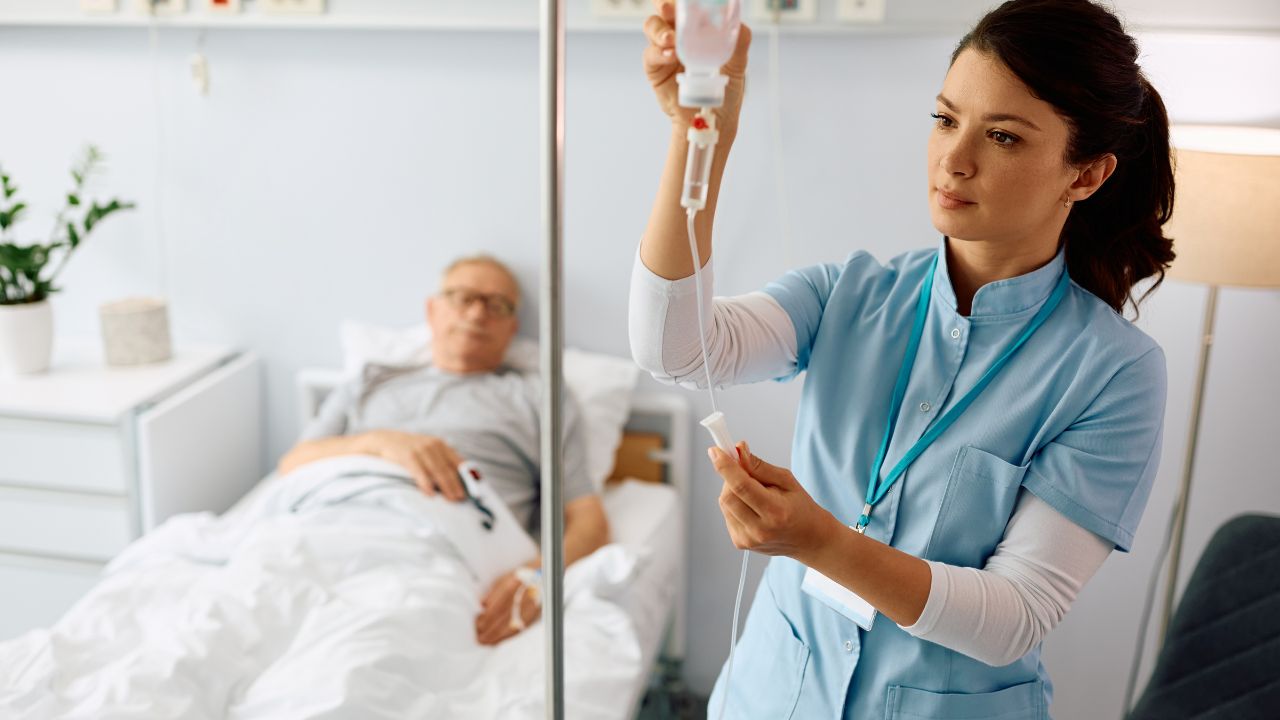
The medical intensive care unit (MICU) represents the pinnacle of complex medical management, a specialized environment where patients with profound, life-threatening illnesses are treated. Unlike surgical or cardiac intensive care units (ICUs), MICU patients often present with a cascade of failures across multiple organ systems, demanding a level of care that is both broad and comprehensive.
Achieving excellence in this setting is not merely a function of advanced technology, but is fundamentally dependent on optimized MICU staffing.
A skilled, resilient, and well-coordinated clinical team is essential for:
- Navigating complex care
- Improving outcomes
- Facing unique MICU challenges
The key takeaway of this article is that optimized staffing has a direct impact on MICU effectiveness and patient safety. Continue reading to learn more.
Defining the medical ICU and patient mix
The MICU is a specialized area within a hospital focused on complex, non-operative critical illnesses. Unlike general ICUs, the MICU patient population is clinically unstable and carries heavy co-morbidity.
Common patient presentations in the MICU include:
- Severe sepsis and septic shock
- Acute respiratory distress syndrome (ARDS) secondary to pneumonia, influenza, or other insults often leading to advanced respiratory failure
- Decompensated chronic illnesses, such as end-stage liver disease, refractory heart failure, or severe chronic obstructive pulmonary disease (COPD) exacerbations
- Complex metabolic emergencies like diabetic ketoacidosis (DKA) with comorbid complications
- Acute kidney injury requiring continuous renal replacement therapy (CRRT)
Admission pathways typically originate from the emergency department, from a general medical floor after sudden decompensation, or as transfers from other facilities lacking the requisite level of care.
Discharge planning is equally complex, often involving transitions to:
- Step-down units
- Long-term acute care hospitals
- Palliative care consultations
MICU staffing models, roles, & ratios
A successful MICU operates on the foundation of a robust, collaborative team. The core of this model is the multidisciplinary ICU team, a group of specialists who bring unique expertise to the patient's bedside.
Key roles within this team include:
- Intensivist: A physician, often with a pulmonary/critical care background, who leads the medical plan
- MICU nurse: The primary provider of continuous assessment, intervention, and coordinator of care at the bedside
- Respiratory therapists: Specialists in managing ventilators, artificial airways, and medical gases
- Clinical pharmacist: A critical team member who manages complex medication regimens, ensures dosing accuracy in organ failure, and monitors for interactions
- Advanced practice providers (NP/PA): Manage daily care, perform procedures, and facilitate patient flow
- Case management: Nurses and social workers to coordinate discharge planning, family communication, and resource utilization
- Support staff: Including patient care technicians, monitor technicians, and unit secretaries
Effective MICU staffing hinges on maintaining appropriate nurse-patient ratios, typically 1:2. These ratios must be flexible, as 1:1 ratios are required for patients with high care needs. Adjusting ratios to patient acuity is crucial for both safety and quality of care.
Filling the schedule to maintain these ratios involves a mix of staffing solutions.
Core staff provides the stable foundation, while gaps are filled by a PRN critical care nurse (internal or contracted staff who pick up shifts as needed) and a dedicated float pool MICU team. These float pool nurses are experienced critical care providers who are oriented to multiple ICUs, providing invaluable flexibility. When internal resources are exhausted, external agency nurses may be used, though this requires careful management of orientation and integration.
Credentialing, onboarding, & education
The acuity of the MICU demands a rigorous approach to credentialing, onboarding, and ongoing education.
A nurse seeking medical ICU nurse jobs is expected to have a strong foundation in critical care, with many units requiring or strongly preferring the CCRN (Certification for Critical Care Registered Nurses). Basic Life Support (BLS) and Advanced Cardiovascular Life Support (ACLS) are non-negotiable requirements.
The onboarding MICU process is an intensive, competency-based program, not a simple orientation. It involves:
- A lengthy preceptorship with an experienced senior nurse
- Validation of clinical skills, from managing ventilators and hemodynamic lines to titrating complex infusions
- In-depth training on unit-specific protocols, such as sepsis bundles, glycemic control, and sedation/delirium management
- Simulation training for low-frequency, high-risk events (e.g., difficult airways, malignant hyperthermia, code events)
Compliance with hospital-wide and unit-specific mandates, such as infection prevention and annual skills refreshers, is continuously tracked.
This structured onboarding contrasts with that of contingent staff. A PRN critical care nurse, being an internal employee, typically has an abbreviated orientation focused on unit-specific workflows, as they are already familiar with the hospital's electronic medical record (EMR) and overarching policies. Contracted nurses, however, require a different process, as outlined in the table below.
Regardless of employment type, all staff must demonstrate competency in key areas. High-quality continuing education MICU programs are essential for keeping the entire team updated on evidence-based practice changes, new technologies, and treatment modalities.
Workflow optimization, scheduling, & tech in the MICU
The MICU environment is fast-paced and data-intensive, making workflow optimization essential.
Structured, interdisciplinary rounds anchor the daily rhythm. These rounds serve as the central communication hub, where the entire team gathers to:
- Review each patient
- Set daily goals
- Identify barriers to discharge
- Ensure the care plan is unified
Technology plays an essential role in the MICU workflow. Advanced monitors and a strong EMR system enable real-time data access and efficient documentation.
The EMR charting system is the central repository for this information. A well-designed EMR can:
- Streamline documentation
- Reduce redundancy
- Support clinical decision-making
However, a poorly optimized EMR can become a significant burden, pulling nurses away from the bedside and reducing their direct care hours. Continuous efforts to improve EMR charting efficiency are vital.
Technology is also transforming the staffing and scheduling process.
While traditional models are standard, many units are moving toward flexible scheduling options, such as:
- Self-scheduling
- 8-hour or 10-hour shifts
- Weekend-only programs
These flexible scheduling options help improve work-life balance and retention. Digital platforms like Nursa augment this. Staffing apps allow for direct, real-time access to open shifts for both internal staff (such as the PRN critical care nurse) and external agency staff, streamlining the process of filling last-minute needs.
Safety, compliance, & quality metrics
A robust culture of safety is non-negotiable in the MICU. This culture is supported by stringent adherence to internal and external standards, including those established by The Joint Commission (TJC) and the Centers for Medicare & Medicaid Services (CMS).
Key safety initiatives and quality metrics tracked in the MICU include:
- Infection control bundles: Strict protocols to prevent central line-associated bloodstream infections (CLABSIs), catheter-associated urinary tract infections (CAUTIs), and ventilator-associated pneumonia (VAP).
- Medication safety: High-alert medication protocols, smart-pump compliance, and pharmacy-led medication reconciliation.
- Protocol adherence: Tracking adherence to evidence-based guidelines, such as the surviving sepsis campaign bundles.
- Patient safety indicators: Monitoring rates of hospital-acquired pressure injuries (HAPI) and patient falls (often with injury).
The rapid response team (RRT) is a critical safety component that intervenes before a patient on a medical floor declines to the point of needing MICU admission, or provides immediate support for acute events within the MICU itself.
Structured quality improvement (QI) programs drive continuous improvement.
These programs utilize internal audits and performance metrics to identify areas for improvement. Regular, data-driven feedback is provided to the team to reinforce best practices and guide change, ensuring the unit continually evolves to meet the highest standards of care.
Burnout support, retention, & career advancement
The clinical and emotional demands of the MICU place staff at a high risk for burnout.
This can be caused by dealing with:
- Serial acute cases
- Complex family dynamics
- Patient mortality
Recognizing and addressing the risk of burnout is a core component of a successful staffing strategy.
Building burnout resilience involves a multi-faceted approach:
- Peer support: Formal and informal programs, such as debriefs after a critical event or "code lavender" teams, for immediate psychological first aid
- Mental health resources: Confidential and easy access to employee assistance programs (EAPs) and mental health professionals
- A culture of learning: Utilizing case review and morbidity and mortality (M&M) conferences as opportunities for learning and system improvement, rather than for blame
- Leadership support: Visible managers listening to staff concerns and advocating for a safe and manageable work environment.
Retention is directly linked to professional satisfaction and growth.
Offering clear pathways for career advancement, such as clinical ladder programs, allows senior nurses to be recognized and compensated for their expertise. Opportunities to "level up" into roles such as preceptor, charge nurse, or participate in QI programs provide meaningful engagement.
Furthermore, supporting and funding continuing education opportunities in MICUs, such as conference attendance or pursuing advanced degrees, demonstrates a commitment to the team's long-term professional development.
MICU staffing FAQs
Find answers to frequently asked questions here.
How is surge staffing handled during a public health crisis or pandemic?
Surge staffing involves a tiered activation plan. This includes canceling elective procedures to free up staff, deploying nurses from the float pool and other critical care areas, and cross-training nurses from step-down units to assist with less acute tasks.
Models may shift to "team nursing," where one experienced ICU nurse oversees one or two non-ICU nurses. Nurse-patient ratios are often extended, with a focus on prioritizing the most critical interventions.
What are the essential certifications for medical ICU nurse jobs?
The non-negotiable certifications are BLS and ACLS. While not always required for hiring, the CCRN from the American Association of Critical Care Nurses (AACN) is the gold-standard specialty certification that is strongly preferred and often required for advancement.
What credentialing is required for agency staff working in the MICU?
Contracted staff must meet the same credentialing standards as core staff. This includes a valid, unencumbered RN license, current BLS and ACLS certifications, and proof of experience in a comparable high-acuity ICU setting. They must also complete the facility's specific onboarding modules, including EMR training and competency validation, before being assigned to a patient.
How are digital scheduling solutions changing MICU staffing?
Digital apps are changing the staffing landscape by providing a transparent, real-time marketplace for open shifts. Instead of relying solely on traditional agencies, the "agency vs app" discussion now includes PRN staffing platforms. These apps can also connect facilities directly to a verified pool of external agency nurses, often streamlining the credentialing and scheduling process and providing more flexibility to meet immediate needs.


