

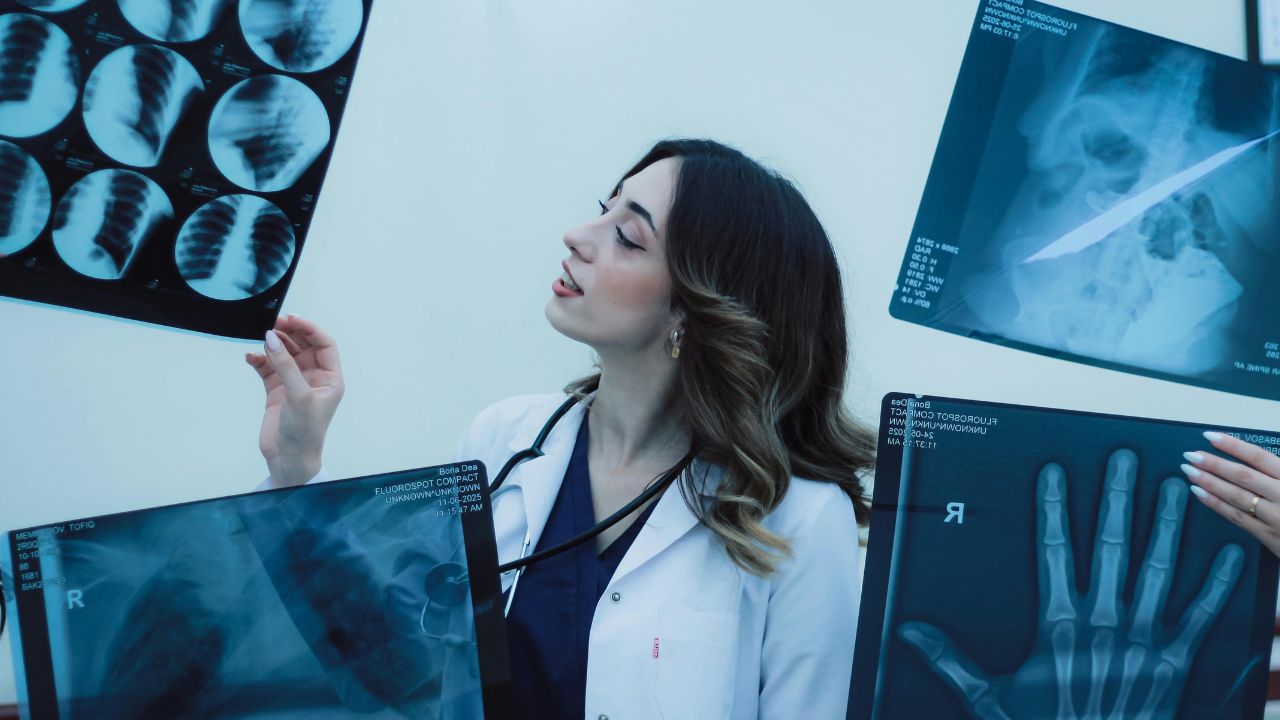
Discover how interventional radiology is transforming modern medicine with minimally invasive, imaging-guided treatments that offer faster recovery and cost-effective care.
Learn the origins, techniques, real-world applications, and future promise of this innovative field, showing healthcare leaders why interventional radiology is a pivotal bridge between diagnosis and treatment.
Interventional radiology: Precision from within
Imagine treating diseases with pinpoint accuracy—without the need for a large surgical scar or prolonged recovery.
This is the everyday reality of interventional radiology, a medical field that blends cutting-edge imaging with minimally invasive procedures to tackle some of the most complex medical challenges.
Interventional radiology serves as a dynamic bridge between diagnosis and definitive treatment, powered by the latest image-guidance technologies.
As a discipline, it rethinks how we approach illness—from blocked arteries to cancer and beyond—by offering alternatives that often shorten hospital stays and quicken recovery.
In this article, you’ll gain a comprehensive understanding of how this specialty has evolved, the revolutionary interventional radiology techniques it employs, and what sets it apart from both traditional surgery and standard radiology. We'll explore its vast applications, glimpse into its future, and appreciate the blend of science and human touch at its core.
What is interventional radiology?
Interventional radiology (IR) is a modern medical specialty that treats a wide range of conditions using image-guided, minimally invasive procedures.
At its heart, IR leverages advanced imaging techniques—such as X-ray fluoroscopy, computed tomography (CT), magnetic resonance imaging (MRI), and ultrasound—not just to diagnose, but to precisely deliver treatment to areas inside the body with remarkable accuracy.
Instead of making large incisions as done in surgery, interventional radiologists use small, targeted approaches. Through a tiny cut, often less than a centimeter, they insert catheters or micro-instruments, which are then navigated under imaging guidance to the site of disease.
This approach:
- Minimizes trauma to healthy tissues
- Reduces pain
- Accelerates recovery times
The shift toward minimally invasive procedures has redefined treatment paradigms in cardiovascular care, oncology, and even emergency medicine.
Targeted treatment is a key principle in IR: small incisions with a big impact, allowing many patients to resume normal activities far sooner than after traditional surgery.
As a result, interventional radiology stands apart among medical specialties, offering therapy options that extend hope and healing while prioritizing patient comfort and safety.
A brief history of interventional radiology
Understanding the history of interventional radiology requires a journey back to the mid-20th century, a period marked by rapid advancements in medical imaging.
What began as simple diagnostic X-rays soon paved the way for catheter-based interventions, largely due to imaginative pioneers like Dr. Charles Dotter. Often referred to as the “father of interventional radiology,” Dr. Dotter performed the first documented angioplasty in the 1960s, using a catheter to unblock an artery and restore blood flow—without the need for open surgery.
In the decades that followed, what was once limited to imaging blood vessels evolved dramatically. The expansion of imaging modalities such as CT and MRI enabled even more precise navigation and broadened the reach of treatments.
Today, interventional radiology features not only manual dexterity but also advanced robotics, artificial intelligence, and sophisticated software, continually reshaping the practice and possibilities of minimally invasive care.
How interventional radiology works
Interventional radiology relies on a methodical and elegant sequence of steps to achieve precise, effective treatments.
- First, imaging acts as the physician’s map. Whether using fluoroscopy, ultrasound, CT, or MRI, these tools provide real-time detail of internal structures.
- The interventional radiologist then creates a tiny incision, often less than a centimeter long, to access blood vessels or other internal pathways.
- Next, catheters or specialized microdevices are threaded through these pathways with expert control. Because the entire process unfolds under continuous imaging, the physician can monitor and adjust device position, ensuring action at exactly the right place.
- Finally, these images confirm the intended outcome, whether it’s the opening of a blocked artery, the delivery of medication, or the destruction of abnormal tissue.
Procedures are frequently completed in a matter of hours, rather than days, with a level of precision akin to “surgery guided by microscopic navigation.”
Such process-driven care avoids unnecessary tissue disruption, limits scarring, and empowers practitioners to treat issues that once required much more invasive surgical approaches.
Interventional radiology vs diagnostic radiology
It’s important to distinguish between interventional radiology and its companion specialty, diagnostic radiology.
Diagnostic radiologists use imaging alone to identify medical problems—scanning for fractures, tumors, or infections and interpreting those images for insight.
In contrast, interventional radiology utilizes similar imaging techniques not only for diagnosis but also for direct treatment of conditions. For example, a diagnostic scan might reveal a blocked coronary artery, while an interventional radiologist would use the same technology to actually open the vessel and restore blood flow.
The interplay between diagnostic and interventional radiology is foundational. The ability to both locate and treat disease bridges gaps in patient care, fostering a comprehensive approach that connects the power of modern imaging to hands-on therapies.
As part of the radiology field, interventional radiology exemplifies a collaborative and outcome-focused mindset in healthcare.
Common interventional radiology procedures
Interventional radiology provides a toolkit of procedures designed for accuracy and adaptability. The specialty features an array of interventions, each with unique applications and benefits:
- Angioplasty and stent placement: These techniques restore blood flow by opening narrowed or blocked arteries, commonly used to treat coronary artery disease, peripheral arterial disease, or life-threatening blockages in the brain.
- Embolization: In cases of abnormal blood vessels—such as aneurysms, arteriovenous malformations, or even bleeding tumors—embolization blocks the vessel, stopping unwanted blood flow.
- Ablation: For certain cancers, radiofrequency or microwave ablation uses heat, while cryoablation employs cold to destroy unhealthy tissue precisely.
- Drainage procedures: These are used to remove infectious fluid, abscesses, or relieve pressure from blocked organs, improving comfort and function.
- Biopsies: When a diagnosis is unclear, interventional radiology can obtain tissue samples with pinpoint accuracy, guiding needles under imaging to the exact area of interest.
In oncology, interventional radiology offers tailored therapies, such as chemoembolization—delivering anti-cancer drugs directly to tumors—or radiofrequency ablation, which targets the localized destruction of malignancies.
The hallmark is always image-guided targeting, often achieving accuracy within millimeters, thereby preserving healthy tissue and lowering the risk of complications.
Common interventional radiology treatments are accessible to a broad spectrum of patients, encompassing conditions ranging from blocked vessels and cancer to infections and chronic pain—all via methods that prioritize safety, precision, and efficiency.
Interventional radiology vs surgery
As modern medicine evolves, the debate often centers on interventional radiology vs surgery. Both fields hold enormous value, but differ fundamentally in approach, invasiveness, and patient experience.
Surgery (such as that done in the operating room) typically requires large incisions, general anesthesia, and days of recovery.
Interventional radiology, in contrast, relies on small incisions and local or mild sedation. The minimally invasive nature of IR leads to:
- Fewer complications, such as infections or bleeding
- Shorter hospital stays—many procedures are outpatient or require only an overnight stay
- Quicker recovery and return to normal activities
- Lower cost of interventional radiology, especially for common vascular and oncologic procedures, due to reduced hospitalization and resource usage
It is important to recognize that IR does not replace surgery; instead, it complements it.
In some cases—especially when surgery is too risky or when patient preference or medical history dictates alternatives—IR offers hope and effective results. This flexible, patient-centered approach is reshaping what it means to tailor treatment in healthcare today.
The role of the interventional radiologist
Behind every successful interventional radiology procedure stands a highly trained physician skilled in both diagnostics and therapy.
The role of an interventional radiologist is multifaceted, and their responsibilities typically involve:
- Interpreting complex imaging studies
- Planning procedures
- Navigating delicate internal pathways to deliver treatment
Training in interventional radiology follows a rigorous pathway, consisting of completion of medical school, a diagnostic radiology residency, and finally, specialized fellowship programs focused on interventional techniques and technologies.
This extensive education prepares them to assess risks, understand anatomy, and sometimes even invent new solutions for challenging cases.
Interventional radiologists frequently work closely with surgeons, oncologists, critical care teams, and other specialists, demonstrating a multidisciplinary, problem-solving mentality.
Their reputation as innovators in medicine stems not only from their technical skill but also from their ability to adapt technology to address the unique needs of patients.
Real-world applications of interventional radiology
Interventional radiology’s impact spans nearly every specialty:
- Oncology: Provides treatments like tumor embolization and targeted ablation for patients ineligible for surgery.
- Cardiology: Performs lifesaving stent placements and clot removals for heart attack and stroke patients.
- Neurology: Offers advanced treatments for cerebral aneurysms and emergent stroke interventions.
- Vascular medicine: Treats varicose veins, deep vein thrombosis, and peripheral artery disease, often reducing the need for open repair.
- Gynecology: Provides uterine fibroid embolization, sparing many patients from invasive surgery.
Interventional radiology also shines in emergency situations, controlling bleeding after trauma much faster and with less risk than traditional open surgery.
When seconds count, IR specialists help save lives with rapid, targeted interventions—applying temporary or permanent closures to wounded vessels and stabilizing critical patients in the trauma bay.
Beyond emergencies, IR’s reach is everyday practice:
- In telemetry units, real-time monitoring of heart rhythms is paired with image-guided cardiac procedures for patients needing pacemakers or other devices.
- In critical care settings, interventional radiologists place central lines, drain infected abscesses, and maintain ICU patients' stability with the least invasive solutions possible—accelerating their recovery.
Globally, the expansion of IR techniques increases access to essential care, especially in regions where surgical resources may be limited. Mobile IR units and portable imaging equipment are now bringing these advantages to remote communities.
The specialty stands at the crossroads of technology and compassion, making advanced therapies available to more people than ever.
Advancements and emerging technologies
Interventional radiology serves as a testing ground for some of medicine’s most exciting innovations, blending robotics, artificial intelligence, and advanced materials in pursuit of safer, even more effective therapies.
Modern advancements include:
- Robotic-assisted catheter navigation: Surgeons can control ultra-flexible devices remotely, reducing radiation exposure and allowing steadier, more precise maneuvers inside tiny vessels.
- AI-guided 3D imaging: Sophisticated algorithms help select the optimal path and device for each patient, synthesizing data from CT, MRI, and ultrasound to create real-time, interactive maps of anatomy.
- Bioresorbable materials and micro-sensors: New catheters, stents, and coils naturally dissolve after fulfilling their mission, or provide ongoing information about blood flow, pressure, and tissue response.
- Fusion imaging: By overlaying multiple imaging sources, operators can “see inside” the body more clearly than ever—leading to down-to-the-millimeter placements and higher interventional radiology success rates.
- Augmented reality guidance: Procedures are leveraging wearable technology, with headsets or displays projecting anatomical landmarks onto the operator’s field of view to navigate complex or abnormal anatomies.
These breakthroughs offer not only better outcomes but also the ability to tailor each procedure to the specific patient. Research indicates that selecting the appropriate approach and equipment for each scenario enhances interventional radiology success rates and patient safety.
Remote digital data sharing and “tele-mentoring” enable practitioners to collaborate instantly across continents, accelerating the evolution of best practices and inspiring global adoption of novel interventional radiology techniques.
The human side: Patient experience and perspective
While technology drives much of the progress in interventional radiology, the human experience remains at its core.
For most patients, the journey begins with reassurance: procedures frequently require only minimal sedation or local anesthesia and use the smallest possible incisions. The result is less pain, decreased post-procedure discomfort, and a swifter return to everyday life—in many cases, within one to two days.
Real-time images allow interventional radiologists to explain findings and steps with exceptional clarity. Patients can see the challenge and the solution as it happens, which reduces the fear often associated with “going under the knife.”
Compassion and communication further set this field apart. The specialty’s reliance on both leading-edge technology and kindness ensures that, even as nursing credentials and supporting roles become increasingly specialized, emotional needs are met alongside physical ones.
The focus on patient-centered, minimally invasive care represents a new paradigm—a system where outcomes matter, but so does comfort, confidence, and quality of life during the healing journey.
The future of interventional radiology
Looking forward, the future of interventional radiology is bright and full of possibilities.
Outpatient and same-day discharges will likely become the norm for even more complex procedures, reducing disruption to patients and healthcare systems alike.
Artificial intelligence will streamline workflows from diagnosis straight through to treatment, with personalized care plans and risk assessments generated at the click of a button. The rise of nanotechnology and “smart” biomaterials will make self-targeting therapies possible, enabling drugs and devices to automatically seek out diseases within the body.
Accessibility will expand, thanks to portable imaging and procedure units, even enabling interventional therapy outside the hospital in underserved or rural areas.
Simply put, IR embodies the fusion of ingenuity, compassionate care, and relentless innovation. This specialty is uniquely positioned to continue redefining what is possible in the treatment of disease—offering hope, healing, and opportunities that once seemed like science fiction.
Seeing treatment differently
Interventional radiology stands as the perfect blend of precision, science, and compassion in medicine.
It erases the line between “seeing” and “healing,” offering a new way forward for patients and providers alike.
As imaging becomes smarter, and tools even smaller and more agile, IR will continue to transform how we approach illness—one invisible incision, one carefully navigated vessel at a time.
For healthcare leaders, clinicians, and patients, exploring the world of radiology means seeing the future of medicine—and treatment itself—in a whole new light.


