

Romeoville is a suburban village in Will County, located along the Des Plaines River about 30 miles southwest of Chicago. Residents have access to hospitals in nearby Joliet, Bolingbrook, and Naperville, along with Chicago's major academic medical centers.
Romeoville
Illinois
Jump to section on this page

Anchor Link
Go Beyond a Single Job
Choose Multiple Per Diem Shifts on Your Schedule
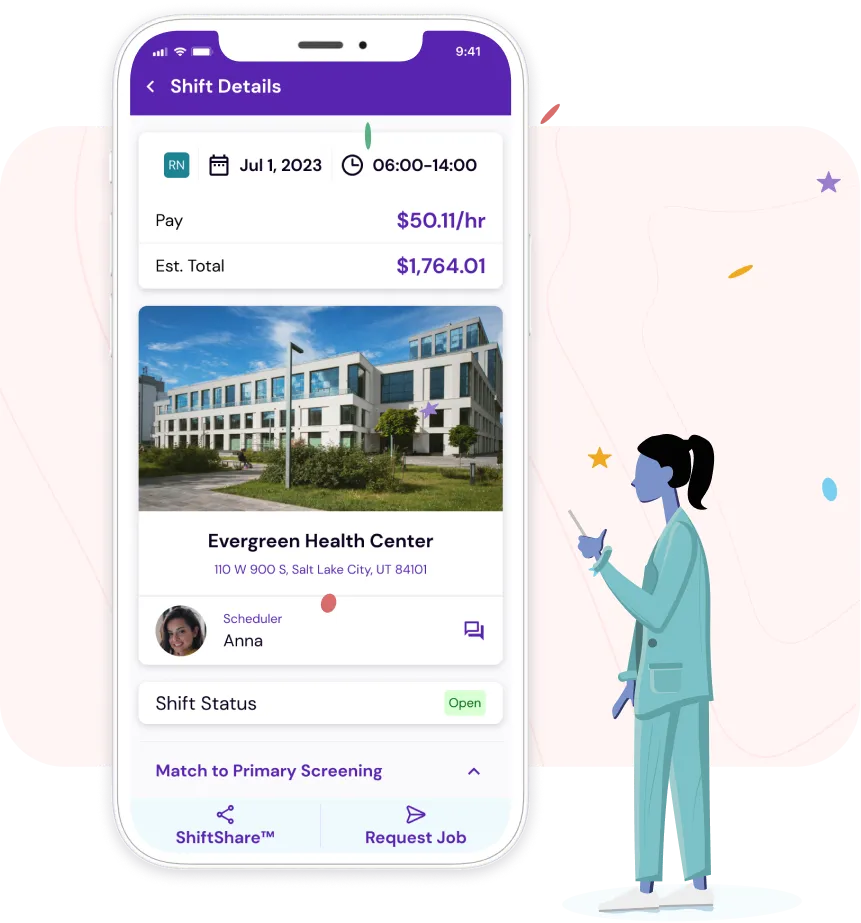
Nursa isn't just about finding a job; it's about crafting your ideal work schedule by selecting shifts. Once you create a Nursa profile, you will experience the convenience of scheduling shifts in real time.
Loading shifts…
Zip codes located within Romeoville, IL:
Loading…
Completed! We will notify you when we have desired shifts for you.
Until then, you can continue with the app to signup or login.
Continue
Until then, you can continue with the app to signup or login.
Oops! Something went wrong while submitting the form.
See More Shifts and Apply Now
Explore and find where you would like to work
Search ShiftsPer Diem JobsSelect your license and location to find the best PRN jobs
Select your license and the location you want to work in, and we'll show you the best PRN jobs available nearby.
Romeoville is home to Lewis University and offers a growing, family-friendly community with parks, trails, and recreation centers. The Isle a la Cache Museum and nature preserve highlight the area's natural and fur-trade history.

Per diem nursing shifts in Romeoville, Illinois
Romeoville is a village in Will County, sitting along Interstate 55 about 30 miles southwest of downtown Chicago. It borders Bolingbrook, Lockport, and Plainfield, and it sits just north of Joliet, the county's largest city.
For nursing professionals considering per diem work, that location matters. Romeoville itself is largely residential, home to Lewis University, but it sits inside a corridor of southwest suburbs with a substantial concentration of hospitals, long-term care facilities, and outpatient clinics.
Per diem nursing shifts in Romeoville, Illinois give clinicians a way to work shift by shift rather than committing to a fixed schedule with one employer. This guide covers what that looks like across license types, what Illinois requires for each role, and how to get started through a platform built specifically for this kind of work.
What per diem shifts look like by license type
Per diem work means requesting individual shifts as they become available, rather than working a set schedule at a single facility. What the shift actually involves depends heavily on license type and setting. Understanding those differences helps clarify which shifts make sense to pursue.
Registered nurses (RNs)
RNs hold the broadest scope of practice among the three main license types, and per diem RN shifts reflect that. Responsibilities can include administering medications, managing IV therapy, assessing changes in a patient's condition, and overseeing LPNs and CNAs on a unit.
In a hospital setting, a per diem RN often floats between units depending on where coverage is needed that day. In long-term care or assisted living, the role shifts toward medication management, care planning, and coordination with physicians and families.
Because RNs are licensed to make independent clinical judgments, facilities rely on them heavily during short-staffed shifts. That reliance is a large part of why per diem RN postings tend to be steady and why the pay reflects the urgency behind them.
Licensed practical nurses (LPNs)
LPNs work under the supervision of an RN or physician. Their scope includes administering medications, monitoring vital signs, changing wound dressings, and providing direct patient care.
Per diem LPN shifts are common in skilled nursing and long-term care settings, where LPNs often make up a significant share of the direct care staff. Hospitals use LPNs more selectively, typically on units where the scope of practice fits the patient population well.
The reasoning behind this pattern is fairly direct. Long-term care residents generally need steady, ongoing management of chronic conditions, which lines up closely with LPN training. Acute hospital units, where a patient's condition can shift quickly, lean more heavily on RN-level assessment.
Certified nursing assistants (CNAs)
CNAs provide direct, hands-on care under the supervision of an RN or LPN, including bathing, dressing, feeding, transferring patients, and monitoring basic vital signs.
Per diem CNA shifts show up frequently in long-term care and assisted living, where residents need consistent daily support with everyday activities. Hospitals post CNA shifts as well, sometimes under the title of patient care technician or nurse aide depending on the facility.
Demand for per diem CNA work tends to run high because the role is physically demanding and turnover in the field is significant. A facility that fills a CNA gap quickly avoids putting extra strain on the staff already on the floor, which is the exact problem a per diem posting is meant to solve.
Illinois licensing requirements for each role
Illinois sets specific requirements for each license type, and meeting them is a prerequisite for taking any per diem shift in the state. Here is what each role involves.
Becoming an RN in Illinois
To practice as an RN in Illinois, you need to complete an approved nursing education program, either an associate degree or a bachelor's degree in nursing, and pass the National Council Licensure Examination for Registered Nurses (NCLEX-RN).
After passing the exam, you apply for licensure through the Illinois Department of Financial and Professional Regulation (IDFPR). The license must be renewed periodically, and Illinois requires continuing education hours as part of that renewal.
Illinois has not implemented the Nurse Licensure Compact, which allows nurses in participating states to hold one multistate license valid across state lines. Confirm current compact status directly with IDFPR before assuming a license from another state covers you here, since compact participation changes periodically.
Becoming an LPN in Illinois
LPN licensure requires completing a state-approved practical nursing program, typically about a year in length, followed by passing the National Council Licensure Examination for Practical Nurses (NCLEX-PN).
As with RN licensure, LPNs apply through IDFPR and must renew their license on a set schedule, with continuing education requirements attached. The shorter education timeline makes LPN licensure a common path for people entering nursing quickly or transitioning from a related healthcare role.
Becoming a CNA in Illinois
CNA certification in Illinois requires completing a state-approved training program, generally 75 hours or more, covering both classroom instruction and supervised clinical practice.
After training, candidates must pass a competency exam covering both a written and a skills component. Illinois maintains a Health Care Worker Registry, and CNAs must appear on that registry in good standing to work legally in the state.
CNA certification also requires periodic renewal, along with proof of recent work in the field. This requirement exists because hands-on skills can decline without regular use, and the registry system is built to confirm that certified aides remain current.
Certifications that strengthen a per diem profile
Beyond baseline licensure, certain certifications materially affect which per diem shifts you qualify for. Facilities often require these before confirming a shift, so holding them ahead of time keeps more options open.
- Basic Life Support (BLS) is close to universal. Nearly every healthcare setting requires a current BLS card, regardless of license type or unit.
- Advanced Cardiovascular Life Support (ACLS) is typically required for RNs working in emergency departments, intensive care, or other high-acuity units.
- Pediatric Advanced Life Support (PALS) matters for RNs and LPNs working in pediatric units or emergency departments that treat children.
- Tuberculosis (TB) screening and up-to-date immunization records are standard requirements across nearly every facility type.
- Specialty certifications, such as wound care or infusion therapy, can open additional per diem opportunities in home health and skilled nursing settings.
The logic behind these requirements holds across facility types. Certifications confirm that a clinician can respond correctly in an emergency, and facilities cannot predict in advance which per diem staff member will be on the floor when one occurs. Keeping certifications current, rather than letting them lapse between shifts, is one of the more straightforward ways to stay eligible for a wider range of postings.
Why nursing professionals choose Nursa
Nursa is a per diem staffing marketplace that connects nurses, nursing assistants, and other clinicians directly with facilities that have open shifts. Rather than working through a staffing agency intermediary, clinicians see posted shifts, review the details, and request the ones that fit their schedule.
For nursing professionals in the Romeoville area weighing PRN nursing jobs, the platform offers several concrete advantages worth understanding.
Pay that reflects urgent need
Per diem rates posted through the platform frequently exceed what the same facility pays a comparable full-time staff position on an hourly basis. Facilities are paying for immediate coverage, and that urgency is reflected directly in the rate.
Rates are visible before a clinician requests a shift, which removes the guesswork that can come with negotiating pay after the fact.
Faster access to earnings
Standard payroll cycles typically run every two weeks. Nursa Direct allows clinicians to access earnings from completed shifts more quickly, without waiting on a traditional pay schedule.
This matters most for clinicians who rely on per diem work to supplement other income or manage variable expenses from month to month.
Scheduling control through a marketplace model
The platform operates as a marketplace rather than an assignment system. Clinicians browse open shifts and choose which ones to request, with no obligation to accept a minimum number of hours.
This structure gives nurses meaningful control over their own calendar, whether the goal is a full schedule, a handful of shifts a month, or something that changes with the season.
A range of facility types
Clinicians using the platform can request shifts across several settings, including:
- Long-term care facilities serving residents with ongoing care needs.
- Assisted living communities focused on daily support and medication management.
- Hospitals covering acute, emergency, and observation care.
- Skilled nursing facilities managing post-acute recovery and rehabilitation.
- Home health settings where clinicians provide care directly in a patient's home.
Working across multiple settings allows clinicians to maintain a broader skill set and identify which care environment best matches their preferences and strengths.
Real-time notifications and direct scheduler contact
The platform sends real-time notifications when shifts matching a clinician's license, location, and preferences become available. This reduces the need to check for postings manually throughout the day.
Clinicians can also communicate directly with facility schedulers before accepting a shift, asking questions about the unit, patient ratios, or check-in procedures. That direct line of communication helps set clear expectations before a shift begins.
How to get started
Signing up follows a straightforward process designed to move a clinician from initial registration to their first confirmed shift with minimal delay.
- Add personal information: Create an account with basic contact and identification details.
- Verify your nursing license: Submit your active Illinois license or certification for verification.
- Complete your clinician profile: Provide your experience, specialties, and preferred work settings.
- Upload your essential credentials: Add required documents, including certifications and immunization records.
- Request a shift: Submitting a shift request initiates the required background check.
Once your profile is verified and your background check clears, you can begin requesting shifts that match your license, availability, and preferences. Initial setup takes some time, but subsequent shift requests move quickly.
Living and working in Romeoville
Location plays a meaningful role in how sustainable per diem work feels over time. Romeoville offers a combination of accessibility, facility variety, and quality of life that makes it a practical base for nursing professionals seeking flexible work.
A southwest suburb with strong access
Romeoville sits directly along Interstate 55, with Interstate 355 also close by, giving clinicians fast driving routes toward Joliet, Bolingbrook, Naperville, and the greater Chicago area. Lewis University adds a steady academic presence to the village.
The village borders Bolingbrook, Lockport, and Plainfield, and sits just north of Joliet, Will County's largest city. Together, this cluster of southwest suburbs supports a substantial concentration of hospitals, skilled nursing facilities, and outpatient clinics.
Metra's Heritage Corridor line runs through Lockport and Joliet nearby, and regional bus service connects Romeoville to surrounding communities, giving clinicians additional options beyond driving for reaching certain shifts.
A dense healthcare market nearby
Clinicians based in Romeoville have access to a wide radius of care settings without extensive travel. Nearby facilities span the range covered earlier in this guide, from long-term care and assisted living to acute hospital campuses in Joliet, Bolingbrook, and Naperville.
Chicago's broader healthcare system, one of the largest in the Midwest, sits within a manageable drive as well. That scale means per diem postings in this area are generally more consistent than in smaller or more rural markets, where facility options can be limited.
For clinicians who want variety, this density allows for meaningful rotation between settings. A nurse might work a long-term care shift one week and a hospital shift the next, without adjusting where they live.
Local amenities for time off
Romeoville and its surrounding area offer a range of options for spending time away from work, whether after a long shift or during a full day off.
The Isle a la Cache Museum sits along the DuPage River within Romeoville and connects to trails that follow the water, offering an easy walk close to home. The Illinois and Michigan Canal towpath trail also runs nearby, giving clinicians a longer paved route for biking or running.
Lake Renwick Heron Rookery Preserve, just south of the village, offers additional trails and a notable birding spot for a quiet afternoon outdoors.
Romeoville also has a range of everyday restaurants and shops along its main commercial corridors, giving clinicians options close to home without a longer drive.
Access to Joliet and beyond
Joliet, just south of Romeoville, has a historic downtown tied to Route 66, along with the Rialto Square Theatre, minor league baseball with the Joliet Slammers, and casino entertainment options.
Naperville, a short drive northeast, offers a well-known downtown riverwalk, along with additional shopping and dining. Downtown Chicago is close enough for a full day trip, with the Loop, museums, and the lakefront all reachable by car or regional transit.
Having both a quieter home base and a major metro area within reach gives clinicians in Romeoville more variety on days off than a village of its size typically offers on its own. Check current hours and schedules before planning around any specific attraction.
Weighing per diem work in Romeoville
Per diem work suits clinicians who value control over a guaranteed schedule. It offers the ability to decline shifts, work more during periods of higher need, and adjust availability around personal circumstances. It does not offer the predictability of a set schedule or the benefits structure of a traditional staff position.
For nurses, nursing assistants, and other clinicians who have weighed that tradeoff and find it workable, Romeoville presents a practical starting point. The area combines a dense, varied healthcare market with manageable commutes and a genuine range of things to do during time off.
Completing the registration process outlined above is the first step toward requesting shifts in the area.
Share this page:


No items found.
Featured Facilities in this City
Searching for other types of per diem nursing jobs? Find nurse and nursing assistant jobs in similar types of healthcare facilities here.
Facility Types
See All


Pick Up a Job Today
Find per diem PRN job opportunities in your area. High paying CNA, LPN and RN and many more licences are available now.
Join Nursa
Post Your Jobs Today
Facilities who use Nursa fill 3 times as many open per diem shifts, on average, compared to trying to fill the shifts themselves.
Post Jobs