

Gwynedd Valley is a community in Lower Gwynedd Township in Montgomery County, located about 20 miles north of Philadelphia. Residents are close to Jefferson Lansdale Hospital and other Montgomery County medical centers, along with Philadelphia's world-renowned health systems.
Gwynedd Valley
Pennsylvania
Jump to section on this page

Anchor Link
Go Beyond a Single Job
Choose Multiple Per Diem Shifts on Your Schedule
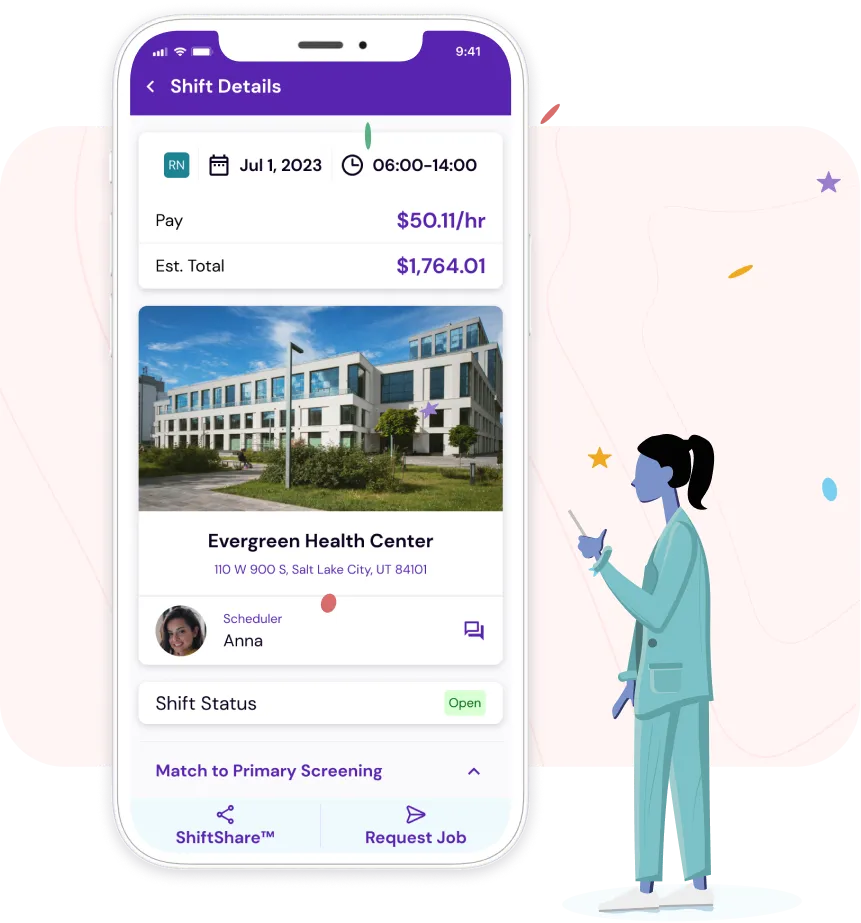
Nursa isn't just about finding a job; it's about crafting your ideal work schedule by selecting shifts. Once you create a Nursa profile, you will experience the convenience of scheduling shifts in real time.
Loading shifts…
Zip codes located within Gwynedd Valley, PA:
Loading…
Completed! We will notify you when we have desired shifts for you.
Until then, you can continue with the app to signup or login.
Continue
Until then, you can continue with the app to signup or login.
Oops! Something went wrong while submitting the form.
See More Shifts and Apply Now
Explore and find where you would like to work
Search ShiftsPer Diem JobsSelect your license and location to find the best PRN jobs
Select your license and the location you want to work in, and we'll show you the best PRN jobs available nearby.
Gwynedd Valley offers a quiet, scenic suburban lifestyle with rolling hills, historic estates, and Gwynedd Mercy University. Nearby Gwynedd Preserve and local trails provide space for walking and wildlife viewing.

Per diem nursing shifts in Gwynedd Valley, Pennsylvania
Gwynedd Valley is a small, unincorporated community in Montgomery County, split between Lower Gwynedd and Whitpain townships. It sits roughly 20 miles northwest of Philadelphia, in one of the more established suburban healthcare corridors in the region.
For nursing professionals considering per diem work, that positioning matters. Gwynedd Valley itself is quiet and residential, but it borders Ambler, North Wales, and Lansdale, and it sits within a short drive of the Philadelphia metro's dense hospital and long-term care network.
Per diem nursing shifts in Gwynedd Valley, Pennsylvania give clinicians a way to work shift by shift rather than committing to a fixed schedule with one employer. This guide covers what that looks like across license types, what Pennsylvania requires for each role, and how to get started through a platform built specifically for this kind of work.
What per diem shifts look like by license type
Per diem work means requesting individual shifts as they become available, rather than working a set schedule at a single facility. What the shift actually involves depends heavily on license type and setting. Understanding those differences helps clarify which shifts make sense to pursue.
Registered nurses (RNs)
RNs hold the broadest scope of practice among the three main license types, and per diem RN shifts reflect that. Responsibilities can include administering medications, managing IV therapy, assessing changes in a patient's condition, and overseeing LPNs and CNAs on a unit.
In a hospital setting, a per diem RN often floats between units depending on where coverage is needed that day. In long-term care or assisted living, the role shifts toward medication management, care planning, and coordination with physicians and families.
Because RNs are licensed to make independent clinical judgments, facilities rely on them heavily during short-staffed shifts. That reliance is a large part of why per diem RN postings tend to be steady and why the pay reflects the urgency behind them.
Licensed practical nurses (LPNs)
LPNs work under the supervision of an RN or physician. Their scope includes administering medications, monitoring vital signs, changing wound dressings, and providing direct patient care.
Per diem LPN shifts are common in skilled nursing and long-term care settings, where LPNs often make up a significant share of the direct care staff. Hospitals use LPNs more selectively, typically on units where the scope of practice fits the patient population well.
The reasoning behind this pattern is fairly direct. Long-term care residents generally need steady, ongoing management of chronic conditions, which lines up closely with LPN training. Acute hospital units, where a patient's condition can shift quickly, lean more heavily on RN-level assessment.
Certified nursing assistants (CNAs)
CNAs provide direct, hands-on care under the supervision of an RN or LPN, including bathing, dressing, feeding, transferring patients, and monitoring basic vital signs.
Per diem CNA shifts show up frequently in long-term care and assisted living, where residents need consistent daily support with everyday activities. Hospitals post CNA shifts as well, sometimes under the title of patient care technician or nurse aide depending on the facility.
Demand for per diem CNA work tends to run high because the role is physically demanding and turnover in the field is significant. A facility that fills a CNA gap quickly avoids putting extra strain on the staff already on the floor, which is the exact problem a per diem posting is meant to solve.
Pennsylvania licensing requirements for each role
Pennsylvania sets specific requirements for each license type, and meeting them is a prerequisite for taking any per diem shift in the state. Here is what each role involves.
Becoming an RN in Pennsylvania
Becoming an RN in Pennsylvania requires completing an approved nursing education program, either an associate degree or a bachelor's degree in nursing, and passing the National Council Licensure Examination for Registered Nurses (NCLEX-RN).
After passing the exam, candidates apply for licensure through the Pennsylvania State Board of Nursing. The license must be renewed on a set schedule, and Pennsylvania requires continuing education hours as part of that renewal.
Pennsylvania participates in the Nurse Licensure Compact, which allows a nurse holding a multistate license issued by a compact state to practice across state lines without applying for a separate license in each one. Confirm your own license status directly with the state board before assuming multistate privilege applies, since not every license type qualifies automatically.
Becoming an LPN in Pennsylvania
LPN licensure requires completing a state-approved practical nursing program, typically around a year in length, followed by passing the National Council Licensure Examination for Practical Nurses (NCLEX-PN).
As with RN licensure, LPNs apply through the Pennsylvania State Board of Nursing and must renew on a set schedule, with continuing education requirements attached. The shorter training timeline makes this path common for people entering nursing quickly or moving over from a related healthcare role.
Becoming a CNA in Pennsylvania
CNA certification in Pennsylvania requires completing a state-approved nurse aide training program, which includes both classroom instruction and supervised clinical practice, followed by a competency evaluation covering written and skills components.
Pennsylvania maintains a Nurse Aide Registry, and CNAs must appear on that registry in good standing to work legally in the state. Certification also requires periodic renewal along with documented recent work in the field.
This renewal requirement exists because hands-on clinical skills can decline without regular use. The registry system is built to confirm that a certified aide has stayed active enough in the field to maintain those skills.
Certifications that strengthen a per diem profile
Beyond baseline licensure, certain certifications materially affect which per diem shifts you qualify for. Facilities often require these before confirming a shift, so holding them ahead of time keeps more options open.
- Basic Life Support (BLS) is close to universal. Nearly every healthcare setting requires a current BLS card, regardless of license type or unit.
- Advanced Cardiovascular Life Support (ACLS) is typically required for RNs working in emergency departments, intensive care, or other high-acuity units.
- Pediatric Advanced Life Support (PALS) matters for RNs and LPNs working in pediatric units or emergency departments that treat children.
- Tuberculosis (TB) screening and up-to-date immunization records are standard requirements across nearly every facility type.
- Specialty certifications, such as wound care or infusion therapy, can open additional per diem opportunities in home health and skilled nursing settings.
The logic behind these requirements holds across facility types. Certifications confirm that a clinician can respond correctly in an emergency, and facilities cannot predict in advance which per diem staff member will be on the floor when one occurs. Keeping certifications current, rather than letting them lapse between shifts, is one of the more straightforward ways to stay eligible for a wider range of postings.
Why nursing professionals choose Nursa
Nursa is a per diem staffing marketplace that connects nurses, nursing assistants, and other clinicians directly with facilities that have open shifts. Rather than working through a staffing agency intermediary, clinicians see posted shifts, review the details, and request the ones that fit their schedule.
For nursing professionals in the Gwynedd Valley area weighing PRN nursing jobs, the platform offers several concrete advantages worth understanding.
Pay that reflects urgent need
Per diem rates posted through the platform frequently exceed what the same facility pays a comparable full-time staff position on an hourly basis. Facilities are paying for immediate coverage, and that urgency is reflected directly in the rate.
Rates are visible before a clinician requests a shift, which removes the guesswork that can come with negotiating pay after the fact.
Faster access to earnings
Standard payroll cycles typically run every two weeks. Nursa Direct allows clinicians to access earnings from completed shifts more quickly, without waiting on a traditional pay schedule.
This matters most for clinicians who rely on per diem work to supplement other income or manage variable expenses from month to month.
Scheduling control through a marketplace model
The platform operates as a marketplace rather than an assignment system. Clinicians browse open shifts and choose which ones to request, with no obligation to accept a minimum number of hours.
This structure gives nurses meaningful control over their own calendar, whether the goal is a full schedule, a handful of shifts a month, or something that changes with the season.
A range of facility types
Clinicians using the platform can request shifts across several settings, including:
- Long-term care facilities serving residents with ongoing care needs.
- Assisted living communities focused on daily support and medication management.
- Hospitals covering acute, emergency, and observation care.
- Skilled nursing facilities managing post-acute recovery and rehabilitation.
- Home health settings where clinicians provide care directly in a patient's home.
Working across multiple settings allows clinicians to maintain a broader skill set and identify which care environment best matches their preferences and strengths.
Real-time notifications and direct scheduler contact
The platform sends real-time notifications when shifts matching a clinician's license, location, and preferences become available. This reduces the need to check for postings manually throughout the day.
Clinicians can also communicate directly with facility schedulers before accepting a shift, asking questions about the unit, patient ratios, or check-in procedures. That direct line of communication helps set clear expectations before a shift begins.
How to get started
Signing up follows a straightforward process designed to move a clinician from initial registration to their first confirmed shift with minimal delay.
- Add personal information: Create an account with basic contact and identification details.
- Verify your nursing license: Submit your active Pennsylvania license or certification for verification.
- Complete your clinician profile: Provide your experience, specialties, and preferred work settings.
- Upload your essential credentials: Add required documents, including certifications and immunization records.
- Request a shift: Submitting a shift request initiates the required background check.
Once your profile is verified and your background check clears, you can begin requesting shifts that match your license, availability, and preferences. Initial setup takes some time, but subsequent shift requests move quickly.
Living and working in Gwynedd Valley
Location plays a meaningful role in how sustainable per diem work feels over time. Gwynedd Valley offers a combination of accessibility, facility variety, and quality of life that makes it a practical base for nursing professionals seeking flexible work.
A quiet community with strong access
Gwynedd Valley is residential and unincorporated, without the density of a larger suburb, yet it sits along the Lansdale/Doylestown Regional Rail Line with its own SEPTA station. That gives clinicians a direct transit option into Philadelphia and to stops throughout Montgomery County.
The community borders Ambler, North Wales, and Lansdale, and it sits close to Blue Bell, Fort Washington, and Spring House as well. Together, this cluster of townships and boroughs supports a substantial concentration of hospitals, skilled nursing facilities, and outpatient clinics.
Route 202 and the Pennsylvania Turnpike's Northeast Extension both run near the area, adding practical driving routes for clinicians working shifts outside a walkable or transit-accessible radius.
A dense healthcare market nearby
Clinicians based in Gwynedd Valley have access to a wide radius of care settings without extensive travel. Nearby facilities span the range covered earlier in this guide, from long-term care and assisted living to acute hospital campuses in Ambler, Lansdale, and the surrounding suburbs.
Philadelphia's broader healthcare system, one of the largest and oldest in the country, sits within a manageable drive or train ride as well. That scale means per diem postings in this area are generally more consistent than in smaller or more rural markets, where facility options can be limited.
For clinicians who want variety, this density supports meaningful rotation between settings. A nurse might work a long-term care shift one week and a hospital shift the next without changing where they live.
Local amenities for time off
Gwynedd Valley and its surrounding area offer a range of options for spending time away from work, whether after a long shift or during a full day off.
The Wissahickon Creek runs near the area, and the Green Ribbon Trail follows sections of it through Whitpain and neighboring townships, offering walking and running paths without requiring travel outside the immediate area. Fort Washington State Park sits a short drive away with additional trails and open space.
Gwynedd Mercy University, located nearby, hosts public lectures, performances, and campus events throughout the year, adding another close-to-home option for time off.
Ambler's small downtown offers restaurants, shops, and a historic theater within a short drive, making it an easy stop for an afternoon or evening off.
Access to Philadelphia
Philadelphia is close enough to serve as a regular option for days off rather than a special occasion. Museums including the Philadelphia Museum of Art and the Barnes Foundation sit a train ride away, along with Fairmount Park and the city's historic district.
Direct Regional Rail access makes this practical without the cost or stress of driving into the city and finding parking. For clinicians working irregular per diem hours, that flexibility matters when a day off falls on a weekday rather than a weekend.
The combination of a quiet residential setting at home and full metro access nearby is a significant part of what makes this location workable for nurses managing a per diem schedule alongside a personal life.
Weighing per diem work in Gwynedd Valley
Per diem work suits clinicians who value control over a guaranteed schedule. It offers the ability to decline shifts, work more during periods of higher need, and adjust availability around personal circumstances. It does not offer the predictability of a set schedule or the benefits structure of a traditional staff position.
For nurses, nursing assistants, and other clinicians who have weighed that tradeoff and find it workable, Gwynedd Valley presents a practical starting point. The area combines a dense, varied healthcare market with manageable commutes and a genuine range of things to do during time off.
Completing the registration process outlined above is the first step toward requesting shifts in the area.
Share this page:


No items found.
Featured Facilities in this City
Searching for other types of per diem nursing jobs? Find nurse and nursing assistant jobs in similar types of healthcare facilities here.
Facility Types
See All


Pick Up a Job Today
Find per diem PRN job opportunities in your area. High paying CNA, LPN and RN and many more licences are available now.
Join Nursa
Post Your Jobs Today
Facilities who use Nursa fill 3 times as many open per diem shifts, on average, compared to trying to fill the shifts themselves.
Post Jobs