

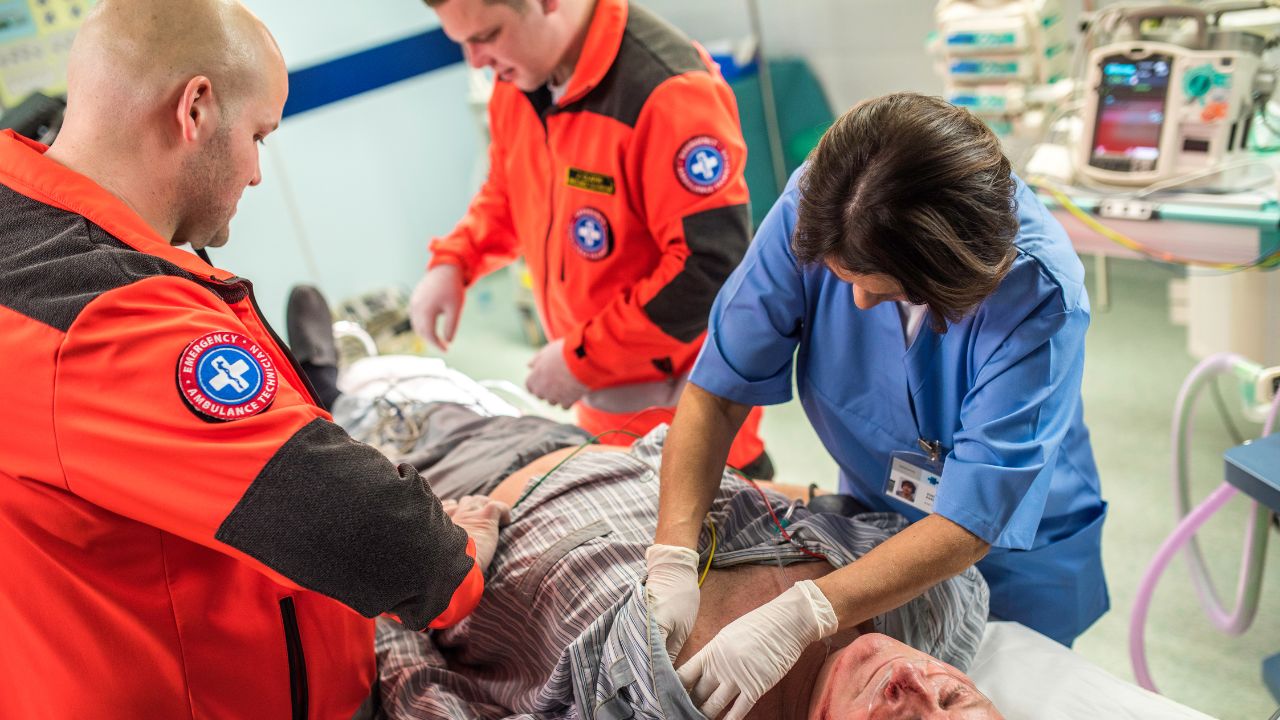
The emergency room (ER) is the central point of unscheduled care in healthcare, operating in continual readiness for cases ranging from minor illnesses to severe trauma. Beyond clinical skills, this environment demands a coordinated and adaptable workforce. Effective ER staffing is essential for ensuring patient safety and operational stability.
This article examines the structure and strategy of emergency department staffing, focusing on the balance between meeting patient needs, flexible workforce management, and supporting staff wellbeing.
We will detail ER team roles, explore regulatory requirements, and discuss essential retention strategies to address burnout. Key aspects are covered below:
Modern emergency room: Scope, services, & staffing demands
An emergency room is a specialized medical treatment facility dedicated to providing immediate care to patients presenting with acute illnesses or injuries.
The core functions of an ER are:
- Triage
- Diagnosis
- Stabilization
- Trauma resuscitation
- Disposition
The demands on emergency department (ED) staffing vary significantly based on the facility’s designation and the community it serves:
- Community ED: This is the most common type, providing stabilizing care for a broad range of medical and surgical conditions. Staffing must be flexible to manage volume surges, and staff (especially ER nurses) must be generalists, ready for anything.
- Level I trauma center: This is the highest designation for trauma care. It requires 24/7 in-house coverage by trauma surgeons and a specialized trauma nurse team, necessitating a robust staffing matrix and deep clinical ladders.
- Pediatric ER: These specialized departments require staff with specific pediatric certifications and equipment tailored to children.
- Free-standing ED: These facilities are structurally separate from a hospital. While they provide emergency care, they also must have efficient protocols for transferring patients who require admission or a higher level of care.
The types of care delivered are comprehensive, spanning acute medical events (such as cardiac and stroke), behavioral health crises, surgical emergencies, and pediatric illnesses. This variety necessitates a diverse staffing model that can scale and adapt quickly.
Clinical and support staffing models in emergency
No emergency room can function with a single staffing model. Instead, effective care requires a multidisciplinary team, with every member performing roles that match their full qualifications and expertise.
Key roles within the emergency department staffing plan include:
- ER nurse: The core of patient care, responsible for assessment, medication administration, intervention, and patient education.
- Triage nurse: A highly experienced ER nurse who performs the initial patient assessment, determines acuity, and initiates protocols. Triage nurse roles are critical for patient flow.
- Trauma nurse: A nurse with specialized training who is part of the core trauma resuscitation team.
- ER tech shifts: Vital support staff performing tasks like phlebotomy, splinting, patient transport, and assisting with procedures. Effective use of ED techs allows nurses to focus on high-level clinical tasks.
- Unit clerks and security: Clerks manage patient tracking, admissions, and communication. Security is crucial for ensuring the safety of both patients and staff, particularly during behavioral health crises.
- Case managers: Social workers or nurses who facilitate safe discharges, arrange follow-up care, and manage complex social situations or admissions.
- Advanced practice providers (APPs): Nurse practitioners (NPs) and physician assistants (PAs) who diagnose and treat patients, often managing lower-acuity "fast-track" areas or working collaboratively with physicians in higher-acuity zones.
Coverage is typically managed by a 24/7 physician, PA, and NP presence. The lynchpin of the shift is the charge nurse, who manages patient assignments, flow, and staffing crises, often supported by a flow coordinator focused on throughput.
Ideal nurse-to-patient ratios are a constant debate, but the ER is a dynamic environment. While an inpatient floor may have fixed ratios, the ER relies on acuity-based staffing. This is supplemented by a hospital’s float pool ER and PRN nurses to fill gaps.
Nurse staffing ratios, acuity, & shift coverage
Acuity-based scheduling is the standard. This model utilizes a triage system, most commonly the emergency severity index (ESI), which ranks patients from 1 (most acute, requiring immediate resuscitation) to 5 (least acute, non-urgent). A staffing grid might assign:
- ESI 1: 1:1 (e.g., active trauma resuscitation, cardiac arrest)
- ESI 2: 1:2 (e.g., potential stroke, chest pain)
- ESI 3: 1:3 or 1:4 (e.g., stable abdominal pain)
- ESI 4-5: 1:4 or 1:5+ (e.g., suture removal, ankle sprain)
This grid is the baseline, but it must be flexible. Staffing for trauma care requires an "all-hands" approach, instantly pulling a designated team. Mass casualty incidents, a core component of disaster preparedness, discard the grid entirely in favor of triage tags and rapid stabilization. Pediatric and psych emergencies also skew ratios, as they often require 1:1 observation or specialized skills.
Regulatory requirements focus on this flexibility. The Joint Commission does not mandate specific ratios (unless required by state law) but requires hospitals to have a documented, data-driven process for determining staffing levels based on patient acuity.
Staffing management during disasters, pandemics, or system outages is the ultimate test of leadership. This is when surge protocols are enacted, activating on-call lists, pulling from the float pool, and potentially leveraging platform staffing solutions for rapid reinforcement.
Recruitment, onboarding, & flexible staffing solutions
The 24/7, unpredictable nature of the emergency room means a 100% full-time employee model is often impractical and expensive. Flexible staffing solutions are crucial for managing shift coverage effectively.
PRN ER nurses
A PRN ER nurse is a clinician who signs up for shifts as needed, without a full-time benefits commitment. They are excellent for covering predictable gaps.
Agency or platform PRN staffing provides external supplemental staff. Traditional agencies offer nurses long-term contracts (e.g., 13 weeks). Modern technology platforms, such as the Nursa app, address a different need: they enable facilities to post hard-to-fill shifts, and qualified local clinicians can fill them on a per-diem basis.
This model offers extreme flexibility for quickly covering last-minute call outs or unexpected surges.
Onboarding protocols
Bringing new staff in, whether full-time or contracted per diem, must be both efficient and safe. Onboarding protocols must include EMR training, access to the medication system, and familiarization with the location of equipment.
Trauma orientation and validation of competency checklists (e.g., for triage, IV skills, code response) are non-negotiable for regulatory compliance.
Fast credentialing for crisis response
A key lesson from recent public health emergencies is the need for speed. Hospitals are developing rapid onboarding pathways to verify credentials and get crisis staff (like those found via the Nursa app) onto the floor in 24-48 hours, a crucial component of disaster preparedness.
Workflow optimization, staff retention, & wellbeing
Recruiting an ER nurse is difficult; retaining them is harder. The intense environment leads to high rates of burnout, making retention strategies a top priority for emergency department staffing managers.
Workflow and scheduling
Practical nurse scheduling ER software can help manage staffing, but the daily challenge is managing downtimes (used for stocking and cleaning) and shift differentials (pay incentives for nights/weekends).
Poor overtime management is a primary driver of burnout and budget overruns. Flexible staffing (PRN, float pool) can reduce reliance on mandatory overtime.
Burnout and wellbeing
Causes of burnout are systemic: high patient loads, thin nurse-to-patient ratios, workplace violence, and documentation burden.
Prevention and wellness programs must go beyond superficial fixes. They must include safe staffing, adequate shift coverage, protected break times, and access to mental health resources.
Team optimization
Float pool ER staff must be managed with competency in mind; a nurse floated to the ER must be qualified for that high-acuity setting.
Team-based handoffs (e.g., at the bedside) and daily huddles are proven methods for enhancing communication, identifying potential risks, and anticipating patient volume.
Coverage for call outs remains a daily struggle, often solved by the charge nurse using a PRN list or a technology platform to find last-minute help.
Retention
Retention is built on recognition and opportunity. A clinical ladder is a formal system that allows an ER nurse to advance in seniority and pay (e.g., from staff nurse to trauma nurse, triage nurse, or preceptor) without leaving the bedside.
Compliance, documentation, & performance metrics
An emergency room is measured by its safety and efficiency. Staffing models have a direct impact on these key performance indicators (KPIs).
Documentation, handoff, and discharge instructions are critical areas of risk management. Clear communication and thorough documentation are primary defenses against errors and a key focus of regulatory audits.
Key metrics for ER performance include:
- ED throughput: The total time a patient spends in the ED, from door-to-discharge or door-to-admission
- Triage wait time: The time from arrival to assessment by a triage nurse
- Left without being seen (LWBS): Direct indicator that triage wait times are too long and the emergency department's staffing cannot meet patient demand
These metrics are not just for regulators; they fuel quality improvement (QI) projects and care improvement cycles. If the LWBS rate spikes at 7:00 PM every night, the nurse scheduling ER manager must adjust the acuity-based staffing grid to provide more resources during that surge.
Emergency room FAQs
Find answers to frequently asked questions here.
What are the recommended nurse-to-patient ratios in the ER?
There are no universal, federally mandated nurse-to-patient ratios for the emergency room, as care is dictated by acuity, not a fixed census. Staffing is acuity-based. A critical patient in trauma resuscitation (ESI 1) is assigned 1:1, while a stable patient (ESI 4) may be assigned 1:4 or 1:5. The triage nurse typically carries no patient assignments.
What certifications do ER nurses need?
At a minimum, an ER nurse must have a BLS (Basic Life Support) and ACLS (Advanced Cardiac Life Support) certification. Most emergency rooms also require PALS (Pediatric Advanced Life Support).
For specialized ER nurse jobs, a TNCC (Trauma Nurse Core Course) is often required for trauma nurse roles, and the CEN (Certified Emergency Nurse) is highly recommended for professional development and advancement on the clinical ladder.
How quickly can an ER onboard PRN staff?
This varies. An internal float pool ER nurse who is already an employee can often be oriented in a few shifts. Rapid onboarding for external staff during a crisis (part of disaster preparedness) aims for 24-72 hours. Traditional agency onboarding can take weeks, while modern technology platforms like Nursa are streamlining fast credentialing to get staff to the bedside in days.
How is ER staffing managed during disasters or surges?
Staffing during a disaster is managed via the hospital's disaster preparedness plan, which activates surge protocols. This includes an "all-call" for staff, utilization of the float pool ER, suspension of non-emergency services to free up staff and beds, and a shift to mass casualty triage.
Acuity-based staffing rules are adapted to provide the greatest good for the greatest number of people.
What tech streamlines ER scheduling or float pool management?
Advanced nurse scheduling ER software helps managers build complex schedules, manage ER shift rotation, and track overtime management. For immediate needs, technology platforms like the Nursa app specifically address float pool ER and per-diem management.
They allow a charge nurse to post hard-to-fill shifts in real-time and provide rapid coverage from a network of local, credentialed clinicians, bridging the gap between internal PRN ER nurse staff and traditional agency contracts.
Discover how Nursa can help your crisis response staffing needs.


