

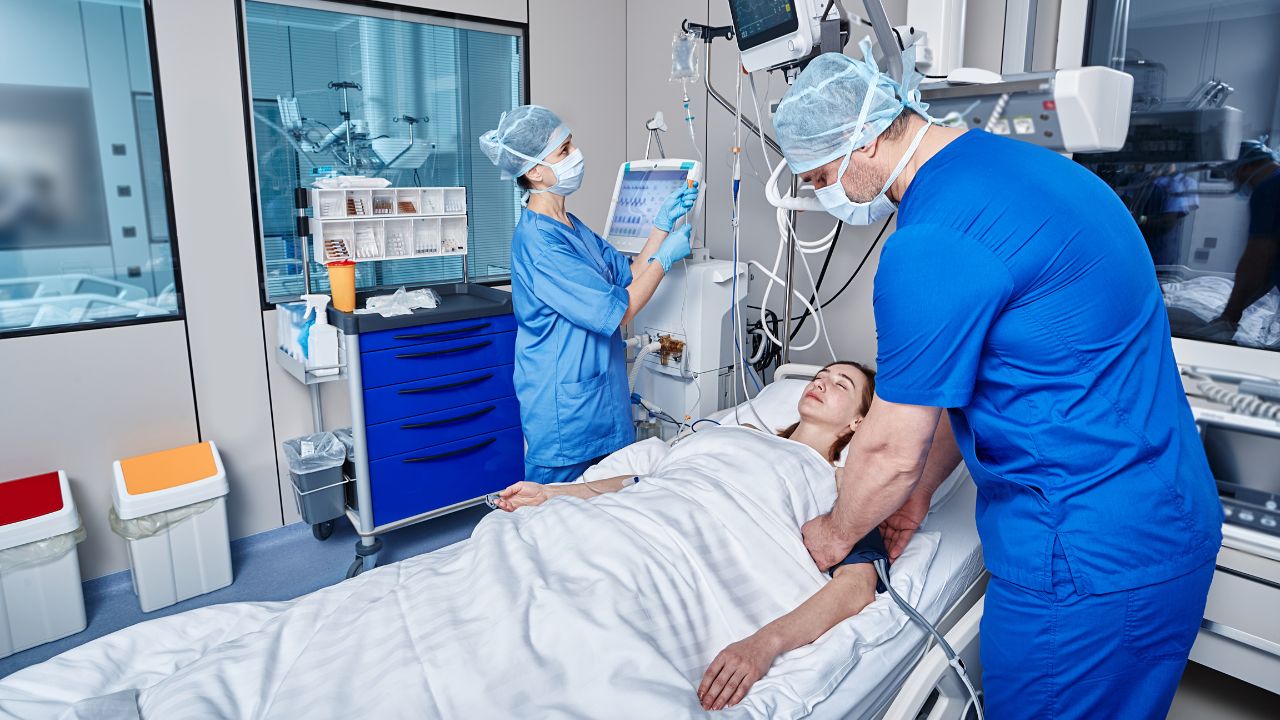
Staffing a transplant intensive care unit (transplant ICU) requires striking a balance between deep specialization and workforce flexibility. This article examines the models, specialized training, and technology used to manage unpredictable surgical surges. It also highlights how flexible staffing (PRN, healthcare staffing app) is critical for compliance, patient safety, and supporting the core team.
Transplant ICU staffing: Specialty teams for life-saving transplants
The transplant intensive care unit is a setting of care defined by extraordinary clinical demands. It is where medical science and surgical skill offer patients a new beginning. But behind this high-acuity service lies a profound operational challenge: staffing.
This unit requires more than just clinical competence; it demands a workforce with deep specialization, emotional resilience, and, critically, immense flexibility within the workforce.
The flow of life-saving organs is unpredictable, and the patient's journey is volatile. As such, creating robust, flexible staffing models for the transplant intensive care unit is a critical priority, ensuring that the right expert team is available at any hour to manage any complication for every single transplant recipient.
What does a transplant ICU do?
The transplant ICU is a highly specialized critical care unit, singularly focused on the complex needs of organ transplant recipients. Unlike general surgical ICUs, it is specifically designed and staffed to manage the distinct physiology of this population.
The unit's primary focus is on recipients of solid organs—including liver, kidney, heart, lung, and multi-organ recipients—through all phases of their intensive pre-op/post-op transplant care.
What truly distinguishes the transplant ICU is the unique set of staff competencies required for its operation. The team's expertise is anchored in managing the delicate balance of immunosuppression. From the moment of transplant, the patient's immune system must be carefully suppressed to prevent organ rejection, yet this action creates a massive infection risk. Every team member must be an expert in the unit's rigorous infection prevention protocols.
The workflow is uniquely volatile, characterized by rapid admission and discharge cycles. Organs become available without warning, leading to sudden surgical surges. Patients are also masters of managing complicated co-morbidities, meaning a "stable" patient can become critically ill in minutes.
This environment, which requires constant advanced monitoring, demands a staffing model that can expand and contract in response to the same volatility as the patient flow. The staff, especially the organ transplant nurse, must be adept at navigating this complex landscape, making the care delivered exceptionally demanding.
Staffing models and multi-specialty teams
The complexity of a transplant recipient cannot be managed by a single practitioner. The care model is, by necessity, a team sport built on deep interdisciplinary collaboration. This multi-specialty team, led by the transplant surgeon and intensivist, forms the core of the unit.
Core transplant surgery team roles:
The success of the unit hinges on the precise collaboration between the following roles:
- Transplant surgeon (team lead): Leads the operative process, manages surgical complications in the ICU, and ensures the overall viability of the graft.
- Transplant intensivist (critical care lead): Directs daily decision-making on hemodynamics, respiratory support, and acute organ failure management within the ICU to maintain overall host physiology.
- Registered nurses (RNs) / organ transplant nurse: Serves as the central provider responsible for continuous advanced monitoring, titrating infusions, and providing patient education on complex anti-rejection drug regimens.
- Transplant coordinator: Manages communication and logistics for the patient's entire journey, often liaising with the Organ Procurement and Transplantation Network (OPTN) and the patient's family.
- Ancillary critical care staff: Collaborates across disciplines—including pharmacy, dietetics, and therapy—to facilitate therapeutic drug monitoring, ventilator weaning, early mobility, and nutritional support.
Achieving workforce flexibility
The core team cannot handle unpredictable surges alone, especially during unexpected simultaneous organ availability or multiple patient decompensations.
Workforce flexibility is the strategy used to maintain mandated, safe nurse-to-patient ratios (1:1 or 1:2), especially given the stringent Therapeutic Intervention Scoring System (TISS) acuity scores often seen in this population.
The flexible model blends:
- Internal resources (control): The core full-time team is augmented by an internal float pool of cross-trained nurses from similar high-acuity areas (e.g., CV-ICU). Additionally, the PRN transplant nurse is a specialized internal employee who picks up open shifts, offering a known quantity of clinical expertise.
- External resources (surge capacity): To cover extended leaves or extreme surge volumes, external partners are leveraged. The agency vs app staffing debate centers on efficiency and transparency. Traditional agencies offer large pools but often lack real-time visibility and may charge non-transparent rates. Modern healthcare staffing app platforms enable managers to review detailed clinician profiles, including skills and ratings, as well as real-time availability and transparent rates.
This blend ensures that liver/kidney/heart/lung transplant staffing remains stable regardless of volume, which is critical for compliance and prevents burnout among the permanent staff.
Credentialing, advanced training, and orientation
Working in the transplant intensive care unit demands a knowledge base that is both broad and incredibly deep. Consequently, rigorous credentialing, advanced training, and comprehensive orientation programs are foundational to a safe and effective unit.
Specialty certification is highly encouraged for career advancement and validation of expertise:
- Certified Clinical Transplant Nurse (CCTN): The primary certification for transplant nurses, validating expertise in the unique physiology and pharmacological management of transplant recipients.
- Certified Clinical Transplant Coordinator (CCTC): A key certification for nurses in coordination roles, confirming expertise in the pre- and post-transplant logistical and regulatory continuum.
- Critical Care Registered Nurse (CCRN): A foundational critical care certification, demonstrating mastery of essential critical care knowledge that underpins transplant nursing practice.
This need for specialization presents a challenge for the flexible staffing model.
How do you prepare PRN/transplant float staff and agency nurses for such a demanding environment?
Orientation programs must be efficient but thorough, focusing on high-risk, low-tolerance tasks:
- Protocol mastery: Conducting intensive review and validation of the unit’s immunosuppression protocols (e.g., administering induction therapy, timing drug draws) and infection-prevention protocols (e.g., dedicated lines, strict barrier use)
- Device competency: Completing hands-on validation with the unit’s advanced monitoring devices (e.g., specialty Swan-Ganz catheters, intracranial pressure monitoring) and life-support technologies (e.g., ECMO, CRRT, VADs)
- Workflow integration: Training in accurate electronic charting practices and digital handoff optimization tools to ensure seamless, safe transitions of care
- Mentorship: Engaging in structured pairing with a dedicated senior preceptor for an extended period to support smooth integration into the transplant surgery team and unit culture
Compliance, infection control, documentation
The transplant intensive care unit exists in a high-stakes regulatory environment. Compliance with governing bodies, such as the Organ Procurement and Transplantation Network (OPTN), is a federal mandate. Transplant program benchmarks for patient outcomes are non-negotiable.
This drives a relentless focus on adhering to protocol. Immunosuppression management, for example, is not just giving a pill; it involves precise timing, therapeutic drug monitoring, and unique documentation, where a single error can lead to organ rejection.
Infection prevention protocols are paramount in a population that is medically immunosuppressed. The team must be vigilant in preventing all hospital-acquired infections.
A medical-surgical unit is subject to constant hospital and external audits and is always monitoring/standardizing quality improvement (QI) projects. This data-driven culture tracks key QI metrics to ensure standards are met. This also creates a significant documentation burden.
This is a critical factor for flexible staffing; any PRN/short-term nurse must be trained to use the technology for accurate charting to maintain 100% compliance.
Teamwork, communication, and career growth
In an environment where patient conditions change rapidly, teamwork and communication are the glue that ensures safety. Clear, respectful communication is formalized through structures such as interdisciplinary rounds, case reviews, and patient/family/care team conferences.
The transplant ICU’s high-stakes environment, with its intense emotional highs and lows, takes a significant toll on staff, creating a high risk for burnout-especially true when unpredictable surges stretch the core team to its limits.
This is where workforce flexibility models directly support staff wellness. By bringing in qualified PRN and float staff to manage volume, the core team is protected from excessive overtime and overwhelming patient assignments. Progressive organizations pair these flexible models with robust emotional support resources.
Furthermore, fostering a culture of ongoing learning and professional development is a key strategy for retention. Offering opportunities to engage in QI projects, pursue certifications, or mentor new staff helps keep the highly specialized team engaged. These retention and wellness initiatives are an essential investment in the stability of the unit.
Technology, workflow, and staffing support
In the fast-paced, data-rich transplant ICU, technology is critical for supporting clinical care and staffing flexibility. The unit relies on advanced monitoring systems, smart infusion pumps, and digital charting. An optimized electronic health record (EHR) with specialized templates is essential.
Technology is also revolutionizing staffing itself. The old paper schedule is being replaced by dynamic, app-based scheduling platforms. This technology is a cornerstone of a modern workforce flexibility strategy. It provides PRN transplant nurse staff and internal float pool members with real-time visibility into open shifts, enabling them to self-schedule and managers to cover needs instantly.
This technology can also provide real-time performance data on staffing levels in relation to patient acuity. Finally, digital handoff optimization tools, which pull data from the EHR, ensure that a nurse coming on shift—whether permanent or PRN—gets a complete and accurate report, ensuring a safe transition of care.
FAQs for transplant ICU staffing
What is unique about transplant ICU nurse roles vs. general ICU?
Transplant ICU nurses specialize in immunosuppression, managing anti-rejection drugs, spotting early rejection, preventing infection, and caring for the specific transplanted organ.
What rapid onboarding is needed for PRN?
PRN onboarding focuses on immunosuppression protocols, infection prevention, device use, smart pumps, charting systems, and a quick buddy shift to confirm competency.
How do PRN clinicians support transplant surges?
PRN clinicians provide flexible, critical-care-competent staffing during sudden increases in volume or acuity, helping maintain safe ratios and reducing strain on the core team.
Which certifications matter most?
Key certifications are CCTN for transplant nurses, CCTC for coordination roles, and CCRN for strong general critical care expertise.
Commitment to excellence and flexibility
The transplant intensive care unit serves as a remarkable example of high-acuity medicine, where a convergence of specialized expertise and profound operational agility is not only beneficial but also essential.
The unique challenges of this environment—from the complexities of immunosuppression and infection control to the inherent volatility of organ transplant surges—demand more than just a skilled team. They demand a resilient and flexible workforce strategy.
Successfully staffing a transplant ICU is a dynamic balance:
It involves nurturing a core team of dedicated experts in liver/kidney/heart/lung transplant staffing, while seamlessly integrating flexible staffing solutions, such as the PRN transplant nurse and internal float pools.
Strengthen your transplant ICU staffing strategy and connect with qualified PRN professionals who can support your team when it matters most.


