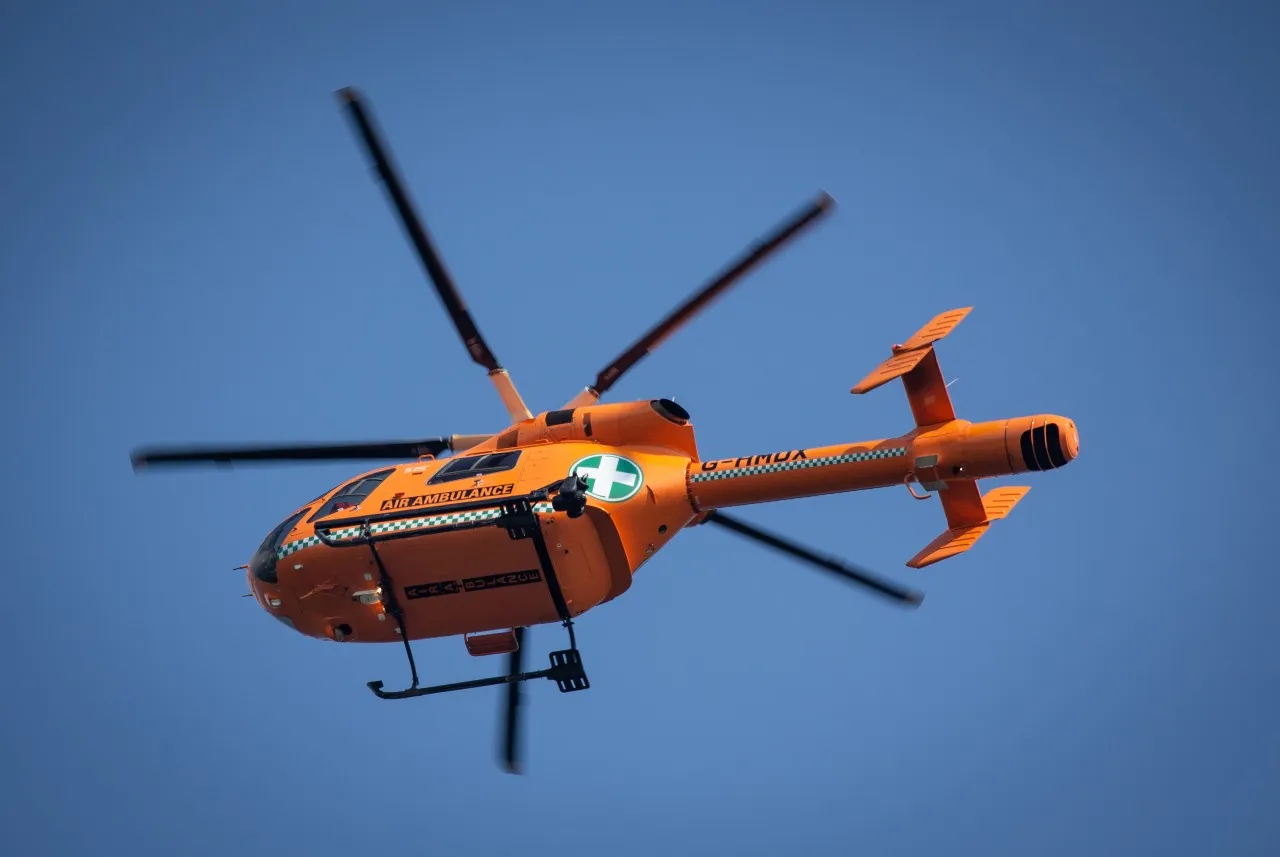
Working as a flight nurse may seem like a far-fetched job. However, the demand for aeromedical services is higher than ever.
ac care.trauma, stroke, and cardiac care.
With the air ambulance market projected to grow by billions this year, flight nursing has solidified its place as one of the most vital—and adventurous—specialties in the profession.
Are you passionate about both nursing and flying?
If you have the adventurous personality required to provide healthcare in the air, you have come to the right place.
Read on for all there is to know about this exciting nursing specialty to help you decide whether you should become a medflight nurse.
What does flight nursing mean in medical terms?
Medical flights transport sick or injured people to or from medical facilities while healthcare professionals provide advanced medical care. These aircraft are essentially "flying intensive care units (ICUs)," equipped with high-tech gear including:
- Extracorporeal membrane oxygenation (ECMO) machines
- Intra-aortic balloon pumps and ventricular assist devices
- Blood products and advanced drug supplies
- Inhaled nitric and active cooling isolettes
Medflight teams usually include physicians, registered nurses (RNs), respiratory therapists (RTs), and other specialist providers with critical care training. They are ready to operate around the clock and year-round, providing planned and emergency medical transport for patients of all ages in any location.
Specialized equipment for flight nursing
To provide patients with the best possible medical care and stabilize them during transport, both airplanes and helicopters are equipped with advanced medical equipment and emergency medications, including the following:
- Blood products
- Cardiac monitors
- Intra-aortic balloon pumps
- Ventricular assist devices
- Inhaled nitric
- Active cooling or an isolette
- Extracorporeal membrane oxygenation (ECMO) machine
- Ventilators
- Intravenous (IV) infusion pumps
- Advanced drug supply
What does medevac stand for?

Medevac stands for medical evacuation. These missions often involve private jet flights for long-distance transport—such as returning a patient to their home country—or helicopters for rapid “scene calls” at accident sites.
Medevacs are often required when an accident occurs in a remote location or when someone is outside the country and needs to return home for critical care.
These evacuations are carried out on private jet flights and can therefore be arranged quickly, often without interruption, though depending on the distance, refueling stops may be necessary.
What about air ambulances?
Air ambulances differ from Medevacs, as they usually operate as civilian services. They are often used for inter-facility transfers.
Air ambulances may depend on local medical transportation services to take patients to the airport, where a medevac nurse and other healthcare team members take over.
What is a helicopter nurse?
By definition, a helicopter nurse is a registered nurse who is specifically trained to provide nursing care on a helicopter, transporting patients to hospitals or other healthcare facilities that can provide the level of care the patients need.
These nurses usually have at least 3 to 5 years of experience working in ICUs or emergency rooms (ERs) and often have advanced nursing certifications as well.
They work alongside other healthcare professionals, including respiratory therapists and paramedics, all of whom receive advanced training in:
- Transport protocols
- Aircraft safety
- Aeromedical physiology
What is flight nursing in a hospital?
Some flight nurses are employed by hospitals, while others work for medical transportation companies, fire departments, government agencies, military bases, and search-and-rescue organizations.
The following comment by a nurse on Reddit helps illustrate what it is like to work as a flight nurse at a hospital:
“I'm not a flight nurse, I just work in NICU, but my cousin does flights as an RT. Her schedule given from the hospital is kind of weird. The hospital doesn't want to give her too much overtime, so what is happening is that they work two 24 hour shifts a week and one 24 hour shift the next. If needed to supplement hours, they are allowed to try and pick up in hospital.
The 'transport team' arrives at 5:30 am and does whatever is needed. If they are not on an active transport in the chopper, they are to do transport rounds in the hospital. (Bring a patient to MRI or CT...) Most of the staff try to get to bed by 22:00 just in case they are called for a middle of the night transport. If they are lucky and it isn't a full moon, they will get to hand off report at 05:30 the next morning.” – Reddit user mellifluouscipher
What is the role of a flight nurse?
A flight nurse—also called a medflight, helicopter, transport, or aircraft nurse—has a similar role to an ER or ICU nurse, except that a flight nurse cares for patients while they fly through the air in the relatively confined space of an aircraft.
Furthermore, flight nurses can be divided into 2 main categories: civilian and military flight nurses.
Civilian flight nurses
Civilian flight nurses may work for public or private hospitals or for medical transportation companies such as Life Flight. They may transfer patients to different hospitals, such as newborn babies who need to be admitted to a neonatal intensive care unit (NICU); transfer patients from emergency situations to a hospital; or work with organ donation.
Military flight nurses
A military flight nurse is enlisted in the Air Force and works specifically with military members. Their role may include caring for patients as they are transferred from a dangerous place to a field hospital or from a field hospital to a hospital that can provide the level of care they need.
A common misconception is that airlines hire nurses, but in fact, they do not. It is possible for a nurse to work as a flight attendant. Alternatively, a passenger with a minor health concern may privately hire a nurse to accompany them on a trip, but airlines do not routinely provide healthcare aboard commercial flights.
What does a flight nurse do?
The responsibilities of a flight nurse vary depending on their specific role and employer. However, the following are typical flight nurse duties:
- Evaluate the needs of patients.
- Provide nursing care and management during the duration of the flight.
- Ensure patient safety and comfort.
- Provide the necessary equipment, supplies, and medications.
- Assist in the preparation and planning for medevac missions.
- Act as a liaison between the operational and medical crew.
- Provide initial emergency care when a physician is not present.
- Provide mechanical ventilation, hemodynamic support, and vasoactive medications.
- Retrieve, stock, and clean medical equipment.
- Maintain a clean operational environment.
- Uphold safety standards.
- Complete documentation (written and electronic).
- Maintain effective communication (written and spoken) with the rest of the flight healthcare team, patients, and hospitals.
- Maintain clinical skill proficiency and knowledge base.
Requirements to be a flight nurse
If flight nursing has caught your attention, you’ll be wondering how to become a flight nurse and how long it might take.
Becoming a flight nurse requires significant clinical “seasoning.” Most programs strictly require:
- Licensure: An active RN license (BSN preferred)
- Experience: A minimum of 3–5 years in a high-acuity area (ICU or ER)
- Physical fitness: A BMI below 30 or a maximum weight (typically 210–225 lbs) to ensure aircraft safety and weight/balance requirements
- Agility: The ability to lift up to 75 lbs and perform in cramped, high-vibration environments
How can I become a flight nurse?
To become RNs, aspiring nurses have 2 main pathways: An associate degree in nursing (ADN) or a bachelor of science in nursing (BSN). Completing an ADN program takes approximately 2 years, and completing a BSN program takes about 4 years.
Nurses without BSNs are often asked to have 5 years of work experience, whereas nurses with BSNs may be hired with 3 years of experience. Thus, either way, becoming a flight nurse takes at least 7 years.
In addition to obtaining nursing certifications, which are covered in the following section, flight nurses must meet the following physical requirements:
- Class I employment physical
- Capacity to perform in small spaces and any type of weather condition
- A physical condition that allows running, climbing, carrying medical equipment, and lifting patients
- Body Mass Index (BMI) below thirty or maximum weight below 210 pounds
- Ability to stand up from a squat while lifting 175 pounds with another person
- Passing random drug screens
- Ability to pass annual physical examinations and fit-for-duty tests
- Absence of motion sickness
- Absence of physical ailments that may impair consciousness or cognitive ability
Flight nursing schools and certification
Any RN program can provide nurses with the foundation for a career in flight nursing. However, there are specific certifications that most employers require.
Let’s start with the basics. As is the case with many nursing jobs, flight nursing jobs require the following life support certifications:
- Basic Life Support (BLS)
- Advanced Cardiovascular Life Support (ACLS)
- Pediatric Advanced Life Support (PALS)
- Neonatal Resuscitation Program (NRP)
- Prehospital Trauma Life Support (PHTLS)
Split examination for transport nursing
In addition to the standard life support certifications (BLS, ACLS, PALS, NRP), March 2026 marked a major change in certification. The Board of Certification for Emergency Nursing (BCEN) officially split the examination content for transport nursing:
- CFRN (certified flight registered nurse): Now focused specifically on the unique physiology and operational challenges of flight (altitude, gas laws, aviation safety).
- CTRN (certified transport registered nurse): Now focused on high-acuity ground transport.
Furthermore, many flight nurses are expected to be trained as emergency medical technicians (EMTs). If they are hired without this training, they may have to complete the training upon hire.
Required certifications
Moreover, flight nurses are usually required to complete at least one of the following certifications offered by the Board of Certification for Emergency Nursing (BCEN):
- Certified Emergency Nurse (CEN)
- Certified Flight Registered Nurse (CFRN)
- Certified Transport Registered Nurse (CTRN)
To sit for any of these exams, the BCEN requires nurses to hold current unrestricted RN licenses and recommends having 2 years of specialty nursing experience.
Courses for transport
The Air and Surface Transport Nurses Association also offers numerous courses for flight nurses, both in person and online, including the following:
- Transport Professional Advanced Trauma Course (TPATC)
- Pediatric Advanced Transport Course (PATC)
Another certification option for flight nurses is the Trauma Nursing Core Course (TNCC) available through the Emergency Nurses Association (ENA).
Additional valued credentials
Other valued credentials in flight nursing are critical care certifications, such as those offered by the American Association of Critical-Care Nurses (AACN):
- Acute/critical care nursing – CCRN (adult)
- Acute/critical care nursing – CCRN (pediatric)
- Acute/critical care nursing – CCRN (neonatal)
This list of certification options might seem too long for a single nurse to pursue, but when it comes to flight nursing, the more certifications the better. Therefore, instead of choosing which certifications to pursue, aspiring flight nurses should decide in which order they should pursue multiple certifications, if not all of the certifications listed above.
How much does a flight nurse make?
According to the U.S. Bureau of Labor Statistics (BLS), registered nurses employed in nonscheduled air transportation often earn more compared to many ground-based RNs.
Top-paying regions
- Washington: $124,256
- District of Columbia: $123,974
- New York: $120,025
- California: $119,590 (San Jose area)
However, not all flight nurses share this higher-than-average salary. If your primary motivation is financial, flight nursing may not be the job for you.
“Cons: Flight nurses don't make as much as you'd think. Around here, it's about $25 hourly. 24 hour shifts, on one, off two. Sometimes you will run all shift and stay for hours doing your PCR's/paperwork…Cramped working conditions. Egos and arrogant providers…If the patient does code you're gonna be working a code in a tight box for a while with just you, and your medic…Most folks that last, and really like it/are fulfilled doing it just do it for the love of the job. They love being part of a flight team…If you're just interested in it for money, it may not be for you.” – Reddit user crumbbelly
What is flight nursing like?

There are many aspects of flight nursing that are often overlooked. One important aspect is the schedule. Whereas most nurses work 8-hour, 10-hour, or 12-hour shifts, flight nurses generally work 24-hour shifts. Perhaps working as little as 1 or 2 days per week gives the impression that flight nursing is easy; however, this flight nurse on Reddit begs to differ:
“Is flying as cool people think? Absolutely! I've never enjoyed going to "work" so much. However, like any job, it has pros and cons…What "regular nurse" often overlook is the constant work required to be a flight nurse. We are training and/or studying constantly. Since our catchment area is so large and our patient population is so varied we constantly have to study. Think about it this way. You get launched for a stroke. Your mind immediately rifles through 1000's questions and scenarios and you need to have a plan for each one...” – Reddit user Northernightingale
Is flight nursing hard?
Flight nursing is mentally and physically taxing. Some of the challenges include:
- Autonomy: You are often the highest-level provider in the air, making life-or-death decisions with limited resources.
- Environmental stress: High noise, vibrations, temperature extremes, and the constant need to calculate altitude physiology (how oxygen behaves as you go higher).
- The “full moon” schedule: Many flight nurses work 24-hour shifts. While you may only work 7 or 8 days a month, those shifts are grueling and require you to be "mission-ready" at 3:00 AM.
Aside from the constant studying that this specialty requires, see what another flight nurse on Reddit shared:
“People don’t see the “not cool” side. Lots of egos/type a personality’s, care teams not understanding or caring about the logistics of transport or our capabilities, being viewed as a “body mover”. The not cool stuff is likely the same as many other people deal with in their nursing profession. For me, care teams who don’t understand/care about the limits/logistics of flight or interfacility transport is the biggest stressor.” – Reddit user roototwo
Why choose flight nursing

As in all nursing specialties, an essential motivation in flight nursing is saving lives.
That said, this feeling may be even stronger in this specialty given the extreme conditions of the job, which lead to both enhanced teamwork and greater autonomy.
The following are some reasons flight nurses love their jobs and choose to stay:
“Pros: autonomy, the prehospital care environment which is pretty rad and such a different kind of job/atmosphere (you either love it or hate it). You work under the license of your medical director understanding orders and protocol. Sick patients. Trauma…Field RSI, blood products, agressive protocols and performing cool interventions. You have some slow shifts, sometimes no-fly days where you hang out at the station because of inclement weather (some services are more agressive than others).” – Reddit user crumbbelly
“Most aspects are as cool as people think. I can’t complain about flying on a beautiful day, being out of the hospital, occasional down time, taking care of critically ill patients. If I had to tell you the coolest aspect to me, it’s the teamwork with your pilot/crew.” – Reddit user roototwo
What makes a good flight nurse: Tips for new nurses
Aside from completing nursing school and certifications and having at least 3 to 5 years of emergency or critical care nursing experience under your scrubs, the following skills, abilities, and characteristics make for an excellent flight nurse:
- Critical thinking skills to analyze and respond appropriately to an emergency
- Effective communication with both team members and patients
- Resourcefulness to improvise when needed and solve problems
- Showing initiative in an emergency
- Staying calm under pressure and being able to think clearly and make decisions
- Effective time management both in the air and between transports
Additionally, if you still don’t have the required experience and certifications, this tip from a flight nurse on Reddit can set you in the right direction to position yourself as an ideal flight nurse candidate:
“I've been a flight nurse for about 2 years. I love it!! I worked for 4 years in a level 1 trauma ICU prior. Programs in my area require 3 yrs critical care. I would recommend getting lots of certifications and eventually taking on leadership rolls (shared gov, charge nurse)…It really is an awesome job!!” – Reddit user ready_right
Final thoughts on flight nursing
If you crave autonomy, elite teamwork, and a view from 5,000 feet, flight nursing is the pinnacle of the profession.
As the “hospital-at-home” and inter-facility transfer markets continue to grow, the need for these “sky-high” specialists has never been greater.
Most flight nurses love their jobs. However, only you can decide whether the aspects that motivate them will work for you as well.
Do you crave a regular eight-hour work schedule?
Then you might be better suited for a specialty such as dialysis nursing.
Are you an adrenaline junkie with a fear of heights?
Then stick to an ER on the ground.
However, if you were nodding your head to every section of this ultimate guide, then flight nursing might be the perfect career choice for you!
Sources: