Physical therapy is a cornerstone of modern rehabilitation medicine, a dynamic and essential specialty focused on the science of human movement, function, and recovery. It is the field dedicated to restoring mobility, alleviating pain, and improving quality of life for individuals affected by injury, illness, or disability. This discipline is not just a set of exercises; it is a comprehensive clinical practice that bridges the gap between medical diagnosis and functional, real-world living.
Physical therapy: The science of restoring motion
The importance of physical therapy extends across the entire continuum of healthcare. You will find its practitioners in the fast-paced, acute care environment of a hospital, guiding patients through their first steps after major surgery. You will see them in outpatient orthopedic physical therapy clinics, managing the return to sport of a high school athlete. They are critical in pediatric physical therapy, helping children with developmental delays achieve new milestones, and they are a foundational part of geriatric care, preventing falls and maintaining independence in long-term care facilities.
This comprehensive overview of physical therapy is designed for clinicians, facility managers, and allied health professionals. It explores the specialty's vast scope, the distinct roles within its teams, the operational workflows that define its success, and the technologies that are shaping its future.
Understanding physical therapy as a medical specialty
Physical therapy, also known as physiotherapy, is a healthcare profession that provides services to help individuals develop, maintain, and restore maximum movement and functional ability throughout their lifespan. This physical therapy practice is crucial when movement and function are compromised by aging, injury, pain, disease, disorder, or environmental factors.
A central goal of physiotherapy in healthcare is to assess and diagnose movement dysfunction and then treat it with non-invasive, non-pharmacological methods.
What is the distinction between physical therapy and related modalities?
- Physical therapy vs. occupational therapy (OT): Although both are rehabilitation specialists, their primary focuses differ. Physical therapy typically focuses on gross motor function—restoring the ability to walk, run, climb stairs, and maintain balance. Occupational therapy, in contrast, focuses on fine motor function and the activities of daily living (ADLs), such as dressing, eating, bathing, and performing work-related tasks. They are a classic partnership: the PT helps the patient from the bed to the kitchen; the OT assists them in safely preparing a meal.
- Physical therapy vs. chiropractic care: While both treat musculoskeletal pain, their core philosophies and approaches differ. Physical therapy is a broad rehabilitation specialty that is grounded in exercise, manual therapy, and functional retraining, aiming to correct movement patterns. Chiropractic care is primarily focused on diagnosing and treating neuromuscular disorders through manual adjustment or manipulation of the spine and other joints.
Work settings
The rehabilitation care continuum is vast, and physical therapy professionals play a vital role in every part of it. Their work settings include:
- Hospitals (acute care): Providing immediate post-surgical or post-trauma care, focusing on safe mobilization, preventing complications like pneumonia, and preparing for discharge.
- Inpatient rehabilitation facilities (IRFs): Offering intensive, multidisciplinary rehab (often 3+ hours per day) for patients recovering from severe events like strokes, spinal cord injuries, or traumatic brain injuries.
- Skilled nursing facilities (SNFs): Providing sub-acute rehabilitation for patients, often geriatric, who no longer need hospital-level care but are not yet safe to go home. These skilled nursing settings rely heavily on PTs.
- Outpatient clinics: This is the most common setting, treating a wide range of orthopedic conditions, sports injuries, and chronic pain.
- Home health: PTs visit patients in their homes to restore function in their own living environment, focusing on safety and independence.
- Specialty centers: This includes athletic programs, pediatric physical therapy clinics, and school systems.
Physical therapy roles, duties, and team collaboration
A physical therapy department is a highly collaborative environment. While the physical therapist (PT) and physical therapy assistant (PTA) are the core clinicians, the team's success depends on several key roles. Understanding these physical therapy roles and responsibilities is essential for administrators and collaborating clinicians.
A deeper look at the roles:
- Physical therapist (PT): The PT is the clinical leader and primary evaluator. They must hold a Doctor of Physical Therapy (DPT) degree. The physical therapist's duties revolve around complex problem-solving. They are the "diagnosticians of movement." They don't just see "knee pain"; they evaluate the patient's gait, muscle imbalances in the hip and ankle, and lifestyle factors to determine the underlying cause of the knee pain. They then create a comprehensive plan of care, perform advanced manual therapy techniques, and are legally responsible for all care provided by the PTA.
- Physical therapy assistant (PTA): The PTA is a licensed, skilled clinician who must earn an associate's degree from an accredited program. The physical therapy assistant tasks involve implementing the plan of care established by the PT. They are the hands-on coaches, expertly guiding patients through exercise prescription practices, monitoring their response, and making necessary adjustments within the established plan. They are also meticulous documenters, tracking progress and reporting any significant changes back to the supervising PT.
- Rehabilitation aide: The aide is the driving force behind the clinic's workflow. This non-licensed role is critical for efficiency. By handling patient prep, equipment sanitation, and inventory, they allow the licensed PTs and PTAs to remain "hands-on" with patients, thus optimizing the clinic's productivity and patient safety in therapy.
- Physical therapy practice administrators: This is the leader responsible for the business of rehabilitation. Their focus is on operational excellence. This includes managing the complex patient schedule, ensuring compliance with billing regulations (like Medicare's "8-minute rule"), managing the revenue cycle, and, critically, overseeing healthcare management in the physical therapy workforce.
Across all these roles, the unifying responsibilities are communication (with patients and the interdisciplinary team), documentation (for legal, billing, and continuity of care purposes), and leadership (all roles contribute to a culture of safety and patient-centered care).
Rehabilitation center workflow
How do rehabilitation centers manage patient flow and communication?
A successful rehabilitation center workflow is a highly structured process designed to convert a medical diagnosis into a functional outcome. This system ensures that every patient receives a standardized, evidence-based, and well-documented episode of care.
The workflow follows a distinct, cyclical path:
- Referral and intake
A patient is referred to physical therapy by a physician (e.g., an orthopedist, neurologist, or primary care provider) with a medical diagnosis (e.g., "right total knee arthroplasty"). The administrative staff then collects insurance information, verifies benefits, and schedules the initial evaluation.
- Patient assessment (initial evaluation)
This is the most critical step, performed exclusively by the PT. It includes:
- Subjective history: Listening to the patient's story, their goals, and their perceived limitations.
- Objective tests: This is the data-gathering phase: measuring range of motion (ROM) with a goniometer, testing strength (manual muscle testing), assessing balance, and performing special tests (e.g., a Lachman test for an ACL).
- Goal setting
This is a collaborative process. The PT asks, "What are your goals?" The patient might say, "I want to be able to play with my grandkids on the floor." The PT translates this into clinical, measurable goals: "Patient will be able to independently transfer from floor to stand" or "Achieve 120 degrees of knee flexion."
- Intervention (treatment)
This is the "doing" phase, where the plan of care is implemented by the PT or PTA. It involves the physiotherapy techniques detailed in the next section (manual therapy, exercise, and modalities).
- Evaluation (re-assessment)
Physical therapy is not static. Every visit includes a brief reassessment. More formally, the PT will perform a progress note (e.g., every 10 visits or 30 days, per Medicare rules) to objectively re-measure progress toward the goals.
- Documentation
"If it wasn't documented, it wasn't done." After every single encounter, the clinician completes a progress note, typically in a SOAP format (subjective, objective, assessment, plan). This is essential for managing patient records in physical therapy, communicating with the referring physician, and justifying billing. Accurate charting is a core professional skill.
- Discharge
Once the patient has met their goals, their progress has plateaued, or they are safe for self-management, the PT completes a discharge summary. This note summarizes the episode of care and, most importantly, provides the patient with a detailed Home Exercise Program (HEP) to maintain their gains.
This entire workflow is embedded within a collaborative care in physical therapy model, involving constant communication with the interdisciplinary team of physicians, nurses, and care coordinators.
Physiotherapy techniques and therapeutic modalities
The "magic" of physical therapy lies in its diverse toolbox of interventions. A PT's skill is in knowing which tool to use for the right patient at the right time. These physiotherapy techniques are broadly categorized into manual, exercise-based, and modality-based interventions.
Manual therapy techniques
These are the hands-on skills that PTs and, in some jurisdictions, PTAs use to assess and treat musculoskeletal dysfunction.
- Soft tissue mobilization: This includes various forms of therapeutic massage, myofascial release, and trigger point therapy designed to reduce pain, decrease muscle tension, and improve tissue mobility.
- Joint mobilization: This is a passive, skilled movement of a joint at varying speeds and amplitudes. It's used to reduce pain (Grade I-II) or increase joint mobility and range of motion (Grade III-IV).
- Manipulation: A high-velocity, low-amplitude (HVLA) thrust performed at the end of a joint's range. This is often used in spinal care to restore motion and reduce pain.
- Proprioceptive neuromuscular facilitation (PNF): Advanced stretching techniques that involve both stretching and contracting the target muscle group to achieve greater gains in flexibility.
Exercise prescription practices
This is the true cornerstone of physical therapy. Unlike a personal trainer, a PT's exercise prescription practices are highly specific and designed to correct pathological deficits.
- Therapeutic exercise: Specific exercises to target documented weakness. For example, prescribing "clamshells" and "lateral band walks" to strengthen the gluteus medius to correct a gait deviation that is causing knee pain.
- Neuromuscular re-education: Exercises designed to retrain the brain-muscle connection. This includes balance training on unstable surfaces (e.g., foam pads, BOSU balls), coordination drills, and proprioception exercises.
- Functional training: This involves task-specific practice that mimics the patient's goals. This could involve practicing lifting mechanics for a warehouse worker, stair climbing for a post-operative patient, or agility drills for an athlete.
- Home exercise program (HEP): The PT designs a program of 3-5 key exercises for the patient to perform at home. This is critical for empowering the patient and ensuring progress continues between sessions.
Therapeutic modalities
Modalities are tools used to decrease pain, reduce swelling, or facilitate muscle activation, primarily to prepare the patient for the more active parts of therapy (exercise and manual).
- Electrotherapy: Includes transcutaneous electrical nerve stimulation (TENS) for pain control and neuromuscular electrical stimulation (NMES) to help activate and "wake up" a weak muscle (e.g., the quad after knee surgery).
- Ultrasound: Uses sound waves to create deep heat in tissues, intended to increase blood flow and tissue extensibility.
- Thermal therapies: Hot packs (vasodilation) to relax muscles before stretching and cold packs/ice (vasoconstriction) to reduce acute inflammation and pain after exercise.
- Hydrotherapy: Performing exercises in a pool. The buoyancy of water unloads joints, making it an excellent environment for patients with severe arthritis or those who are non-weight-bearing.
Subspecialties within physical therapy
The DPT degree provides a generalist foundation, but many PTs pursue board certification or advanced training in a specialty area. This allows clinics to offer highly specialized services.
- Orthopedic physical therapy: This is the most common specialty. It deals with the assessment and treatment of the musculoskeletal system: bones, joints, muscles, tendons, and ligaments. This includes sports injury rehabilitation, post-operative rehabilitation (such as total joint replacements), and managing chronic conditions like low back pain or tendinitis. You can also get information on orthopedic trends.
- Pediatric physical therapy: These specialists work with infants, children, and adolescents. They treat developmental delays (e.g., not meeting crawling/walking milestones), congenital conditions (e.g., cerebral palsy, spina bifida), and orthopedic injuries in young athletes. The focus of pediatric physical therapy is often "play with a purpose," using games and fun activities to achieve therapeutic goals in settings like pediatric specialty units.
- Neurological physical therapy: This specialty focuses on individuals who have a neurological disorder or disease. This includes stroke (CVA), traumatic brain injury (TBI), spinal cord injury (SCI), Parkinson's disease, and multiple sclerosis (MS). The goal of neurological physiotherapy is to maximize functional independence, often by leveraging neuroplasticity (the brain's ability to rewire itself) through repetitive, task-specific training.
- Geriatric physical therapy: This specialty focuses on the unique movement needs of older adults. The primary goals are fall prevention, balance training, gait stabilization, and maintaining independence with ADLs. These PTs are experts in managing age-related changes and are a critical part of the care team in skilled nursing and long-term care facilities.
- Cardiopulmonary physical therapy: A hospital-based specialty, these PTs work with patients who have cardiovascular or pulmonary conditions like heart failure (CHF), post-heart attack (MI), or chronic obstructive pulmonary disease (COPD). They focus on improving endurance and functional capacity through monitored exercise and breathing techniques.
- Women's health (pelvic floor physical therapy): A rapidly growing and vital specialty. These PTs have specialized training to treat pelvic floor dysfunction, including urinary incontinence, pelvic pain, and pre- and post-partum musculoskeletal issues.
Multi-disciplinary and collaborative care
Physical therapy is, by its very nature, a team-based profession. A patient's recovery is rarely linear and almost never depends on a single provider. Multi-disciplinary care in physiotherapy is the standard, requiring constant communication and interprofessional rehabilitation planning.
The collaborative care in physical therapy network includes:
Physicians (surgeons, PM&R, PCPs)
The referring physician provides the medical diagnosis and, in post-surgical cases, the protocol (e.g., "patient is toe-touch weight-bearing for 6 weeks"). The PT provides regular progress reports, creating a feedback loop that informs medical decision-making.
Nurses
In inpatient, SNF, and home health settings, the nurse-physical therapist (PT) relationship is the most critical. The nurse manages the patient's medical status and pain control. They must collaborate on a daily basis:
- Nurse to PT: "Is the patient's pain managed well enough for you to see them?"
- PT to nurse: "The patient was able to walk 100 feet with a walker today. They are now a 1-person assist, not 2." This communication is crucial for ensuring safety and promoting progressive mobility.
Occupational therapists (OTs)
As mentioned, this is the classic rehab partnership. In a "split" 60-minute session, the PT might work on strengthening the patient's legs to stand, and the OT will then work on their ability to perform hygiene tasks at the sink.
Speech-language pathologists (SLPs)
In neuro-rehab, the "big 3" (PT, OT, SLP) are essential. An SLP may work on a stroke patient's cognitive or swallowing deficits, which directly impacts the PT's ability to give complex instructions or ensure the patient is safely hydrated.
Athletic trainers (ATs)
In sports injury rehabilitation, the AT often manages the acute, on-field injury and daily "practice room" care, while the PT manages the formal, long-term rehab. They coordinate the final return-to-play testing.
This teamwork is often formalized in integrated care meetings, especially in inpatient rehab, where the entire team (including social work and case management) meets weekly to discuss each patient's progress and discharge plan.
Healthcare management and practice leadership
For physical therapy practice administrators and facility managers, the specialty is a complex operational and financial puzzle. Healthcare management in physical therapy involves striking a balance between high-quality patient care and business realities.
The administrative perspective focuses on several key domains:
- Operational oversight: This involves managing the clinic's engine, specifically the patient schedule. An administrator must optimize the "matrix" to ensure patient access is high, wait-lists are low, and clinician schedules are full but not overwhelming.
- Productivity and metrics: In most rehab settings, clinician productivity is a key performance indicator (KPI). This is often measured in "visits per day" or "billable units per hour." A manager must set realistic targets and track them to ensure the clinic remains financially viable.
- Budgeting: The administrator manages the practice's profit and loss statement (P&L). This means managing the largest expense—payroll—as well as the costs of equipment, supplies, and real estate, all against projected revenue.
- Team training and compliance: The manager is responsible for ensuring all staff (PTs, PTAs, and aides) are compliant with state and federal regulations, have up-to-date licenses, and are trained on safety protocols.
- Staffing strategies: Staffing in rehabilitation facilities is a major challenge. How does a manager handle a sudden influx of "post-op knee" patients in the fall? What about FMLA for a lead therapist? Relying on a flexible staffing model is essential. This on-demand allied health staffing capability bridges gaps, prevents staff burnout, and ensures continuity of care without the overhead of over-staffing the core team.
Risk management and safety in rehabilitation
Rehabilitation facilities, by definition, are environments where patients are physically unstable. This makes risk management in rehabilitation facilities a top priority for all staff, from aides to administrators.
What are the best practices in managing compliance and safety in rehabilitation?
Key patient safety in therapy protocols include:
- Fall prevention
This is the #1 risk:
- Gait belts: Mandatory use for any patient with a balance or strength deficit.
- Guarding: Clinicians must use proper "contact guard" or "stand-by assist" techniques.
- Environment: Maintaining a clean and organized gym floor by keeping it free of clutter, weights, and cords.
- Equipment maintenance
This is a critical administrative role. A frayed cable on a pulley machine or an uninspected electrical stimulation unit is a significant liability. A robust compliance management program includes a regular maintenance and inspection log for all equipment.
- Infection control
In a high-traffic gym, this is paramount. Every mat, table, weight, and piece of equipment must be wiped down with disinfectant between every single patient use.
- Clinician safety
Physical therapy is a physically demanding job, and workplace injuries are common. Risk management also means protecting staff through mandatory training on proper body mechanics, lift techniques, and the use of assistive devices to prevent career-ending back injuries.
- Incident tracking
When a fall or "near-miss" does occur, a culture of safety encourages immediate, non-punitive incident reporting. The administrator and clinical lead then review these reports to identify trends and perform root-cause analyses (e.g., "Do all falls happen near the parallel bars at 4 PM?").
Patient satisfaction and quality outcomes
In modern, value-based healthcare, simply "getting better" is no longer enough. The experience of care and provable outcomes are key metrics.
How is patient progress measured and satisfaction tracked in physical therapy?
Measuring outcomes (objective)
Therapy performance metrics are used to prove that treatment is working.
Clinical tests
These are the objective data points, such as:
- Goniometric measurements for range of motion (e.g., "Knee flexion improved from 90 to 115 degrees").
- Manual muscle test grades (e.g., "Hip abductors improved from 3/5 to 4+/5").
Standardized functional scales
These are evidence-based tests that provide a numerical score for function, enabling clear pre- and post-comparison. Examples include:
- TUG (Timed Up and Go): A test for gait, balance, and fall risk.
- 6-Minute Walk Test: A test for cardiovascular endurance.
- Berg Balance Scale: A comprehensive assessment of balance.
Patient-reported outcome measures (PROMs)
These are validated surveys that allow patients to rate their own function. Examples include the Oswestry Disability Index for low back pain or the DASH (disabilities of the arm, shoulder, and hand).
Measuring satisfaction (subjective)
Patient satisfaction in physical therapy is a core administrative focus. This is measured via post-discharge surveys that ask about:
- Ease of scheduling and access to care.
- The clinician's communication, empathy, and ability to listen.
- The cleanliness and safety of the facility.
- The patient's belief that the therapy was helpful to them.
Administrators and clinical leads utilize data from all these sources to improve rehab quality. If PROMs for shoulder patients are lagging, the team may need training on new manual therapy techniques. If patient satisfaction scores for "communication" are low, it serves as a trigger for team-wide training in patient-centered communication.
Documentation and record management
In physical therapy, the adage is, "If it wasn't documented, it wasn't billed, and it didn't happen." Managing patient records in physical therapy is a core professional skill that is essential for patient care, legal protection, and financial viability.
Documentation standards require a specific note for every single patient encounter:
Initial evaluation
Written by the PT. This is a comprehensive legal document that establishes the patient's history, objective deficits, physical therapy diagnosis, prognosis, and the complete plan of care, including specific goals.
Daily visit note (SOAP note)
Written by the PT or PTA for every treatment session.
- S (Subjective): What the patient reports. "Patient states he was sore after the last session but is now able to walk further."
- O (Objective): What was done and measured. "Performed 3x10 long-arc quads. Manual stretching of hamstrings. Gait training 150 ft with rolling walker."
- A (Assessment): The clinician's skilled analysis. This is the most important part. "Patient's antalgic gait is reduced. Strength deficit in the quad (3+/5) remains the primary limiting factor for stair negotiation."
- P (Plan): What's next? "Continue current plan. Will add 2lb ankle weight next visit as tolerated."
Progress note
A formal re-evaluation by the PT (often every 10 visits or 30 days) that re-measures objective data against the initial goals and updates the plan.
Discharge summary
The final note from the PT summarizes the episode of care and achievements.
The EHR in physical therapy is often a specialty-specific platform (like WebPT or Clinicient) that has built-in flowsheets for exercises, compliance alerts for progress notes, and integrated billing. Proper record management is the foundation of accurate coding and effective interprofessional communication.
Technology in rehabilitation and physical therapy
The physical therapy gym is rapidly evolving from a world of rubber bands and foam pads to a high-tech environment. Rehabilitation technology advancements are augmenting clinicians' skills, improving patient engagement, and providing better data.
What are the latest advancements in rehabilitation technology?
- Digital motion tracking and wearables: Using wearable sensors or even a smartphone's camera, digital physiotherapy tools can perform a 3D movement analysis. This technology can precisely measure joint angles during a squat, track gait asymmetry, and provide real-time visual feedback to the patient on their exercise form, even during a tele-rehab session.
- Virtual reality (VR) rehabilitation systems: VR is a powerful tool for making rehabilitation engaging. A stroke patient can "play" a game that requires them to perform the exact arm movements they need to rehab. A patient with balance deficits can be placed in a safe, virtual environment that challenges their stability (e.g., walking on an "icy" sidewalk).
- Robotic-assisted therapy: For patients with severe neurological injuries (like SCI or TBI), robotic exoskeletons can assist them in standing and walking. These devices help retrain neural pathways by providing sensory input that mimics a normal gait pattern.
- Blood flow restriction (BFR) training: A modality where a cuff (like a blood pressure cuff) is placed on a limb. It allows patients to experience the strength-building benefits of heavy lifting, but with very light weights. This is a game-changer for post-operative patients who cannot tolerate high loads.
- Tele-rehab / virtual care systems: This is now a standard part of practice. PTs can conduct entire episodes of care remotely, evaluating movement and guiding exercises via a secure video platform. This has dramatically improved access to care. These digital health tools are here to stay.
Continuing education for physical therapy professionals
The DPT is a license to start learning. The physical therapy profession is founded on a culture of lifelong learning in the field of therapy.
What skills do physical therapy professionals need?
They need to constantly update them.
Continuing education for physical therapy professionals is not optional; it is mandated by all state licensing boards for license renewal. But for most PTs, the drive to learn goes far beyond the minimum requirement.
Clinical specialization
The American Board of Physical Therapy Specialties (ABPTS) offers board certification in numerous areas. Achieving one of these is a rigorous process of study and examination, signifying a high level of expertise:
- OCS (Orthopedic clinical specialist)
- SCS (Sports clinical specialist)
- NCS (Neurologic clinical specialist)
- PCS (Pediatric clinical specialist)
- GCS (Geriatric clinical specialist)
Skill-based certifications
PTs flock to weekend courses to learn new clinical skill development and manual therapy techniques that they can immediately apply. Popular certifications include:
- Cert. MDT (Certified in mechanical diagnosis and therapy): The "McKenzie Method" for spine and extremity pain.
- Dry needling certification: Using fine needles to treat trigger points.
- Kinesio taping certification.
Leadership and management
Senior PTs or administrators often pursue MHA (Master of Health Administration) or MBA degrees. They also take continuing education courses in leadership, billing, compliance, and healthcare management in physical therapy. This pathway for career advancement is crucial for building the next generation of practice leaders.
Staffing and workforce strategies in rehabilitation
Workforce management in physical therapy is a constant balancing act for administrators. The demand for physical therapy services is high and growing, driven by an aging population and a focus on active lifestyles. However, patient volumes can be unpredictable.
The staffing in rehabilitation facilities must be able to absorb these fluctuations.
- Inpatient/SNF needs: Hospitals and long-term care facilities require consistent, 5- to 7-day-a-week coverage. A staffing gap here means patients don't receive therapy, discharges are delayed, and hospitals incur financial losses.
- Outpatient needs: Clinics experience seasonal surges (e.g., "skier's knee" season) and must manage short-term staff absences (PTO, FMLA, maternity leave).
- The problem: Relying only on a full-time staff leads to two problems: 1) Staff burnout from overwork during surges, or 2) Financial waste from overstaffing during lulls.
This is why allied health staffing strategies are moving to a "core-and-flex" model. This involves a dedicated core team supplemented by PRN (per diem) therapists and assistants for flexible shift coverage. The role of the PRN clinician is vital. They are experienced, adaptable professionals who can step into a facility and be productive from day one.
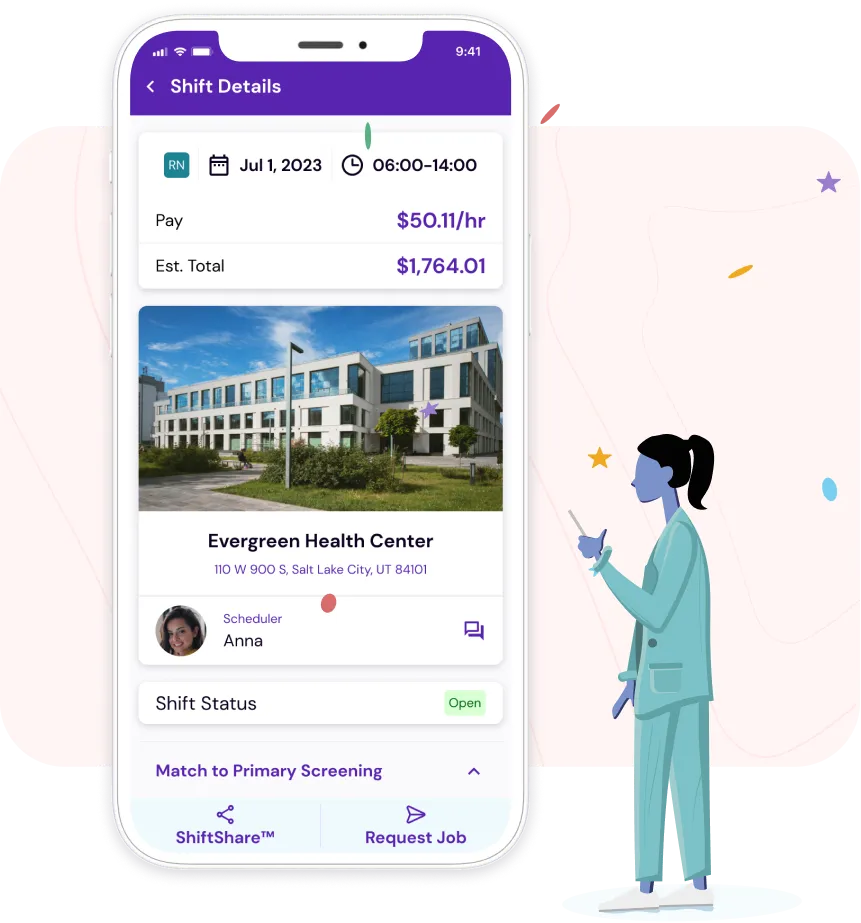
How do administrators support staffing in physical therapy facilities? Modern physical therapy practice administrators leverage technology. Instead of relying on slow, expensive traditional staffing agencies, they use platforms like Nursa. This allows a manager to post a need for a licensed PT or PTA for a specific day or week, and have that shift filled by a qualified, local clinician. This on-demand model is key to maintaining team morale, ensuring balanced caseloads, and avoiding patient care sacrifices due to staffing gaps.
Measuring success: Outcomes and improvement metrics
For physical therapy practice administrators, success is measured in data. While patient satisfaction is key, rehabilitation outcomes and quality metrics in therapy are what drive reimbursement and clinical excellence.
Administrators are constantly tracking and benchmarking their clinic's performance measurement data against national averages. Key data points include:
Financial and efficiency metrics
- Visits per day per clinician: The core productivity metric.
- Arrival rate/no-show rate: A measure of patient engagement and front-desk efficiency.
- Units per visit: A measure of billing accuracy and treatment intensity.
Clinical quality metrics
- Functional scale improvement: The average change in a patient's TUG, Berg, or Oswestry score from evaluation to discharge.
- Duration of care: The average number of visits to rehabilitate a specific diagnosis (e.g., TKA). Fewer, effective visits are more efficient.
- Adherence to plan of care: What percentage of patients complete their full, recommended course of care?
The role of the administrator is to review these reports and align the practice. If the clinic's "no-show" rate is high, it may trigger a new automated reminder system. If the functional outcomes for low back pain are below benchmarks, the administrator and clinical director will invest in continuing education for the team on new spine care techniques.
Future trends in physical therapy
The future of physiotherapy is bright, high-tech, and deeply integrated into healthcare. The field is moving from reactive treatment to predictive prevention, driven by innovation in rehabilitation care.
- Predictive analytics and AI: The most significant advancement in rehabilitation technology will be artificial intelligence. In the future, a PT will use AI-supported assessment tools. A patient will perform a series of movements in front of a camera, and the AI will provide a detailed biomechanical analysis, flagging specific movement "faults" or "asymmetries" that the PT can then confirm, leading to a more precise exercise prescription.
- "Pre-hab" as a standard: Rather than just rehabbing an ACL after it tears, data analytics and movement screening will identify athletes at risk for an ACL tear, allowing PTs to implement preventive strengthening programs.
- Tele-therapy as a hybrid model: The future of physiotherapy is not all virtual, but a hybrid. Patients may come to the clinic once for a manual, hands-on evaluation, then conduct their next two sessions via a virtual care system from home, before returning to the clinic for further progression.
- Advanced robotics and exoskeletons: These tools will become lighter, more affordable, and more accessible, transitioning from elite hospital gyms to standard outpatient neuro clinics, enabling a wider range of patients with spinal cord injuries or strokes to benefit from high-repetition gait training.
- Growth in specialty areas: The demand for physical therapy is expected to continue growing, particularly in pediatric physical therapy (in-school services) and geriatrics (home-based fall prevention).
Restoring strength, restoring lives
Physical therapy is a foundational pillar of the modern health system. It is the science of human movement and the art of human recovery. It is a diverse specialty that adapts its approach, from high-tech rehabilitation technology advancements for athletes to the gentle, hands-on care needed in geriatrics. At every stage, it is an evidence-based, data-driven practice dedicated to restoring function, eliminating pain, and giving patients back the lives they want to live.
For clinicians, physical therapy offers a rewarding career that combines lifelong learning with tangible, positive outcomes. For administrators and physical therapy practice administrators, it is a dynamic operational field that requires a mastery of workflow, staffing in rehabilitation facilities, and quality improvement.
Ultimately, physical therapy is one of the most powerful examples of team-based recovery in medicine. It is a blend of science, compassion, and collaborative care in physical therapy that does more than just heal a joint or strengthen a muscle—it restores strength and, in doing so, restores lives. Learn more about how professionals like nurses can change lives.