

Cullowhee is a community in Jackson County in western North Carolina, home to Western Carolina University and located in the Blue Ridge Mountains. Residents have access to Harris Regional Hospital in nearby Sylva, with larger medical centers in Asheville.
Cullowhee
North Carolina
Jump to section on this page

Anchor Link
Go Beyond a Single Job
Choose Multiple Per Diem Shifts on Your Schedule
Nursa isn't just about finding a job; it's about crafting your ideal work schedule by selecting shifts. Once you create a Nursa profile, you will experience the convenience of scheduling shifts in real time.
Loading shifts…
Zip codes located within Cullowhee, NC:
Loading…
Completed! We will notify you when we have desired shifts for you.
Until then, you can continue with the app to signup or login.
Continue
Until then, you can continue with the app to signup or login.
Oops! Something went wrong while submitting the form.
See More Shifts and Apply Now
Explore and find where you would like to work
Search ShiftsPer Diem JobsSelect your license and location to find the best PRN jobs
Select your license and the location you want to work in, and we'll show you the best PRN jobs available nearby.
Cullowhee offers a lively college-town atmosphere surrounded by mountain scenery, rivers, and waterfalls. Residents enjoy hiking, fly fishing, and whitewater paddling throughout the region.

Per diem nursing shifts in Cullowhee, North Carolina
Cullowhee sits in a river valley in Jackson County, deep in the western North Carolina mountains. It is unincorporated, wrapped around Western Carolina University, and surrounded on every side by ridgelines and national forest.
The Tuckasegee River runs through the middle of it. Sylva is ten minutes north, Asheville is about an hour east, and the Great Smoky Mountains start just over the ridge.
For a nurse or nursing assistant who wants to set their own schedule, per diem nursing shifts in Cullowhee, North Carolina come with a specific set of tradeoffs worth understanding. Rural healthcare works differently than it does in a metro area.
Here is what PRN work looks like here, what the state asks of you, and what you get out of living in the mountains.
What PRN work looks like day to day
You pick your own days. That is the whole premise, and in a rural area it matters more than usual.
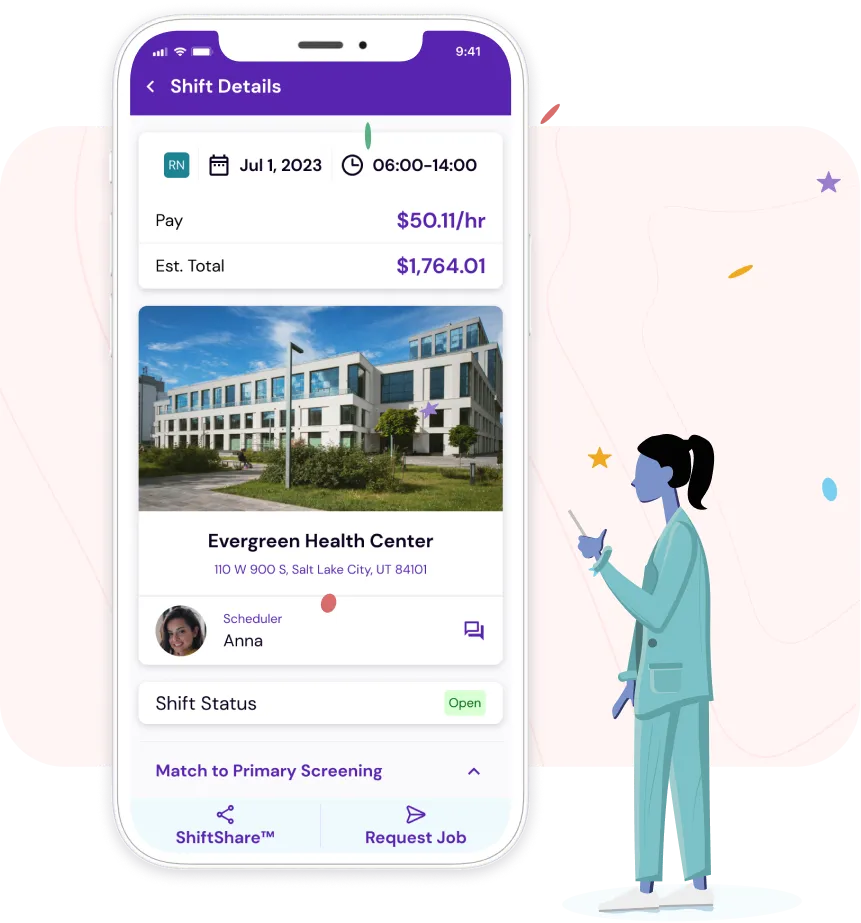
Nursa is a marketplace app. Facilities post the shifts they need filled, you scroll what is open, and you claim what fits. Nobody assigns you anywhere and nobody calls you about a placement you did not ask for.
For a lot of clinicians here, that flexibility is what makes the math work. Western North Carolina has fewer facilities spread over more ground, so being able to choose which drives are worth it is genuinely useful.
Building a week that fits your life
Some clinicians work full-time hours entirely from claimed shifts. Others take a handful a month around a staff job, a farm, or a family.
Western Carolina University runs a nursing program, and students who are already licensed as nursing assistants often pick up shifts around class schedules. PRN work bends around a semester in a way a staff position will not.
You can also change your pattern without asking permission. Claim heavily one month, almost nothing the next, then pick back up. No approval, no conversation.
Different settings, different skills
Staying on one unit for years quietly narrows what you are good at. You get fast at that building's routine and rusty everywhere else.
Moving between settings does the opposite. A week in skilled nursing, then a home health day driving the county roads, then a hospital shift keeps your assessment skills current and your charting adaptable.
It is also the cheapest way to test a specialty. Work three shifts in memory care before deciding whether you want to build a career there.
Your time actually stays yours
If you want a Tuesday off to fish the Tuckasegee, you do not claim a Tuesday shift. There is no request form.
Holidays work the same way. Take them off completely, or work them on purpose because rates climb.
The flip side is that consistency is your job now. Nobody is watching your hours for you, so plan a little. Most people find their rhythm inside a month.
Which facilities post PRN shifts around here
Jackson County is rural, but the healthcare picture is broader than the population suggests. Small mountain communities still need the full range of care, and facilities spread across several counties.
The settings where a nurse, nursing assistant, or other healthcare professional might pick up PRN work in this area include:
- Skilled nursing facilities caring for residents after surgery or a hospital stay.
- Long-term care buildings serving residents who need daily clinical attention.
- Assisted living and memory care communities.
- Community hospitals covering emergency, medical-surgical, and outpatient services.
- Hospice programs, both inpatient and in patients' homes.
- Home health agencies covering patients across Jackson, Swain, Macon, and Haywood counties.
- Urgent care and rural health clinics.
- Behavioral health and rehabilitation facilities.
Sylva, ten minutes north, has the county's hospital. Bryson City, Franklin, Waynesville, and Cherokee all have facilities within a half-hour to forty-five minutes. Asheville, about an hour east, holds the region's large referral hospital.
Each setting asks different things. Skilled nursing runs on efficiency, with heavier resident loads and a medication pass that cannot slip.
Hospital work moves faster with lighter ratios and higher acuity. A rural community hospital also means you handle a wider variety in a single shift, since there are fewer specialty units to hand patients off to.
Home health in the mountains is its own thing. You drive winding roads between houses, sometimes well off the main highways, and you work alone. Clinicians who like the independence love it, and the drive time is real.
What makes this platform different
A lot of apps say they have shifts. A few things actually change how the work feels.
Rates you can see, wages you get fast
Facilities price their own postings based on how badly they need coverage that day. Because you are filling an open gap rather than a budgeted position, PRN rates frequently land above what the building pays staff for the same hours.
That matters more in rural areas, where facilities compete for a smaller pool of clinicians and often have to pay up to get someone through the door.
Nursa Direct lets you pull your wages once a completed shift is verified rather than waiting out a standard pay cycle. When your income arrives one shift at a time, days matter.
Knowing what you are walking into
The rate is visible before you claim. Nothing changes afterward.
Facilities carry ratings from clinicians who have worked there, and you can leave your own once you have. In a small region where everyone eventually works everywhere, that feedback is worth a lot.
Real-time notifications send new postings to your phone as they publish, filtered to what you care about. Good shifts go fast, and seeing them first is half the game.
Backup when something goes sideways
Nursa Support handles account and shift issues, which keeps you from troubleshooting alone at five in the morning before an hour-long drive.
The Nursa Community forum is where clinicians trade notes on settings, rates, and what a building is actually like. Newer PRN workers ask, experienced ones answer.
Facilities generally think well of the platform too, which sounds like a small thing but is not. Schedulers who trust where a clinician came from post more shifts and request people back.
How to start picking up PRN shifts
Setup takes one sitting, and your phone handles all of it.
- Sign up and enter your personal information.
- Verify your nursing license so the app can confirm it is active and in good standing.
- Complete your clinician profile with your background, specialties, and preferred settings.
- Upload your credentials, including certification cards, immunization records, and required screenings.
- Request a PRN shift that works for your schedule.
- Complete your background check, which the shift request starts automatically.
Pull your paperwork together first. You need your license or certification number, your BLS card and any other certifications, tuberculosis screening results, immunization records, and a photo ID.
Photograph all of it before you sit down. Nothing kills momentum like discovering your immunization records are in a filing cabinet forty minutes away.
Once you are approved, claiming shifts is simple. A facility confirms your request, it shows up on your schedule, and you work it like any other day.
Start one habit immediately. Set calendar reminders about two months ahead of each credential expiration, because a lapsed card stops you from claiming anything until it is renewed.
Also decide on your number before you start. Work out how many hours you want and what you need to earn weekly, then build backward from there. Clinicians who skip that part tend to overcommit early and burn out fast.
North Carolina licensing and certifications
North Carolina belongs to the Nurse Licensure Compact, which simplifies things considerably.
If you hold a multistate license from another compact state, you can practice in North Carolina without applying for a separate license. Tennessee, Georgia, South Carolina, and Virginia are all compact states, and all four are within driving distance of the mountains.
If your home state sits outside the compact, you will need a North Carolina license through the Board of Nursing. Registered nurses and licensed practical nurses both go through that office.
Nursing assistants work a little differently here, and it is worth knowing. North Carolina maintains separate Nurse Aide I and Nurse Aide II listings, with Nurse Aide II allowing additional tasks after extra training.
That distinction affects which shifts you can claim, so confirm which listing you hold and what each allows. Verify current training hour requirements, renewal cycles, and registry rules directly with the state rather than relying on secondhand numbers.
Certifications worth having
Your license lets you practice. Certifications decide which shifts you can actually take.
- Basic Life Support (BLS) is required nearly everywhere, across settings and roles. Most facilities want American Heart Association certification, so check before paying for a course.
- Advanced Cardiovascular Life Support (ACLS) is expected for nurses working hospital, emergency, telemetry, and critical care assignments.
- Pediatric Advanced Life Support (PALS) applies to pediatric, emergency, and mixed-population units. Children decompensate on a different curve than adults, and PALS trains you to see it early.
- Dementia and memory care training comes up constantly in assisted living and skilled nursing, and memory care units often require it before you can claim a shift.
- Crisis prevention and de-escalation training helps in behavioral health and emergency settings.
In a rural market, carrying extra certifications matters even more. Fewer facilities means fewer postings, so qualifying for a wider range of them is how you keep your schedule full.
Healthcare work trends in Jackson County
Healthcare and education carry this county. Western Carolina University is the largest operation in Cullowhee, and healthcare facilities across Jackson and neighboring counties make up much of the rest.
Sylva's hospital serves as the hub for Jackson County, with smaller community hospitals in Bryson City, Franklin, and Waynesville covering the surrounding area. Cherokee has a tribally operated hospital on the Qualla Boundary.
Demand runs ahead of supply in western North Carolina, which is the defining feature of this market. Rural counties across the state have struggled to keep clinical positions filled, and that gap is exactly what PRN work exists to close.
An aging population adds to it. The mountains draw retirees, particularly around Cashiers and the higher-elevation communities, and long-term care demand has climbed steadily alongside that.
What that means for you
Facilities here compete for a limited pool of clinicians, and rates reflect it. A building that needs someone on a Saturday night in a county with few available nurses does not have much leverage to lowball.
Drive time is the real variable. Shifts might be ten minutes away in Sylva or an hour out in Asheville, and mountain roads take longer than the mileage suggests.
Run that math before claiming. A few extra dollars an hour stops being worth much once you add two hours of winding two-lane road to a 12-hour day.
Seasonality shows up in two ways. Respiratory season from December through February tightens coverage everywhere, and the university calendar shifts the local population substantially between semesters.
How to spend a day off in the mountains
This is why people put up with the drives.
The Tuckasegee River runs right through Cullowhee, and it is a well-regarded fly fishing river with a delayed-harvest section. In summer, tubing the Tuck is basically the regional pastime.
Judaculla Rock sits just outside town, a soapstone boulder covered in Cherokee petroglyphs thousands of years old. It takes fifteen minutes to visit and it is genuinely remarkable.
Panthertown Valley, sometimes called the Yosemite of the East, is south toward Cashiers with waterfalls, granite domes, and a trail network you could spend years on. Whitewater Falls, one of the highest waterfalls east of the Rockies, is in the same direction.
The Blue Ridge Parkway runs along the ridgeline northeast of here, and Great Smoky Mountains National Park starts near Cherokee. Both are close enough for an afternoon.
Towns worth your time
Sylva's Main Street is the local hangout, with the old county courthouse and its long staircase looking down over the town. There is a good independent bookstore, a few breweries, and enough restaurants for a proper night out.
Dillsboro is a small crafts town nearby. Bryson City has the Great Smoky Mountains Railroad and sits at the edge of the national park. Cherokee has the museum of the Eastern Band, the outdoor drama in summer, and a casino.
Cashiers and Highlands sit thirty to forty-five minutes south at higher elevation, with nicer restaurants, galleries, and cooler summer temperatures.
Asheville is about an hour east when you want a city. Restaurants, live music, breweries, and the Biltmore Estate.
On campus and around town
Western Carolina brings more to Cullowhee than a college town its size usually gets. The Bardo Arts Center hosts touring performances and exhibitions, and Catamount football fills the stadium on fall Saturdays.
Mountain Heritage Day each September celebrates Appalachian music, craft, and food on campus, and it draws people from across the region.
A practical note on driving
You need a reliable vehicle here. There is no meaningful public transit connecting Cullowhee to the surrounding towns, and the distances are real.
Mountain roads take longer than the map suggests, especially at night or in weather. Winter brings snow and ice at elevation, and fog settles into the valleys year-round.
Western North Carolina also took serious storm damage in recent years, and some roads and routes have been affected. Check current conditions before an unfamiliar drive rather than trusting a navigation app.
Share this page:


No items found.
Featured Facilities in this City
Searching for other types of per diem nursing jobs? Find nurse and nursing assistant jobs in similar types of healthcare facilities here.
Facility Types
See All


Pick Up a Job Today
Find per diem PRN job opportunities in your area. High paying CNA, LPN and RN and many more licences are available now.
Join Nursa
Post Your Jobs Today
Facilities who use Nursa fill 3 times as many open per diem shifts, on average, compared to trying to fill the shifts themselves.
Post Jobs