

Miramar is a city in southwest Broward County in South Florida, located between Fort Lauderdale and Miami. It is home to Memorial Hospital Miramar, part of Memorial Healthcare System, and residents are close to the many major health systems of the Miami-Fort Lauderdale area.
Mirimar
Florida
Jump to section on this page

Anchor Link
Go Beyond a Single Job
Choose Multiple Per Diem Shifts on Your Schedule
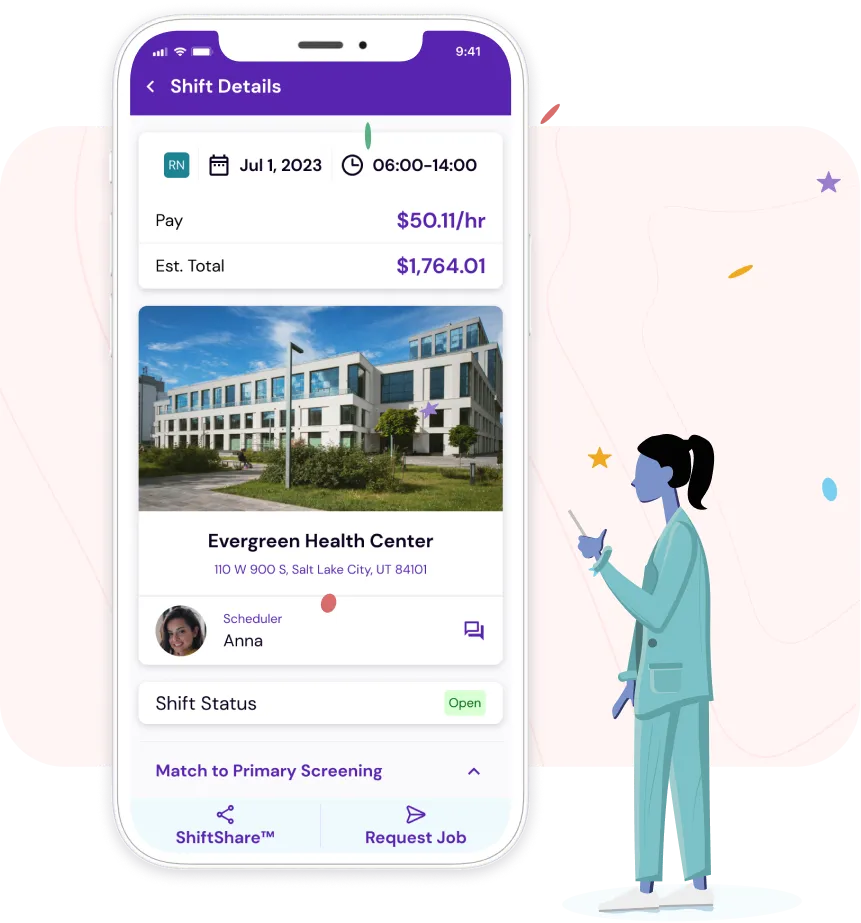
Nursa isn't just about finding a job; it's about crafting your ideal work schedule by selecting shifts. Once you create a Nursa profile, you will experience the convenience of scheduling shifts in real time.
Loading shifts…
Zip codes located within Mirimar, FL:
Loading…
Completed! We will notify you when we have desired shifts for you.
Until then, you can continue with the app to signup or login.
Continue
Until then, you can continue with the app to signup or login.
Oops! Something went wrong while submitting the form.
See More Shifts and Apply Now
Explore and find where you would like to work
Search ShiftsPer Diem JobsSelect your license and location to find the best PRN jobs
Select your license and the location you want to work in, and we'll show you the best PRN jobs available nearby.
Miramar offers a diverse, family-friendly community with parks, cultural centers, and a strong Caribbean influence. Its location provides easy access to South Florida's beaches, the Everglades, and both Miami and Fort Lauderdale.

Per diem nursing shifts in Miramar, Florida
Nurses looking for more control over their schedules are finding steady demand for per diem nursing shifts in Miramar, Florida. This growing Broward County city sits between Fort Lauderdale and Miami, giving nursing professionals access to a wide range of facilities without the overhead of full-time commitments. This guide covers what per diem work looks like for each license type, the credentials needed to work in Florida, how a platform like Nursa fits into the picture, and what daily life is like for clinicians who choose Miramar as a home base.
Whether the goal is extra income, a flexible schedule around family or school, or simply a change from the routine of a permanent staff position, per diem work has become a real career path rather than a side gig. Understanding how it works in Miramar specifically can help nurses decide if this is the right move for them.
What per diem nursing work looks like in Miramar
Per diem work means picking up individual shifts rather than committing to a permanent position. A nurse decides which days to work, which facility to work at, and how many hours to take on in a given week. This model gives nursing professionals more say over their income and their time off than a traditional staff role typically allows.
Facilities rely on per diem staff for a few practical reasons. Census can shift quickly on any given unit, a staff nurse might call out sick, or a facility might simply be short-handed during a particular season. Rather than overstaffing every shift just in case, many facilities in the Miramar area keep a pool of per diem nurses they can call on when the need arises. This benefits both sides: facilities get coverage without carrying extra payroll on slow days, and nurses get access to shifts without being tied to one employer.
The day-to-day experience varies by license type, since each role carries different responsibilities and scope of practice. Below is a breakdown of what per diem shifts generally involve for RNs, LPNs, and CNAs working in the Miramar area.
Per diem shifts for registered nurses
Registered nurses (RNs) who pick up per diem shifts often step into acute care units, skilled nursing facilities, and outpatient clinics on short notice. Because RNs carry the broadest scope of practice among nursing roles, a per diem shift can include medication administration, patient assessments, care planning, and supervision of LPNs and CNAs on the unit.
Walking into a new facility for a single shift requires quick orientation skills. Most facilities that use per diem staff provide a brief unit tour and a rundown of documentation systems before the shift begins. RNs who are comfortable adapting to new environments tend to find this work rewarding, since every shift offers a change of pace from the last.
Shift length and timing also matter for RNs weighing per diem work. Many facilities in the Miramar area post twelve-hour shifts, though eight-hour options exist as well, particularly in clinics and outpatient settings. Night and weekend shifts tend to carry a pay premium, since these are the hardest hours for facilities to staff with full-time employees. An RN who is willing to work some nights or weekends will generally find more per diem shifts, and better-paying ones, than an RN who only wants daytime hours.
Per diem shifts for licensed practical nurses
Licensed practical nurses (LPNs) frequently fill per diem shifts in long-term care and assisted living settings, where their scope of practice covers wound care, medication administration, and vital sign monitoring under the supervision of an RN or physician. Skilled nursing facilities in and around Miramar regularly post per diem needs for LPNs, particularly on evening and weekend shifts when staffing tends to run thin.
LPNs who take per diem shifts often build relationships with several facilities rather than just one. This spreads out their opportunities and reduces the risk of a slow week at any single location. It also lets an LPN compare pay rates and working conditions across facilities before deciding where to commit more of their time.
One advantage LPNs often mention is the chance to see how different facilities operate before choosing a long-term fit. A facility that looks good on paper might have a chaotic pace, while a smaller long-term care community might offer a calmer, more predictable environment. Per diem shifts let an LPN test that out directly, one shift at a time, instead of relying on a job posting alone.
Per diem shifts for certified nursing assistants
Certified nursing assistants (CNAs) make up a large share of the per diem workforce, since their support is needed across nearly every care setting. Per diem CNA shifts typically involve helping patients with daily living activities, taking vital signs, and assisting nurses with basic clinical tasks.
Because CNA certification requires less time to obtain than an RN or LPN license, many nursing professionals use per diem CNA work as a starting point in healthcare. It offers hands-on patient care experience and a flexible schedule for those still in nursing school or weighing which license to pursue next.
Per diem CNA work also appeals to nurses who want to keep a foot in direct patient care while pursuing further education. A CNA who is enrolled in an LPN or RN program can often build a per diem schedule around class times, something that is much harder to do with a fixed, full-time shift pattern.
The variety of settings available to per diem CNAs also builds a broader skill set faster than a single, permanent placement typically would. A CNA who works shifts across a hospital, a skilled nursing facility, and a home health setting within the same month picks up a wider range of patient care experience than one working the same unit every day. That range often serves them well later, whether they stay a CNA long term or move on to further nursing education.
What to expect during a first per diem shift
The first shift at a new facility can feel different from anything a nurse experienced in a permanent role, and knowing what to expect ahead of time makes it far less stressful. Most facilities schedule per diem staff to arrive a few minutes early for a short check-in with the charge nurse or unit manager, who will point out where supplies are kept, how the call system works, and which patients need the most attention.
Documentation systems tend to be the biggest adjustment. Facilities in the Miramar area use a range of electronic health record systems, and a per diem nurse may work in a different one every week. Most systems share the same basic logic once a nurse gets past the first few screens, but asking a coworker for a quick walkthrough at the start of a shift saves time later and avoids documentation errors.
Weather is worth planning around as well. South Florida's rainy season, which runs roughly from late spring through early fall, can bring sudden afternoon storms that slow traffic on the way to a shift. Nurses who build in a little extra travel time during these months tend to avoid the stress of arriving late to a facility they have never worked at before.
Nurses who succeed at per diem work tend to share a few habits. They arrive early enough to get oriented without rushing, ask clarifying questions rather than guessing, and stay organized with their own notes since they cannot rely on the routines built up over months at one facility. These habits become second nature after a handful of shifts, and most clinicians report that the adjustment period gets shorter with each new facility they work.
Licensing requirements for nurses in Florida
Every nurse working in Miramar must hold an active license issued or recognized by the Florida Board of Nursing. Requirements differ by license type, and understanding them helps clinicians plan their career path with confidence.
RN licensure requirements
To become an RN in Florida, a candidate must complete an accredited nursing education program, either an associate degree in nursing or a bachelor of science in nursing. After graduation, the candidate must pass the National Council Licensure Examination for Registered Nurses (NCLEX-RN) and submit an application to the Florida Board of Nursing.
Florida is a member of the Nurse Licensure Compact, which allows RNs with a compact license from another member state to practice in Florida without applying for a separate state license. This matters for per diem nurses who may relocate to the Miramar area or split time between states, since it removes a layer of paperwork that would otherwise slow down their ability to pick up shifts.
Beyond the initial license, RNs in Florida must renew their license periodically and complete continuing education requirements set by the state board. Staying current on these requirements is especially important for per diem nurses, since a lapsed license means no shifts can be worked until it is reinstated.
LPN licensure requirements
LPN candidates complete a state-approved practical nursing program, which usually takes about a year to finish. After completing the program, candidates sit for the National Council Licensure Examination for Practical Nurses (NCLEX-PN) and apply for licensure through the Florida Board of Nursing.
Like the RN license, LPN licenses issued under the Nurse Licensure Compact allow practice across member states. This flexibility is one reason LPN per diem work has grown in popularity, since it lets clinicians pick up shifts in Miramar even if they hold a compact license from a neighboring state.
LPNs should also confirm any facility-specific requirements before their first per diem shift. Some skilled nursing facilities, for example, require proof of a recent physical exam or specific immunizations in addition to an active license. Handling this paperwork ahead of time keeps the process smooth once a shift is claimed.
CNA certification requirements
CNAs in Florida must complete a state-approved nursing assistant training program, which covers both classroom instruction and supervised clinical practice. Once training is finished, candidates must pass a competency exam covering both skills and knowledge before their name is added to the Florida Certified Nursing Assistant registry.
Because CNA certification does not carry compact recognition the way RN and LPN licenses do, nurse aides moving to Florida from another state generally need to confirm reciprocity requirements or complete state-specific steps before they can start working shifts.
CNAs must also keep their certification active through periodic renewal, which generally requires proof of paid work hours as a nursing assistant within a set period. Per diem shifts count toward this requirement, which makes per diem work a practical way for a CNA to keep their certification active between full-time jobs or school semesters.
Certifications that strengthen a per diem nursing career
Beyond the core license, certain certifications make a real difference in how many per diem shifts a nurse can access. Facilities often require or strongly prefer candidates who hold these credentials, since they confirm a baseline level of readiness for emergency situations.
- Basic Life Support (BLS) certification confirms a nurse can perform CPR and respond to choking or cardiac emergencies, and most facilities require it before a nurse can be scheduled for any shift.
- Advanced Cardiovascular Life Support (ACLS) certification is often required for RNs working in emergency departments, intensive care units, or telemetry floors, since it covers advanced protocols for cardiac arrest and other life-threatening events.
- Pediatric Advanced Life Support (PALS) certification matters for nurses who take shifts involving pediatric patients, and it is frequently requested by facilities with dedicated pediatric units or emergency departments.
- Specialty certifications, such as wound care or IV therapy credentials, can help nurses stand out when facilities are choosing between multiple candidates for the same shift.
- A Trauma Nursing Core Course (TNCC) certification can open up emergency department shifts for RNs who want to specialize in trauma care.
Keeping these certifications current takes some planning, since most expire every two years and require a renewal course. Nurses who stay ahead of renewal deadlines avoid gaps that could keep them from accepting a shift on short notice.
It also helps to think about which certifications match the type of shift a nurse wants most. A CNA or LPN aiming for long-term care shifts may get more value from a dementia care certification than from ACLS, while an RN hoping to pick up emergency department shifts should prioritize ACLS and PALS early. Matching certifications to the facilities a nurse actually wants to work in makes the time and cost of renewal worth it.
Cost is a fair concern here too. Certification courses typically run a few hours to a full day, and hospitals and community colleges across South Florida offer them on a regular schedule. Spreading certifications out over a year, rather than renewing everything at once, keeps the cost and time commitment manageable for a nurse who is also working shifts.
Why Nursa is the platform for per diem jobs in Miramar
Nursa is a workforce marketplace built to connect nursing professionals directly with facilities that need coverage. Rather than working through a staffing agency, clinicians use the Nursa app to browse open PRN nursing jobs and choose the ones that fit their schedule and preferences.
One of the clearest advantages of using Nursa is pay. Per diem nursing jobs booked through the platform frequently pay more per hour than comparable full-time positions, since facilities are covering an immediate staffing gap rather than a long-term salary. Nurses can also access Nursa Direct, which allows clinicians to receive payment for a completed shift right away instead of waiting for a standard pay cycle. For nurses managing bills or unexpected expenses, that kind of immediate access to earnings can make a real difference.
Because Nursa operates as a marketplace, nurses set their own availability instead of being assigned a schedule by someone else. A clinician can work three shifts one week and none the next, depending on what fits their life at the time. This level of control is difficult to find in traditional staff nursing roles, where schedules are usually built weeks in advance and require formal requests to change.
The variety of facility types available through Nursa also stands out. Nurses can choose PRN shifts at hospitals, skilled nursing facilities, long-term care communities, assisted living facilities, and home health settings, all from the same app. This variety lets clinicians try different care environments and decide which setting suits them best, rather than guessing based on a single job description.
A few other features make the platform practical for day-to-day use:
- Real-time shift notifications alert nurses the moment new per diem shifts open up near Miramar, so they can claim the ones that work for them before another clinician does.
- Direct communication with facility schedulers lets nurses ask questions about a shift or unit before committing, which reduces surprises once they arrive.
- A single profile and credential file work across every facility on the platform, so nurses are not re-submitting the same paperwork for each new shift.
- Shift history and ratings within the app help nurses track which facilities have been a good fit, making it easier to build a rotation of preferred locations over time.
Taken together, these features remove much of the friction that has traditionally come with per diem work. Instead of calling multiple facilities to ask about openings, a nurse can see everything available in one place and decide what fits their week.
The marketplace model also changes the relationship between nurse and facility for the better. Rather than an agency setting the terms for both sides, facilities post the shifts they need at a rate they set, and nurses accept the ones that make sense for them. That direct connection tends to build accountability on both ends, since facilities know the nurse chose the shift on its own merits, and nurses know exactly what they are walking into before they arrive.
How to start picking up shifts with Nursa
Getting started on Nursa is a straightforward process built for busy clinicians. The steps below outline what to expect when signing up.
- Add personal information to create a basic profile on the app.
- Verify an active nursing license so the platform can confirm eligibility to work in Florida.
- Complete a full clinician profile, including work history and areas of experience.
- Upload essential credentials, such as BLS certification and any other required documents.
- Request a shift, which initiates a background check required before the first shift can be worked.
Each of these steps exists to protect both the nurse and the facility. License verification confirms a clinician is legally able to practice, the credential upload gives facilities confidence that a nurse meets their requirements, and the background check gives facilities the same assurance they would expect from any new hire, even for a single shift.
Once these steps are complete, nurses can browse and claim per diem shifts in Miramar and the surrounding area right from their phone. Most clinicians find that the entire setup process, from creating a profile to requesting a first shift, takes far less time than a traditional job application and interview process would.
Living and working in Miramar, Florida
Miramar offers nursing professionals a well-connected South Florida setting, sitting between two major metro areas while still keeping a more residential, suburban feel. This mix is part of why the area appeals to clinicians who want flexible work without giving up access to a wide range of facilities.
A convenient home base between Fort Lauderdale and Miami
Miramar sits in southern Broward County, within a short drive of both Fort Lauderdale and Miami. That location matters for per diem nurses, since it puts a large number of hospitals, skilled nursing facilities, and outpatient clinics within easy reach on either side of the county line. A nurse based in Miramar can reasonably consider shifts across two major metro areas, which widens the pool of per diem nursing shifts available in a given week.
Major roadways run through and around Miramar, giving nurses several route options for reaching facilities during peak traffic hours. Fort Lauderdale-Hollywood International Airport sits a reasonable distance away as well, which matters for nurses who travel for continuing education or family visits between shifts.
Housing in Miramar tends to offer more space for the price than comparable options directly in Miami or Fort Lauderdale, which can matter for nurses managing a variable per diem income. Combining that relative value with the flexibility of per diem pay rates gives many clinicians more breathing room in their monthly budget than a fixed salary elsewhere might.
Local amenities for nurses off the clock
Per diem work gives nurses more say over their days off, and Miramar has enough going on locally to make good use of that time. Miramar Regional Park offers walking trails, sports fields, and shaded picnic areas for nurses who want an easy outdoor break close to home.
South Florida's beaches sit within a short drive as well. Hollywood Beach and Hallandale Beach both offer a straightforward escape for nurses looking to spend a day off near the water, while the Everglades sit close enough on the other side of the county for nurses who prefer wetland trails, airboat tours, or wildlife viewing.
Miramar's cultural center hosts concerts, theater performances, and community events throughout the year, giving nurses a local option for an evening out without a long drive into Miami or Fort Lauderdale. For those who do want the bigger city experience, both downtowns offer a wider range of restaurants, nightlife, and entertainment within about a half hour of Miramar.
Year-round warm weather is one of the clearest draws of living in this part of Florida. Outdoor plans rarely get canceled for cold weather, and nurses working per diem shifts can count on being able to spend time outside on most days off throughout the year, aside from the rainy season that runs through the summer and early fall months.
The pace of life in Miramar tends to suit nurses coming off demanding shifts as well. A more residential layout, paired with quick access to major highways, means errands and downtime rarely eat into a full day off the way they might in a denser part of Miami.
Broward County's health systems also give Miramar nurses a strong sense of professional community even outside of shifts. Memorial Healthcare System operates several hospitals in the county, including a location in Miramar itself, and Broward Health and larger Miami-area systems add even more nearby options for continuing education, networking, and per diem shifts alike.
Taken together, Miramar offers per diem nurses a practical mix of housing value, easy access to two major metro areas, and enough local amenities to make time off feel like a genuine break from work. For nursing professionals weighing where to base their per diem career, that combination is worth serious consideration.
DO NOT PUBLISH WITH THE CONTENT BELOW
Meta Title: Per Diem Nursing Shifts in Miramar, Florida
Meta Description: Explore per diem nursing shifts in Miramar, Florida, including license requirements, recommended certifications, and how Nursa connects nurses with local facilities.
Summary statement: This article explains what per diem nursing work looks like for RNs, LPNs, and CNAs in Miramar, Florida, covers state licensing and certification requirements, introduces Nursa as a platform for finding per diem shifts, and outlines what makes Miramar a practical place to live and work.
Key takeaways:
- Per diem shifts differ by license type, with RNs, LPNs, and CNAs each taking on different responsibilities.
- Florida requires specific licensure steps for each nursing role, and compact licensure applies to RNs and LPNs.
- BLS, ACLS, and PALS certifications can expand the number of per diem shifts a nurse qualifies for.
- Nursa offers higher pay potential, instant pay through Nursa Direct, and full control over scheduling.
- Miramar's location between Fort Lauderdale and Miami gives nurses access to two major metro areas alongside a suburban lifestyle.
URL: /blog/per-diem-nursing-shifts-miramar-florida
Primary Keyword: per diem nursing shifts in Miramar, Florida
Secondary Keywords:
- nursing professionals
- PRN shifts
- nurse
- clinicians
- prn nursing jobs
- per diem nursing jobs
Links: none added — insert internal links per standard editorial pass.
Share this page:


No items found.
Featured Facilities in this City
Searching for other types of per diem nursing jobs? Find nurse and nursing assistant jobs in similar types of healthcare facilities here.
Facility Types
See All


Pick Up a Job Today
Find per diem PRN job opportunities in your area. High paying CNA, LPN and RN and many more licences are available now.
Join Nursa
Post Your Jobs Today
Facilities who use Nursa fill 3 times as many open per diem shifts, on average, compared to trying to fill the shifts themselves.
Post Jobs