

Misenheimer is a small village in Stanly County in central North Carolina, home to Pfeiffer University. Residents have access to Atrium Health Stanly in nearby Albemarle, with larger medical centers in Charlotte.
Misenheimer
North Carolina
Jump to section on this page

Anchor Link
Go Beyond a Single Job
Choose Multiple Per Diem Shifts on Your Schedule
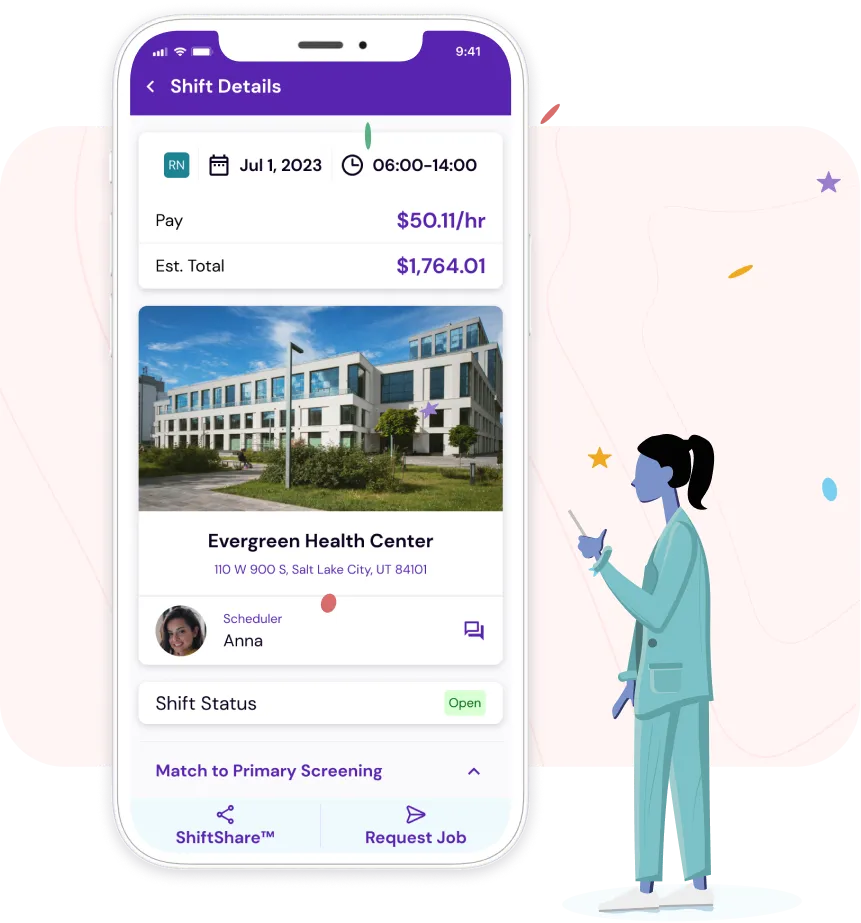
Nursa isn't just about finding a job; it's about crafting your ideal work schedule by selecting shifts. Once you create a Nursa profile, you will experience the convenience of scheduling shifts in real time.
Loading shifts…
Zip codes located within Misenheimer, NC:
Loading…
Completed! We will notify you when we have desired shifts for you.
Until then, you can continue with the app to signup or login.
Continue
Until then, you can continue with the app to signup or login.
Oops! Something went wrong while submitting the form.
See More Shifts and Apply Now
Explore and find where you would like to work
Search ShiftsPer Diem JobsSelect your license and location to find the best PRN jobs
Select your license and the location you want to work in, and we'll show you the best PRN jobs available nearby.
Misenheimer offers a quiet, rural college-town lifestyle centered around Pfeiffer University. Nearby Morrow Mountain State Park and the Uwharrie National Forest offer hiking, camping, and boating.

Per diem nursing shifts in Misenheimer, North Carolina
What the Stanly County market looks like
Misenheimer is a village of roughly 700 people in northern Stanly County, in the Uwharrie region of central North Carolina. Pfeiffer University occupies most of it and has since 1885.
Clinicians evaluating per diem nursing shifts in Misenheimer, North Carolina are working a rural market that sits close enough to the Charlotte metro to reach it when the local board runs thin.
Albemarle is ten minutes south with a community hospital. Salisbury is twenty-five minutes northwest, Concord about thirty minutes west, and Charlotte roughly fifty minutes southwest.
That gradient from rural to metropolitan is the practical story here. This guide covers what per diem shifts involve for registered nurses, licensed practical nurses, and nurse aides, what North Carolina requires of each role, which certifications open more assignments, and what the area offers on days off.
How per diem work operates
Per diem means "per day." Instead of committing to fixed weekly hours with one employer, you claim individual shifts as facilities post them. Each listing shows the date, hours, unit, setting, and pay rate before you agree to anything.
Facilities depend on this because staffing demand does not hold still. Census rises without warning. A nurse calls out two hours before a night shift. A long-term care unit loses three aides in a month and cannot replace them quickly.
Rural staffing sharpens that pressure. A facility in Stanly County has a far smaller pool of available clinicians to call than one in Charlotte. When someone is short, the options run out fast, and facilities pay above their standard rate to close the gap.
What RN per diem shifts involve
PRN shifts for registered nurses vary widely by setting, and this market spans both ends of the range.
At a community hospital, the work is broad. With fewer specialty units available to transfer patients into, a single shift can cover emergency, medical-surgical, and observation patients rather than one narrow population. That rewards general competence and steady judgment over deep specialization.
Drive toward Concord, Salisbury, or Charlotte and acuity climbs considerably. Those larger campuses carry trauma capacity, subspecialty units, and pediatric specialty services, and they pay at the top of the regional range for nurses with current acute care experience.
Skilled nursing looks different again. An RN there typically oversees a unit, supervises LPNs and aides, manages admissions and hospital returns, completes required assessments, coordinates with providers, and responds to any change in a resident's condition. The resident load is much larger and the role leans toward clinical oversight.
Home health puts an RN in a car covering long distances across rural county roads, handling wound care, medication reconciliation, teaching, and skilled assessments. Agencies generally expect at least a year of experience, because you evaluate and decide without a colleague nearby.
Facilities pay RNs the most because the license carries the clinical judgment. When a patient's condition changes, the RN determines what it means and acts. A facility short one RN is missing a decision-maker.
What LPN per diem shifts involve
Licensed practical nurses practice under RN or physician supervision. In this part of North Carolina, that work concentrates in skilled nursing, long-term care, adult care homes, assisted living, clinics, and home care.
A typical shift centers on medication administration. On a long-term care unit, that can mean passing medications to 20 or more residents across a shift, with treatments, dressing changes, glucose checks, and continuous observation layered on top.
Documentation runs alongside the clinical work rather than after it. Falling behind during a shift compounds quickly, and the final hour becomes unmanageable.
LPNs are also the staff most likely to catch a problem first. You see the same residents repeatedly, you know their baseline, and you notice a change before it registers in a vital sign. Reporting that promptly to the supervising RN is among the most clinically valuable things the role does.
Pace matters here more than in most positions. A medication pass running an hour behind pushes the entire unit out of sequence. Facilities request LPNs who move through a pass accurately and stay on schedule.
What nurse aide per diem shifts involve
Nurse aides account for the highest volume of open postings across this region, and the work is the most physically demanding of the three roles.
Shifts center on direct resident care: bathing, dressing, toileting, repositioning, transfers, feeding assistance, and ambulation. You also record vital signs, document intake and output, and report anything unusual to the nurse covering the unit.
North Carolina recognizes two levels of nurse aide, and which one you hold determines what you can be assigned. The second level permits additional tasks after further training, which the licensing section below covers in detail.
The clinical importance of the role gets underestimated. Aides spend more time with residents than anyone else in the building. Skin breakdown, decreased appetite, new confusion, unsteadiness that was not present last week, most of it reaches the care team through an aide first.
Body mechanics deserve deliberate attention in per diem work. You move between buildings with different lift equipment, different transfer policies, and different layouts. Locate the mechanical lifts and confirm the transfer policy before your first resident.
How per diem compares to a staff position
Staff employment provides predictability: set hours, a consistent paycheck, and whatever benefits the employer carries. What you give up is control of your calendar. Someone else builds the schedule, holidays rotate on a fixed cycle, and mandatory overtime arrives regardless of your circumstances.
Per diem reverses that. You choose the days you work, and no manager can hold you for a second consecutive shift. In exchange, you take responsibility for your own scheduling consistency, your own credential renewals, and your own financial planning between shifts.
Many clinicians refuse to treat this as an either-or decision. They keep a part-time staff role for a stable floor and add claimed shifts on top. Others build a full week from per diem work alone.
North Carolina license requirements by role
Every shift in Misenheimer requires the correct North Carolina credential in active status. Which agency handles your credential depends on your role, and the split is not obvious.
Registered nurse and practical nurse licensure
The North Carolina Board of Nursing licenses both registered nurses and licensed practical nurses. It operates as an independent regulatory body rather than sitting inside a larger state department, which differs from how many states organize it.
Licensure requires graduation from an approved program and a passing score on the appropriate NCLEX examination.
North Carolina participates in the Nurse Licensure Compact. A multistate license from another compact state authorizes you to practice here without applying separately, and clinicians who live near a state line often rely on that.
Renewal works differently here than in states that simply count education hours. North Carolina uses continuing competence requirements that offer several paths, including combinations of practice hours, continuing education, and national certification.
That flexibility helps per diem clinicians, since accumulated practice hours across multiple facilities can count toward what the Board asks for. Review the current options carefully rather than assuming your other state's model applies.
Nurse aide listings and the two levels
North Carolina splits nurse aide oversight across two different agencies, which surprises nearly everyone who encounters it for the first time.
The first level, Nurse Aide I, is listed on a registry maintained by a division within the state health department. The second level, Nurse Aide II, is listed by the Board of Nursing instead.
Two levels, two agencies, two separate listings. An aide can hold both, and many do.
The distinction matters for claiming shifts. Nurse Aide II permits tasks beyond what the first level allows, after completing additional approved training, which opens a category of assignments otherwise closed to you.
Both listings require documented work to renew, which is worth watching if you work per diem. An extended stretch without claimed shifts can put a listing at risk, and restoring a lapsed one takes longer than maintaining it.
Verify current training requirements, listing periods, and renewal rules with the relevant agency before relying on any figure, and confirm which listings you actually hold before assuming you qualify for a posting.
Certifications facilities look for
Licensure lets you practice. Certifications determine which shifts you can actually claim, and a deeper credential set reaches further into the better-paying assignments.
- Basic Life Support (BLS) certification is required across nearly every setting and role. Most facilities specify American Heart Association certification, so confirm what a facility accepts before paying for a course.
- Advanced Cardiovascular Life Support (ACLS) is expected for RNs in hospital and emergency assignments. At a community hospital where a code may be managed by a lean team, that training carries real weight.
- Pediatric Advanced Life Support (PALS) applies to RNs working emergency or mixed-population units. Rural emergency departments see patients of every age.
- Trauma Nursing Core Course (TNCC) is valuable here, where highway, farm, and recreational injuries reach community hospitals before transfer.
- Dementia and memory care training is commonly requested by adult care homes, assisted living, and skilled nursing facilities, and memory care units often require it before a shift can be claimed.
- Crisis prevention and de-escalation training benefits clinicians in behavioral health and memory care settings, where verbal intervention is the first and safest option.
In a rural market with fewer total postings, qualifying for a wider share of them is how you keep a schedule full. Each certification widens that pool.
What drives pay in this area
Per diem rates in this part of North Carolina generally exceed what the same facility pays staff employees holding equivalent credentials. The gap depends on role, setting, timing, and the pressure a facility faces when it posts.
Several patterns repeat consistently.
- Overnight and weekend coverage pays more than weekday daytime hours.
- Holiday shifts reach the highest rates of the year, particularly between Thanksgiving and New Year's Day.
- Postings published within 24 hours of the start time often carry a premium, because internal options have been exhausted.
- Higher-acuity settings pay more than lower-acuity settings for identical credentials.
- Respiratory season raises census and staff call-outs simultaneously from roughly December through February.
- Winter ice events create sudden same-day gaps, since this region clears roads slowly.
Proximity to Charlotte shapes local rates in a specific way. Facilities in Stanly County compete for clinicians who could drive an hour southwest for metropolitan pay, so they have to price competitively to keep people working closer to home.
Growth in the counties between here and Charlotte adds to it. Cabarrus and Rowan have expanded steadily, new facilities have opened, and they recruit from the same regional workforce.
Demand also runs steady for structural reasons. Stanly County's population skews older than the state average, which keeps long-term care, home health, and hospice volume consistent regardless of season.
Why nursing professionals use Nursa
Nursa is a marketplace that connects nursing professionals directly with facilities posting open shifts. It operates as a platform rather than a staffing agency, and that distinction determines who decides. No recruiter assigns you anywhere. You review what is posted, weigh it against your own criteria, and claim what fits.
Rates set by actual demand
Facilities price their own postings according to how urgently they need coverage. Because you are closing a gap rather than occupying a budgeted position, per diem nursing jobs on the marketplace frequently pay more per hour than comparable full-time roles inside the same building. The rate is visible before you claim and does not change afterward.
Instant pay through Nursa Direct
Conventional payroll holds earned wages for a week or longer. Nursa Direct provides access to your pay once a shift is completed and verified, rather than requiring you to wait for a standard pay cycle. When income arrives shift by shift, that timing directly affects how you manage expenses.
Control over your schedule
Nothing is assigned. You filter shifts by date, distance, role, and rate, then select what fits your week. Three 12-hour shifts, two evenings plus alternating weekends, or one shift a month all work within the same system, and the arrangement adjusts as your circumstances change.
Range of facility types
Shifts span long-term care, assisted living, hospitals, skilled nursing facilities, and home health settings. That range protects your clinical skills over time. Working a single setting exclusively narrows your abilities gradually, while rotating across settings keeps your assessment skills and documentation fluency intact.
Real-time notifications and direct messaging
Well-paying last-minute postings fill quickly. Real-time shift notifications deliver new openings to your phone as they publish, filtered to your stated preferences, so you can respond before someone else claims them.
You also message facility schedulers directly in the app. Questions about the unit, the documentation system, or where to park go to the person who knows. On rural roads where a wrong turn costs fifteen minutes, confirming directions before you leave is worth doing.
Setting up your account
Setup is short, and most clinicians complete it from a phone in a single sitting.
- Add your personal information to create your account.
- Verify your nursing license so the platform can confirm it is active and in good standing.
- Complete your clinician profile with your work history, specialties, and preferred settings.
- Upload your essential credentials, including certifications, immunization records, and required screenings.
- Request a shift, which initiates your background check.
Gather your documents before you begin. You will need your license or listing number, certification cards, tuberculosis screening results, immunization records, and a government-issued photo identification.
Aides should have both listings handy if they hold both, since facilities will ask which one applies. Once active, set calendar reminders 60 days ahead of each expiration, because a lapsed credential blocks you from claiming shifts entirely.
Living and working in Misenheimer
Misenheimer suits clinicians who want flexible shifts because the cost of living is low, the drives are uncongested, and a metropolitan market sits within reach when you want it.
Highway 52 runs through the village, connecting south toward Albemarle and north toward Salisbury. Highway 49 crosses nearby toward Concord and Charlotte, and Interstate 85 is about half an hour west.
Pfeiffer University anchors the community and brings athletics, performances, and campus activity that a village this size would not otherwise have.
Facilities within reach
Albemarle, ten minutes south, has the county's hospital along with skilled nursing and adult care capacity. Smaller facilities sit in the surrounding towns.
Salisbury and Concord each have larger hospitals twenty-five to thirty minutes away, and the growth corridor between them has added outpatient and senior living capacity steadily.
Charlotte, about fifty minutes southwest, holds academic campuses, a children's hospital, and a Level 1 trauma center. Asheboro sits forty minutes east with another community hospital.
That spread is what makes prn nursing jobs practical to combine from a Misenheimer address, provided you weigh the drive against the rate.
The Uwharries, lakes, and rivers
The Uwharrie Mountains are among the oldest ranges in North America, worn down over hundreds of millions of years into forested hills. The national forest covers a large stretch east of here with hiking, mountain biking, and camping.
Morrow Mountain State Park sits fifteen minutes from Albemarle on the Pee Dee River, one of the oldest state parks in North Carolina, with trails, a summit road, and river access.
Badin Lake and Lake Tillery both sit within twenty minutes for boating, fishing, and swimming. The Yadkin and Pee Dee river system runs through the whole area.
This is also historic gold country. North Carolina's gold rush predated California's, and the remnants of that history are scattered across these counties.
Local culture and nearby towns
Albemarle has a walkable downtown with restaurants and shops, and Stanly County holds several small towns worth an afternoon. Badin nearby was built as a company town by a French aluminum firm, and the architecture still shows it.
The North Carolina Zoo in Asheboro is about forty minutes east and is among the largest natural-habitat zoos anywhere. Seagrove, a little beyond it, has been a center of American pottery for generations and holds dozens of working studios.
A preserved Native American ceremonial site sits southeast near Mount Gilead, reconstructed and open to visitors.
Charlotte is under an hour for professional football, basketball, and hockey, a strong restaurant scene, museums, and a whitewater center on the edge of the city. The motor speedway and outlet shopping in Concord are closer still.
Practical considerations
Housing in Stanly County runs well below the Charlotte metro and below the state average, which is the strongest financial argument for basing yourself here. Clinicians who want more amenities often live in Albemarle, Salisbury, or Concord.
Traffic is minimal locally, though the corridors into Charlotte back up between roughly 7 a.m. and 9 a.m. and again from 4 p.m. to 6 p.m. That brackets both ends of a day shift, so weigh it before claiming metropolitan work.
Weather rarely interferes, with one exception worth planning around. Winter ice events hit this region occasionally and the roads clear slowly. When ice is in the forecast, treat it seriously rather than assuming a normal drive.
Summer heat and humidity run heavy from June through September, and the remnants of tropical systems occasionally bring heavy rain in late summer and fall.
Getting started
Per diem work rewards clinicians who stay organized, adapt quickly, and can enter an unfamiliar building prepared to contribute. Misenheimer offers low living costs, a community hospital ten minutes away, and metropolitan capacity within an hour.
Confirm your license or listing is current, gather your credential documents, complete your profile, and start tracking what opens nearby. The schedule is yours to build.
Share this page:


No items found.
Featured Facilities in this City
Searching for other types of per diem nursing jobs? Find nurse and nursing assistant jobs in similar types of healthcare facilities here.
Facility Types
See All


Pick Up a Job Today
Find per diem PRN job opportunities in your area. High paying CNA, LPN and RN and many more licences are available now.
Join Nursa
Post Your Jobs Today
Facilities who use Nursa fill 3 times as many open per diem shifts, on average, compared to trying to fill the shifts themselves.
Post Jobs