

Houghton is a small city on Michigan's Upper Peninsula, located on the Keweenaw Waterway and home to Michigan Technological University. UP Health System-Portage in neighboring Hancock and Aspirus Keweenaw Hospital in Laurium serve the area.
Houghton
Michigan
Jump to section on this page

Anchor Link
Go Beyond a Single Job
Choose Multiple Per Diem Shifts on Your Schedule
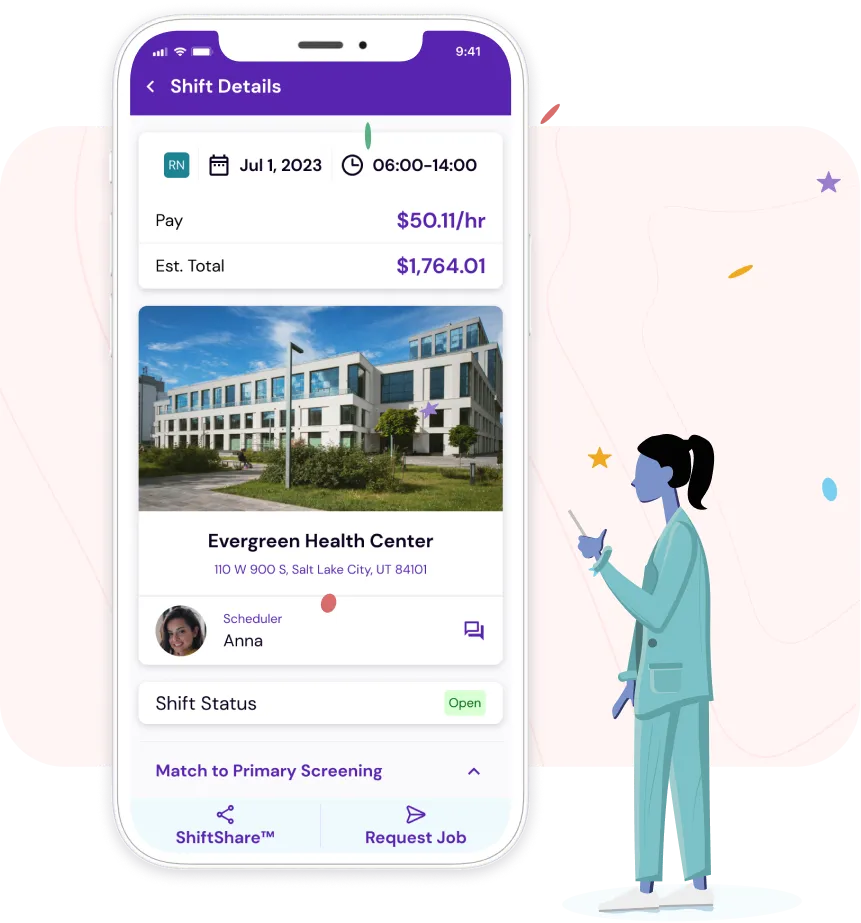
Nursa isn't just about finding a job; it's about crafting your ideal work schedule by selecting shifts. Once you create a Nursa profile, you will experience the convenience of scheduling shifts in real time.
Loading shifts…
Zip codes located within Houghton, MI:
Loading…
Completed! We will notify you when we have desired shifts for you.
Until then, you can continue with the app to signup or login.
Continue
Until then, you can continue with the app to signup or login.
Oops! Something went wrong while submitting the form.
See More Shifts and Apply Now
Explore and find where you would like to work
Search ShiftsPer Diem JobsSelect your license and location to find the best PRN jobs
Select your license and the location you want to work in, and we'll show you the best PRN jobs available nearby.
Houghton offers a lively college-town atmosphere with a historic downtown and waterfront trails. Snowy winters bring skiing, snowmobiling, and Michigan Tech's famous Winter Carnival.

Per diem nursing shifts in Houghton, Michigan
Picking up per diem nursing shifts in Houghton, Michigan is a smart move for any nurse who wants more say over their week. Houghton sits on the Keweenaw Peninsula in Michigan's Upper Peninsula, a bit removed from the rest of the state but home to a steady mix of hospitals and care facilities that keep per diem shifts available.
This guide walks through what PRN work actually looks like day to day, which facilities post shifts nearby, and what to know about getting licensed in Michigan. It also covers what makes Houghton a solid home base for a nurse, nursing assistant, clinician, or any other healthcare professional who wants flexible shifts without giving up a normal life outside of work.
Houghton is small, built along the Portage Canal across from its twin city, Hancock, and anchored by Michigan Technological University. It's a tight-knit, four-season town where a day off might mean a walk along the canal or a drive out to Lake Superior, which makes it an easy place to settle into between shifts.
Nursa is the app behind most of what's covered here, so it's worth naming upfront: it's a staffing marketplace that connects clinicians directly with facilities that need coverage, without the usual back-and-forth of a traditional staffing agency.
What is it like to work PRN in Houghton?
Working PRN means picking up shifts one at a time instead of locking into a fixed schedule. A nurse decides which days work, which facility to try, and how many hours to take on that week.
That kind of control changes how work fits into life. A parent can build shifts around school pickup. A student connected to Michigan Tech can pick up hours between classes. Someone easing back in after time off can start slow and add more as they're ready.
Variety is part of the draw too. One week might mean a shift at a hospital in Hancock, the next a stretch at a long-term care facility a little further out toward Calumet. Every setting runs a little differently, and that variety keeps the work from feeling stale.
Nurses who try PRN shifts often say the biggest shift isn't the paperwork or the new units. It's the mental one. Instead of asking for time off, they simply choose not to pick up a shift that week. No approval needed, no schedule fights with coworkers.
That shift in mindset takes some adjusting to. A clinician coming from a traditional staff role is used to a set calendar handed down from a manager. PRN work flips that. The nurse becomes the one setting the calendar, which feels freeing at first and takes a little getting used to after that.
Balance looks different for everyone. Some clinicians work four days a week and take three off. Others stack shifts for a few weeks, then take a longer break. PRN work through an app bends around whichever pattern actually fits a person's life, rather than forcing them into someone else's shift rotation.
Location plays into that flexibility a bit differently here than in a bigger metro area. Houghton sits fairly far from other population centers, so a clinician's shift radius often stays local to the Keweenaw Peninsula rather than stretching across county lines the way it might near a bigger city. That makes knowing the handful of nearby facilities well worth the effort.
There's also a mental shift that comes with getting comfortable in new places quickly. A nurse who works PRN for a few months usually gets faster at reading a new unit, finding the supply room, and figuring out the pecking order on a floor. That skill carries over everywhere, and it tends to make every future shift a little smoother than the last.
Being one of a smaller pool of local clinicians has its own upside too. Nurses who work PRN around Houghton often get to know facility staff by name after just a handful of shifts, since the community of working nurses here is close-knit compared to a big metro area.
Personal life fits into the picture more easily too. A nurse finishing a degree, training for a ski race, or raising young kids can build a week around what actually matters that month, rather than fitting life into whatever schedule a facility hands down. That kind of control is hard to overstate once someone's actually lived with it for a while.
Which healthcare facilities use the app?
One reason PRN shifts stay interesting is the range of places willing to post them. Around Houghton and the wider Keweenaw and Copper Country area, facilities across nearly every care setting rely on per diem staff to fill gaps.
Common facility types include:
- Long-term care communities that need steady coverage for residents with ongoing care needs.
- Skilled nursing facilities looking for licensed staff to handle rehab and recovery care.
- Hospitals that need extra hands during busy stretches or when full-time staff call out.
- Hospice providers that need compassionate, steady care for patients and families.
- Home health agencies that send clinicians directly into a patient's home.
- Urgent care clinics that need coverage during peak hours or weekend rushes.
- Assisted living communities that need support with daily care routines.
Each type comes with its own rhythm. A hospital shift might move fast and require quick decisions, while an assisted living shift often runs at a calmer, more conversational pace built around residents' daily routines rather than acute emergencies.
This range matters for a simple reason: it means a nurse isn't boxed into one type of setting. A clinician who wants hospital experience can pick that up, then try a slower-paced long-term care shift the following week.
Home health shifts deserve a special mention here. They look different from anything facility-based, since a clinician is working one-on-one in someone's actual home rather than moving between rooms on a unit. Some nurses prefer that quieter pace, while others find they miss the energy of a busier floor. Trying both is the easiest way to figure out which fits better.
Around a remote area like Houghton, that mix matters even more than it would somewhere denser. With fewer total facilities nearby, having several types of settings posting shifts helps make sure a clinician isn't stuck waiting on just one hospital to have an opening.
Urgent care shifts deserve a mention too, since they run differently from a hospital emergency department. The pace is usually faster and more predictable, with a steady stream of walk-in patients rather than the unpredictable surges of a trauma floor. For a clinician who likes quick assessments and a defined shift length, these shifts can be a nice change of pace.
What makes this PRN platform stand out?
Not every way to pick up per diem shifts works the same way, and a few things set this app apart from the usual staffing routine.
Pay speed is one of the biggest. Instead of waiting through a standard pay cycle, clinicians can access wages fast after a completed shift. That matters when bills don't wait for a two-week cycle to catch up.
Pay rates tend to run higher than what a comparable full-time role would offer, since facilities are covering an immediate gap rather than a long-term contract. Nurses can see the rate before they claim a shift, so there's no guessing involved.
Transparency runs through the whole process. Shift details, facility ratings, and pay rates are all visible upfront. Clinicians can also rate their own experience at a facility after a shift, which helps other nurses know what to expect before they sign up.
There's also a clinician community built into the app, where nurses can trade notes, ask questions, and get support from people who've worked the same kinds of shifts. Combined with a dedicated support team for troubleshooting issues, it feels less like a cold booking app and more like a network built around actual nurses.
That community piece turns out to matter more than it sounds. A nurse new to per diem work can ask the community what a specific facility is really like before ever claiming a shift there. Small details, like which unit runs short-staffed on weekends or which facility has the smoothest check-in process, get shared freely instead of staying locked inside one hospital's break room.
Facilities tend to trust the platform too. A strong track record with local hospitals and care communities means shifts get filled fast, and clinicians walk into facilities that already know what to expect from per diem staff. Real-time shift notifications round things out, alerting a nurse the moment something opens up nearby so good shifts don't slip by.
None of this works without both sides trusting the process. Facilities want reliable clinicians who show up ready to work, and clinicians want facilities that treat per diem staff fairly instead of as an afterthought. Building that reputation takes time, and it shows up in how quickly shifts get claimed and how often nurses come back to the same facility on purpose.
Cancellation policies and shift details are laid out clearly too, so there's no confusion about what happens if plans change on either side. A clinician can see exactly what a shift pays, what the unit expects, and what happens if they need to cancel, all before ever committing to it.
How does the app work?
Getting started takes less time than most people expect. Here's the basic flow:
The whole thing is designed to feel less like paperwork and more like getting set up once, then moving on to actually picking shifts. Most of it can be done from a phone in one sitting.
- Sign up and create a basic profile with your contact information.
- Verify your active nursing license so the app can confirm you're cleared to work in Michigan.
- Complete a full clinician profile, including your work history and areas of experience.
- Upload your credentials, such as BLS certification and any other required documents.
- Request a PRN shift, which kicks off a background check before that first shift can be worked.
Each step exists for a real reason. License verification confirms a clinician can legally practice. The credential upload gives facilities confidence before a nurse even walks in the door. The background check gives facilities the same peace of mind they'd expect from any new team member, even for a single shift.
None of these steps take long individually, but together they build the kind of trust a facility needs before letting someone new handle patient care. Skipping ahead isn't an option, and that's actually a good thing. It's what keeps the whole system reliable for both sides.
Once that's done, shifts near Houghton show up right in the app, ready to claim. Most clinicians say the whole setup, start to finish, takes far less time than a typical job application would.
There's also room to keep the profile updated as things change. Adding a new certification, updating availability, or switching preferred facility types all happen in the same app, so a nurse never has to start from scratch just because their goals shifted.
Michigan licensing rules for nurses
Every nurse working in Houghton needs an active license through the Michigan Board of Nursing, part of the state's Department of Licensing and Regulatory Affairs.
Registered nurses complete an accredited nursing program, either an associate degree or a bachelor's degree, then pass the NCLEX-RN exam before applying to the state board. Licensed practical nurses follow a similar path through a shorter, state-approved practical nursing program, then sit for the NCLEX-PN.
Both paths lead to the same state board for final approval, and both require the license to stay current through periodic renewal. It's a straightforward system once someone's been through it once, but it's worth reading the fine print the first time rather than assuming every state handles licensing the same way.
Michigan has joined the Nurse Licensure Compact, which allows RNs and LPNs with a compact license from another member state to practice in Michigan without applying for a separate state license. This matters for per diem nurses who may relocate to the Houghton area or split time between states, since it removes a layer of paperwork that would otherwise slow down their ability to pick up shifts.
It's worth double-checking implementation details for a compact license before relying on it, since rules can shift as states update their systems. Applying directly to Michigan's board is always a safe fallback if there's any doubt.
Renewal cycles matter too. Michigan requires continuing education to keep an RN or LPN license active, and letting that lapse means shifts stop until the license gets reinstated. Setting a reminder well ahead of a renewal date is a small habit that saves a lot of hassle later, especially in a remote area where finding last-minute coverage for a missed shift isn't always simple.
Nursing assistants follow a different track. In Michigan, a certified nurse aide completes a state-approved training program, then passes a competency exam before their name lands on the state's nurse aide registry. That registry status needs to stay active through regular work hours, which per diem shifts count toward.
It's worth checking a facility's specific paperwork requirements too, separate from the state license itself. Some skilled nursing facilities and hospitals ask for a recent physical exam or proof of certain immunizations before a clinician's first shift. Getting that sorted ahead of time means one less delay once a shift gets claimed.
Certifications that help with PRN shifts
Beyond the core license, a few certifications make a real difference in how many shifts a nurse can pick up.
Basic Life Support (BLS) certification is close to universal. It confirms a clinician can handle CPR and basic emergency response, and most facilities won't schedule a shift without it on file.
Pediatric Advanced Life Support (PALS) matters for anyone hoping to work shifts involving kids, whether that's an emergency department or a pediatric unit. Facilities with pediatric patients often list it as a requirement rather than a nice-to-have.
Wound care and IV therapy certifications are worth considering too, especially for clinicians aiming at skilled nursing or long-term care shifts, where those skills come up often and can set a candidate apart when a facility is comparing a few clinicians for the same open shift.
Advanced Cardiovascular Life Support (ACLS) opens doors too, particularly for shifts in intensive care, telemetry, or emergency settings. It signals a nurse can handle advanced cardiac emergencies without hesitation.
A Trauma Nursing Core Course (TNCC) certification is worth a look for anyone eyeing emergency department shifts specifically. It's not always required, but it tends to stand out when a facility is choosing between a few similarly qualified clinicians for the same open shift.
These certifications typically need renewal every two years. Staying ahead of that deadline keeps a nurse eligible for the widest possible range of shifts, rather than getting stuck sitting out a good opportunity because a card expired.
Picking certifications based on the kind of shifts a nurse actually wants pays off. Someone chasing hospital or urgent care shifts should prioritize ACLS and PALS early. Someone focused on long-term care might get more value out of a dementia care certification instead.
Cost and timing matter here too. Most of these courses run a few hours to a full day, and local hospitals in the Houghton and Hancock area regularly offer them. Spacing renewals out across the year, instead of letting them all expire at once, keeps a clinician from scrambling to reschedule shifts around a missing card, which can be tougher to sort out quickly this far from a bigger city.
Local trends in nursing shifts
The Keweenaw Peninsula runs on a smaller, more spread-out healthcare network than most of Michigan, and that shapes what per diem work looks like around Houghton. UP Health System's facility in Hancock sits just across the canal, and Aspirus Keweenaw Hospital in nearby Laurium extends coverage a bit further north.
That spread means steady demand for per diem coverage, especially since remote facilities like these often run leaner staffing than a hospital in a bigger city would. Per diem shifts help fill gaps without requiring a facility to commit to a long-term contract it may not need year-round.
An aging population across the Upper Peninsula also keeps demand strong in long-term care and home health settings specifically. Nurses and nursing assistants comfortable with that kind of work tend to find no shortage of shifts nearby.
Michigan Tech adds its own steady presence too. Between students, faculty, and staff, the university keeps local urgent care and outpatient clinics fairly busy year-round, on top of the demand coming from the wider community.
Houghton itself is small and walkable, built along the Portage Canal across from Hancock. That's part of why nurses use it as a base rather than a destination on its own. Housing costs run lower than in much of the country, which stretches per diem wages further, especially for someone still building up steady shifts.
Commutes here look different from a suburb near a big city. Distances between towns can run longer, and winter weather plays a real role in planning, since heavy snowfall is common through much of the season. Clinicians who build in extra travel time during snowy stretches tend to avoid the stress of arriving late to a shift.
Because Houghton sits well outside a larger metro area, a nurse based here is choosing a genuinely rural lifestyle. For clinicians who want that trade-off, the payoff is a close community, lower costs, and easy access to outdoor recreation most of the year.
Shift availability can also ebb and flow with the university calendar and tourist season. Summer and early fall tend to bring more visitors to the area, which can mean extra urgent care demand, while the school year adds its own steady baseline of need tied to the Michigan Tech community.
Ways to unwind after a shift in Houghton
PRN work gives clinicians more say over their days off, and Houghton has enough nearby to make good use of that time. The Portage Canal runs right through town, with a walking path along the shoreline that makes for an easy stroll after a long shift.
Michigan Tech's campus adds its own steady lineup of events, from hockey games to the university's well-known Winter Carnival, which draws visitors from across the region for its elaborate snow sculptures each February.
McLain State Park sits a short drive away on Lake Superior, with a sandy beach and views out over the water that make for a great warm-weather outing. The Maasto Hiihto trail system offers miles of groomed paths for cross-country skiing in winter and hiking or biking once the snow clears.
History buffs can head over to the Quincy Mine in Hancock for a tour through the area's copper mining past, and downtown Houghton's Shelden Avenue has a solid mix of local restaurants and shops for a low-key evening out.
For something bigger, Copper Harbor sits about an hour north at the tip of the Keweenaw Peninsula, with hiking trails and lake views worth the drive on a day off. Isle Royale National Park is also reachable by ferry from Houghton, offering a more ambitious trip for anyone with a full day or two to spare.
For a quieter reset, plenty of nurses in the area just take a slow morning with coffee, watching the canal traffic pass under the lift bridge before running errands. After a demanding shift, sometimes the best plan is no plan at all.
Nara Nature Park, just outside downtown, adds another easy option for a short trail walk without needing to plan a bigger outing. It's a good pick for anyone who just wants thirty quiet minutes outside between errands.
The seasons shape those choices here more than almost anywhere else. Summers bring warm, comfortable days perfect for the lake and trail system, while fall adds cooler air and color across the surrounding hills. Winters run long, cold, and heavy with snow, which most residents plan around rather than avoid, filling the season with skiing, snowshoeing, and the annual Winter Carnival.
Whatever the pace someone's looking for, Houghton's location gives clinicians options. A short drive covers everything from a quiet canal walk to a historic mine tour, which makes it easier to actually use time off instead of losing it to a long commute.
Share this page:


No items found.
Featured Facilities in this City
Searching for other types of per diem nursing jobs? Find nurse and nursing assistant jobs in similar types of healthcare facilities here.
Facility Types
See All


Pick Up a Job Today
Find per diem PRN job opportunities in your area. High paying CNA, LPN and RN and many more licences are available now.
Join Nursa
Post Your Jobs Today
Facilities who use Nursa fill 3 times as many open per diem shifts, on average, compared to trying to fill the shifts themselves.
Post Jobs